Things we need in times of crisis: a throwback to the 2026 UP - Circus & Performing Arts Festival

What does it mean to attend a circus festival in times of crisis and instability?
It is perhaps commonplace that art can provide hope, fuel resistance, and inspire revolt; yet, we can agree that this is not a requirement!
Art can delight, confront, please, confuse or disturb on its own terms, not necessarily in service of social and political concerns or bound to ethical urgencies. “Where does this leave us?” - one may justifiably, if somewhat self-centeredly, ask. Performing arts do not exist in a vacuum; the work is not installed in a normative art venue, left to occupy time in pristine gallery spaces and stand its ground as it encounters onlookers.
Performing arts draw audiences in; they invite viewers to types of exchange that rarely take place exclusively in the time and space of their staging. The stage and encounter with the audience are something of a destination – a location of arrival for any work, unavoidably layered with inspirations, artistic drive, points of origin that can be traced back through the process of creation. Equally so, perhaps, the work is a form of reaching for the future, for a lasting, meaningful existence, past its time of performance.
This may be the core element of hope, seen in the larger architecture of performing arts and contemporary circus – the fact that the work is never “just” for now; that live art steps into its moment on stage, fully embracing its transience, yet firmly grasping at the future. This is not merely a survival-instinct fight for relevance; rather, a form of immanent positioning, a soft resistance to the abstract or the transcendent.
Contemporary circus creates its audience as it creates art; all art wants to change the world for the better, but in an experiential sense, what changes with a performance is not reality itself, but the viewer, who will attempt to resolve what they brought to the space of the performance with what they see and experience in the moment.
This attempt to reconcile performance with meaning cannot be avoided, no matter the appeal to abstraction and purity of form that many artists make. Yes, circus is grounded and matter-of-fact, but it cannot fully reject its possibilities for the speculative.
This “grounding” is central to our contemporary experience - we expect that contemporary art grounds us in a “now,” which makes sense; but the ground is shaky in times of crisis; the “now” changes all the time, whether we observe it or not. Interestingly, “precarious grounding” is a physical starting point in many circus approaches and a driver of circus creation, which makes it an even more relevant position to consider when our environmental and socio-political reality is also deeply marked by precarity.
What resonances and synchronicities can we identify if we look at a circus festival curation through the lens of being “grounded in a precarious ground”?
For the festival-goer, time becomes a short stretch of reality between one performance and the other, but escapism is not the point. We need to ask: what persists once a performance has been seen/experienced? How do we return to our lives, positioned at a variety of crossroads and messy layers, and what do we take with us?
It’s March 2026, and we attend the UP — Circus & Performing Arts Festival in Brussels, a biannual circus enclave set in the midst of social values’ breakdown, political polarisation, austerity, precarity, extremism, violence, and climate instability that define our global “now.” All of these tendencies while the festival itself is navigating its own crises within the rooted culture scene of Brussels.
Whereas the festival's curation did not have an explicit red thread, the compact experience of performances, presentations, sharings, showcases, and pitches for future work tends towards homogeneity – albeit taking as many shapes as there were guests at the festival.
At the end of each day, all of us attended our own festival, and yet, we try to maintain (or recover) traces of circus “community”; we grasp at communal straws, we strive to belong; shared desire that reinforces our being here, in a “now” that maybe escapes the global breakdown that defines the rest of our reality. The festival brings us together – but what is it that keeps us together?
We revisit here some of the performances in the UP Festival - not to mine them for meaning, transcendence, metaphor, or curative effects to our crises. We look at art to trace the shape and presence of connection, reliance, relation, vibrancy, and hope – some of the things that maybe can keep us together.
An ethos of deconstruction
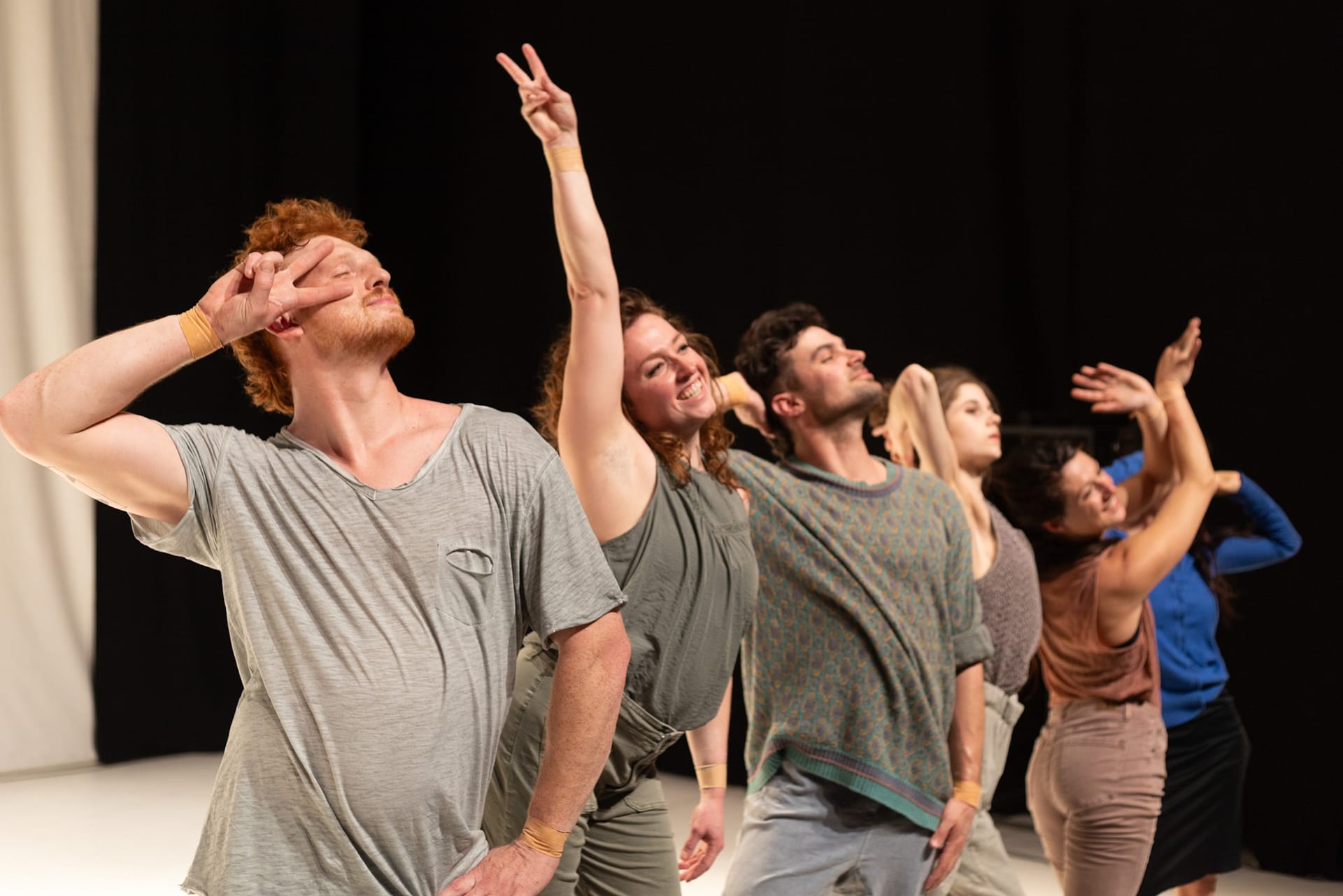
One strong position in several of the performances programmed at UP Festival is a deconstructive impetus; a push to undo, to shake, to point and call out; an underlying plurality of expression that positions itself critically, like a murmuration of necessity and certainty. We see it in Bello by Fabbrica C, in Pinãta Cake by Gaël Santisteva or in Status Quo by Subliminati Corporation: each, respectively, attempting a critical stance towards beauty, the human appetite for revelation, and spectacle itself.
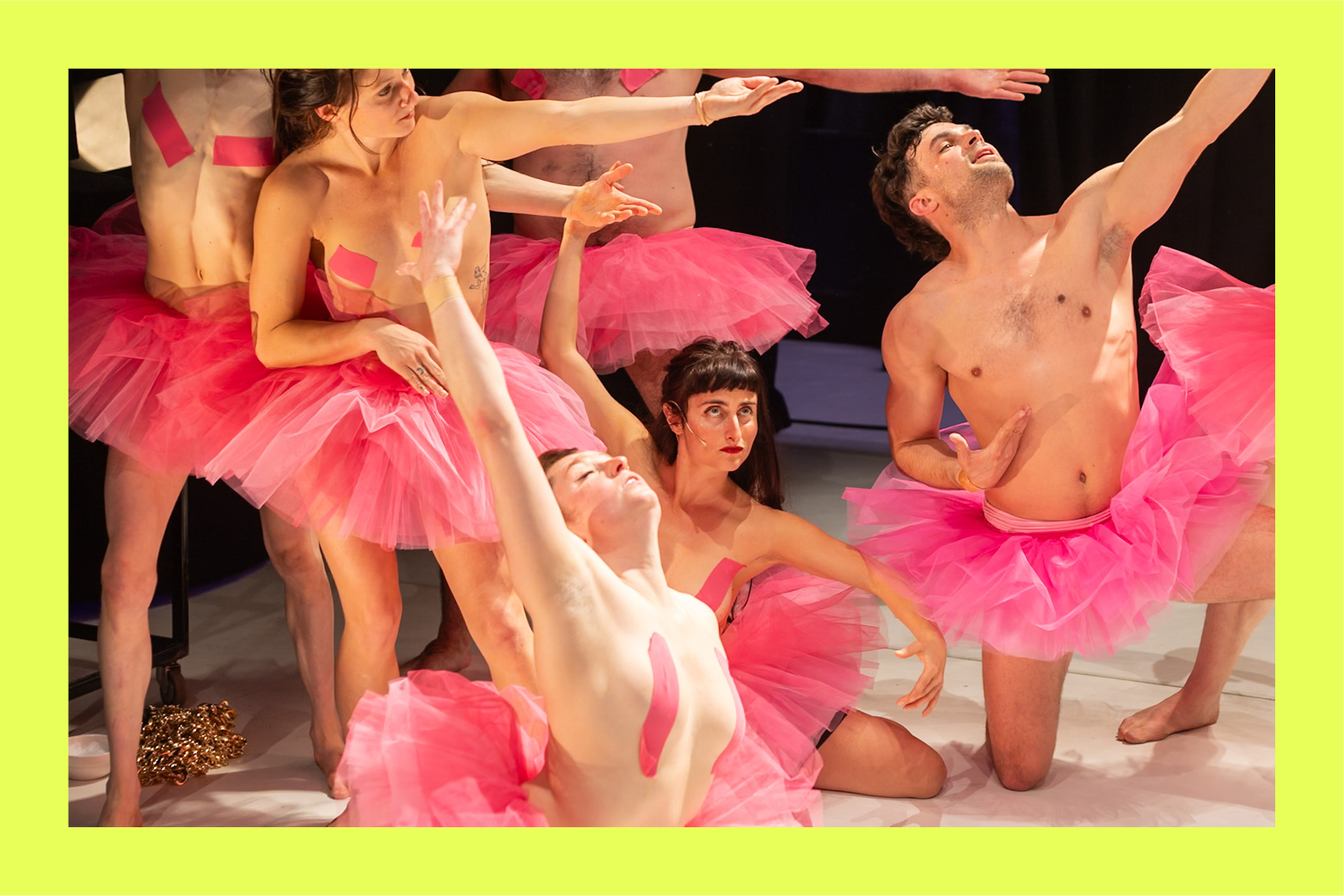
Bello looks at beauty through biting humour and sharp visual metaphors of choreographed togetherness. As a circus form, collective acrobatics lends itself fully to conversations on belonging, desire, community, and support with the capacity to express social critique. The show aims to deconstruct stereotypes around beauty in an “ever-searching circus that subordinates aesthetics to ethics.” Nevertheless, Bello can be found to be normatively beautiful - choreographic harmony, pleasing visual aesthetics, virtuosic circus display. The show inhabits aesthetically the thing it critiques ethically and (rightfully so?) remains unapologetic about it.
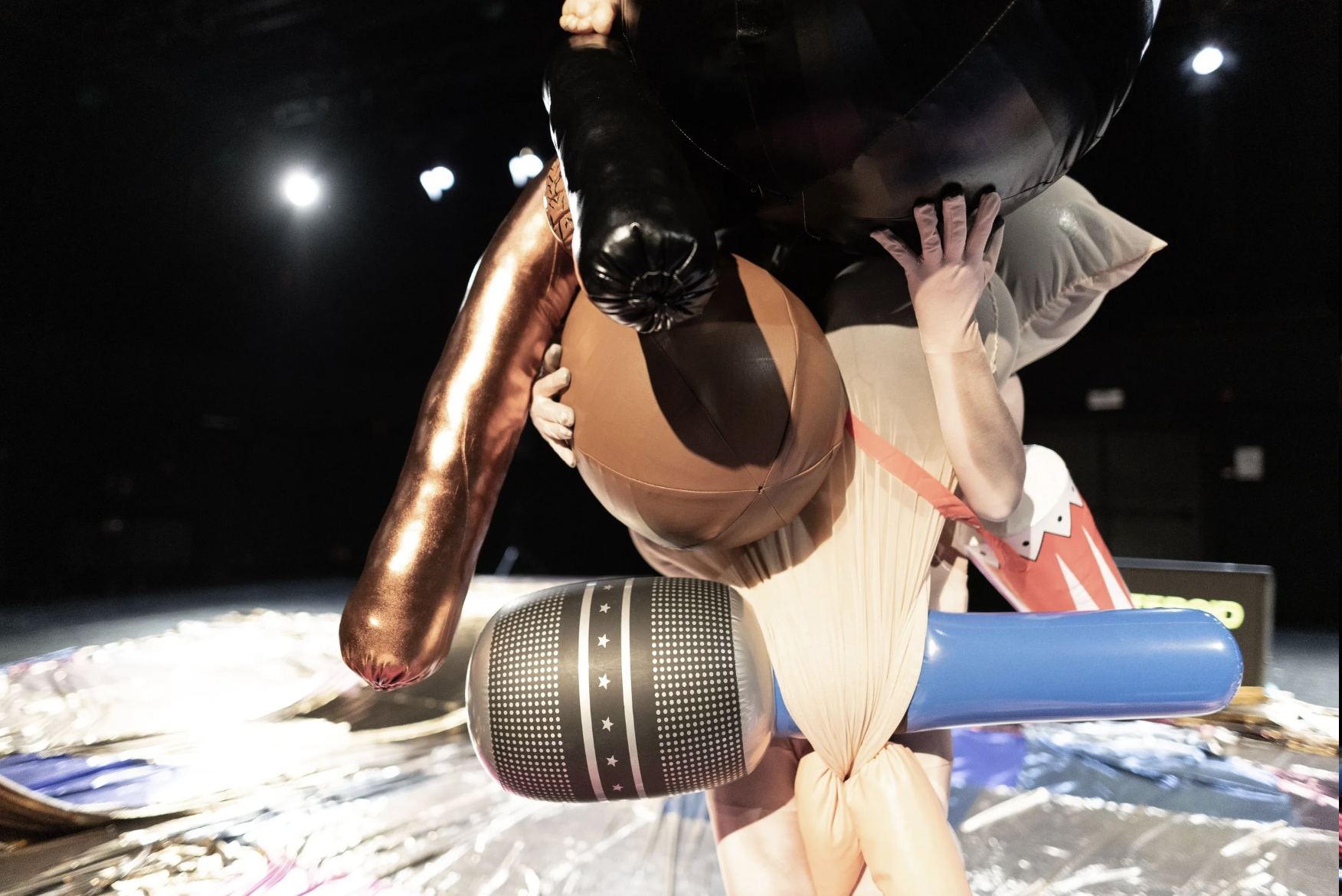
Well, art is rarely made in service of apology! We see it clearly in the self-assured Pinãta Cake, by Gaël Santisteva, a show that plays with concealment and revelation, teasing its audience into desiring transparency and clarity. In terms of staging, Pinãta Cake is not afraid to be messy and at times even confusing, if it all serves the critical engagement with its subject matter: “An exploration of human fascination with orchestrated mystery, the frenzied expectation of a revelation, which exhausts us as soon as it happens.”
The cynical, sardonic humour in the show is palpable in every scene; however, the audience constantly negotiates the extent to which they join in the critique or become the butt of the joke. When does mockery become critique, and what pushes this boundary? Are we the punchline if, by the end, we still crave revelation, cohesion, and a pleasurably consistent work of art? Should we feel ashamed of still desiring aesthetic satisfaction, as the world around us is a polarising, burning mess? Or is this all just hedonism, using art and the stage to mask itself as resilience?
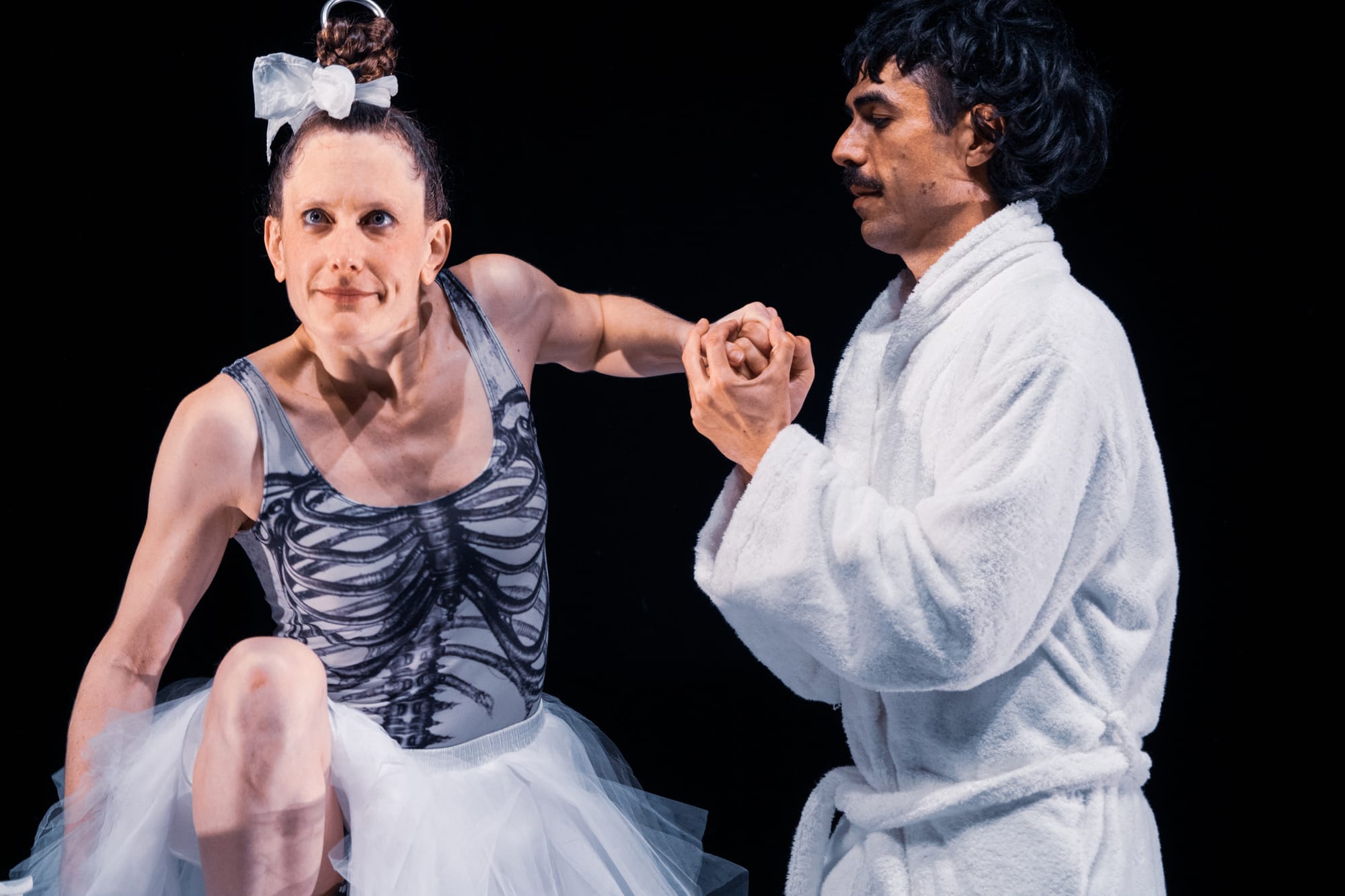
Status Quo, by Subliminati Corporation, touches even closer on the nerve that binds circus to its audience, calling out the very structures of looking and enjoying a “spectacular” circus performance. The show mercilessly stages darker versions of what it means to desire, to expect, to applaud, to encourage, when it comes to limits in the physical performance of circus.
Relation, reliance, entanglement
Art critic Kat Benedict writes of a Zeitgeist that “...reframes reliance not as a personal deficit but as a shared condition that shapes space, time and attention.” And where can we find reliance and interdependence more sharply drawn than in circus? A world-building, system-rich art form, which cannot operate on the fuel of individualism. A few performances in the 2026 edition of UP Festival are noteworthy for engaging with notions of entanglement and relation.
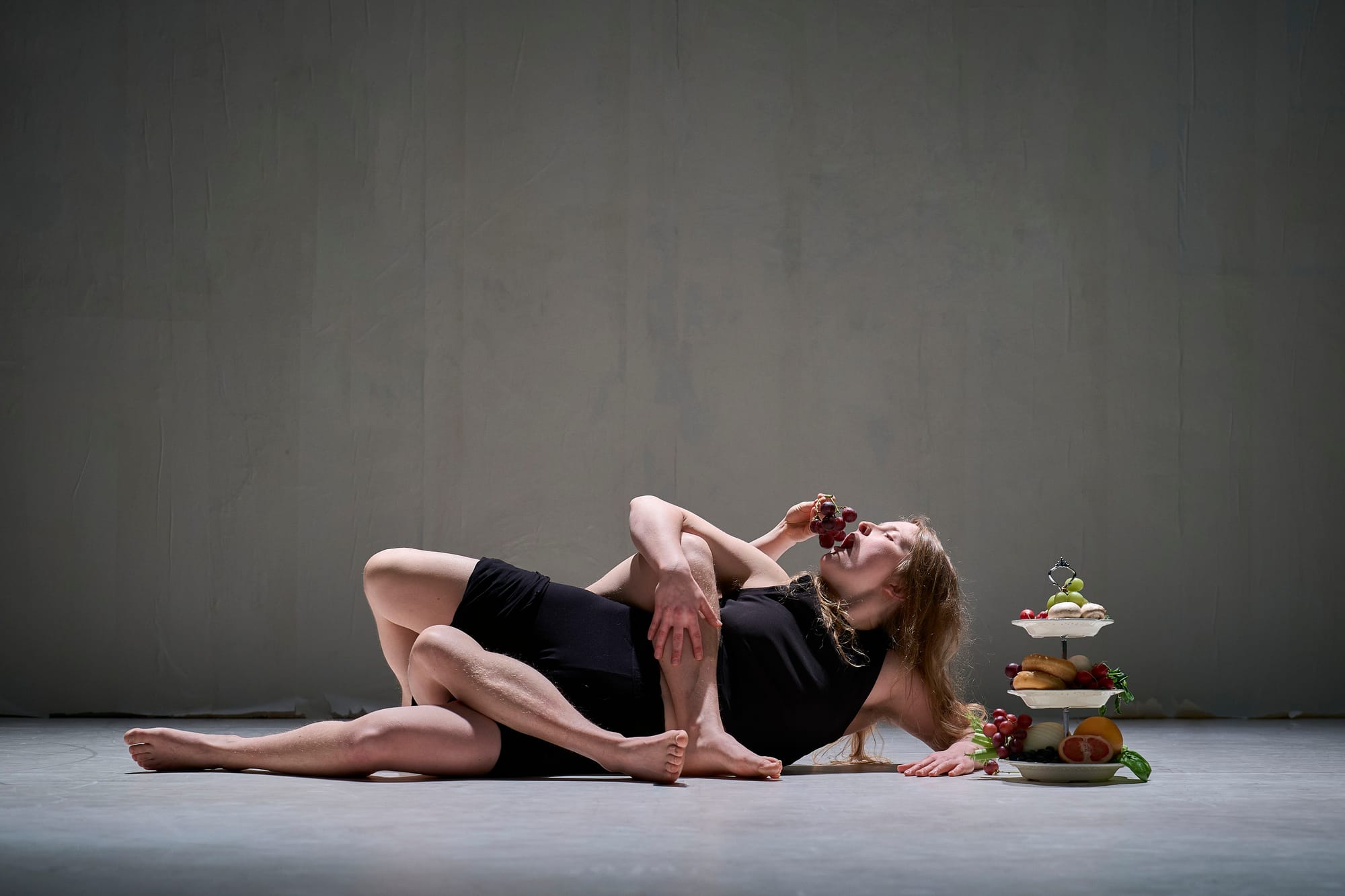
In a subtly grotesque staging, Food by Michael Zandl plays with the idea that one becomes what one consumes. The show delivers a neatly articulated yet bizarre world of consumption, visualising gluttony and a growing appetite for more.
This positions the performance at the core of a (common, by now) critique of our contemporary Western way of life, defined by a surge of neoliberal growth and speed in all aspects of living. With humour and nuanced, paced circus, and a hypnotic set design, Food puts us face to face with “habits shaped by desires that might not necessarily be our own” – an alternative approach to what relation and entanglement can look like when it is not entirely benign.
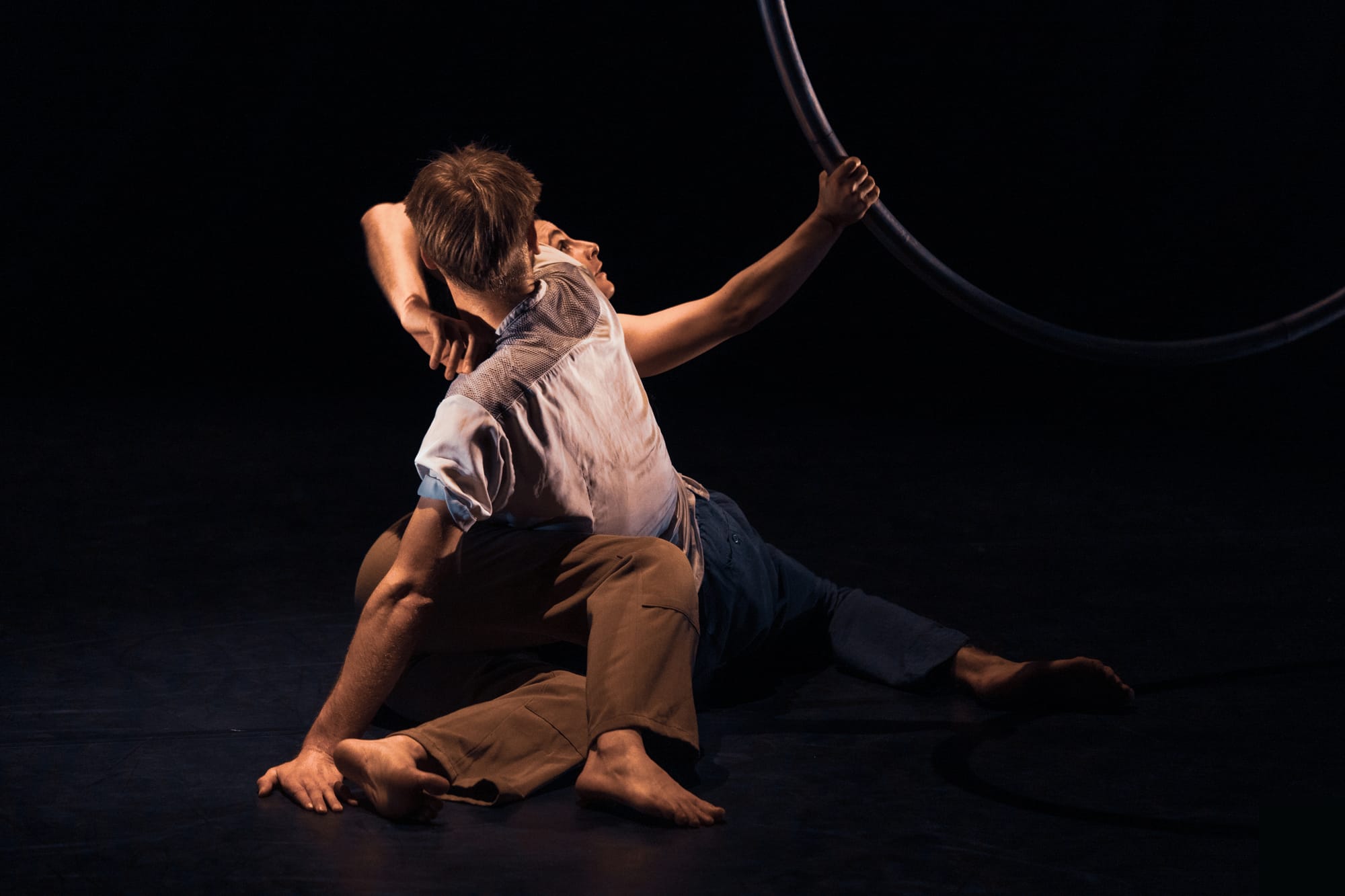
Boundaries between desire and necessity in a relational setting are also blurred in In Difference, by Marica Marinoni and Jef Everaert. The desire to come together, pushed by unspoken laws of proximity, meets the necessity of remaining autonomous. By not overtly taking ethical standpoints or moralising positions, the performance stays elegantly in touch with the humanity underscoring its subject matter: the meaning of being, of being oneself, of being together; of sharing a space with visible, steadfast difference – and not succumbing to clash or crisis.
Circus technique and apparatus become narrative matter and, as Kat Benedict would put it, “dependency is an experience filled with aesthetic possibility:” a tangible motif that speaks for itself and resists forced symbolism. In the performance, nothing happens when the Cyr wheel is not involved – a type of reliance that recalibrates the human body and agency in (and beyond) the performance space.
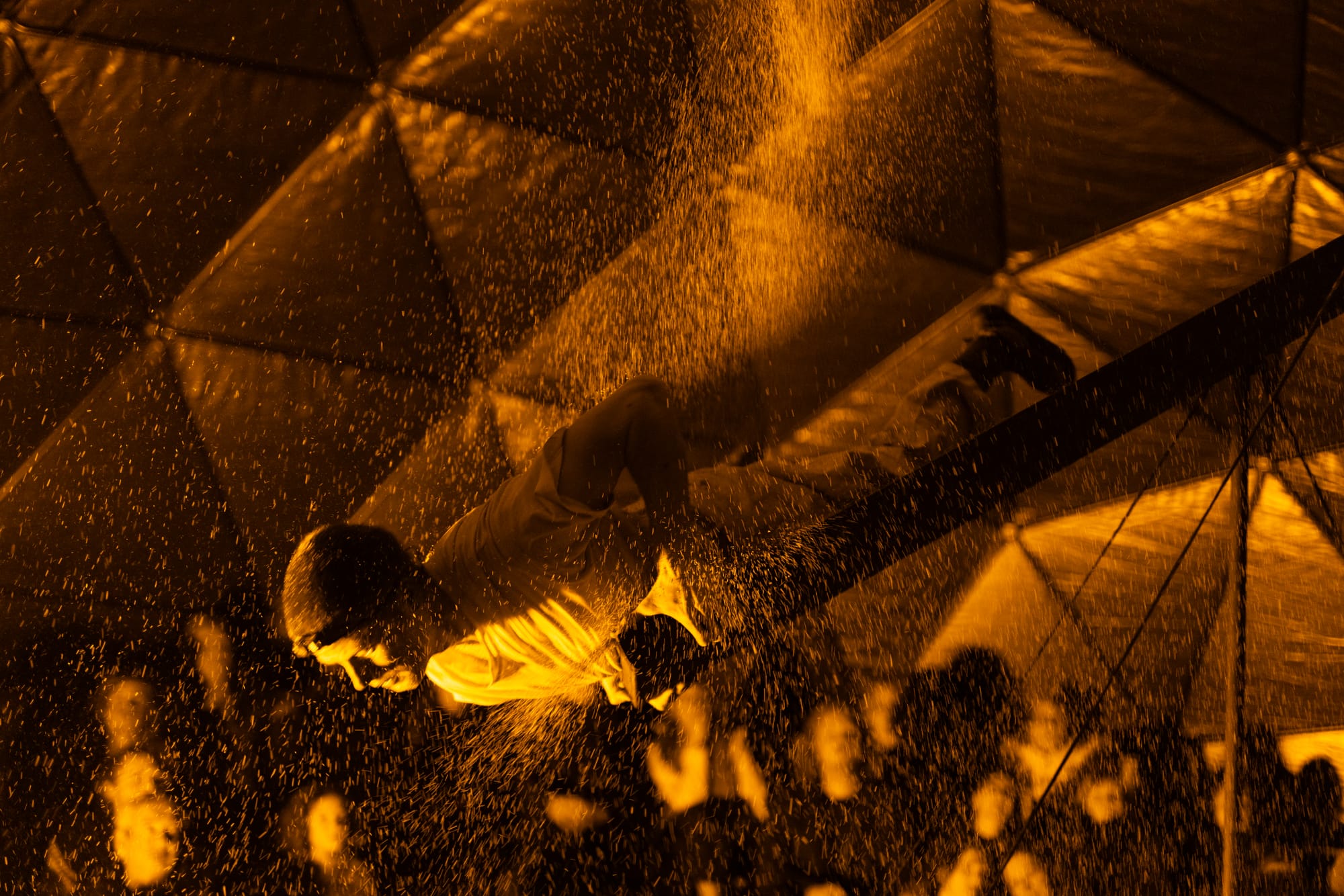
Co-dependence is an important facet of relationality, a form of layered and complex entanglement. Symbiosis, by Luuk Brantjes and Kolja Hunek, hosts variations of co-dependence, from micro/cellular levels of symbiotic living to macro/socio-political stances. A dual dramaturgy – a diptych – places the two artists on the same stage but in starkly different “worlds.” Symbiosis, too, proposes an alternative way of producing and finding nourishment in togetherness: this is not a duo; the two worlds do not collide, nor crave collision. Their proximity is governed by unique laws, rewritten through circus technique, material research, and precise experience design. The set design, in fact, shocks senses and expectations, and at times the audience is left lacking categories to fully describe what we are experiencing.
Symbiosis is dystopian and speculative, and for speculative futures, distance and duality are necessary; embracing a speculative modality means allowing a veering between “this” and “otherwise” without a forced genealogy between the two. A better, more resilient future may not just evolve organically from the present; a breaking point might be necessary. In this sense, Symbiosis stages an example of distance as a formal, ethical, and political necessity, without sacrificing the aesthetic fertility that may be found at its core.
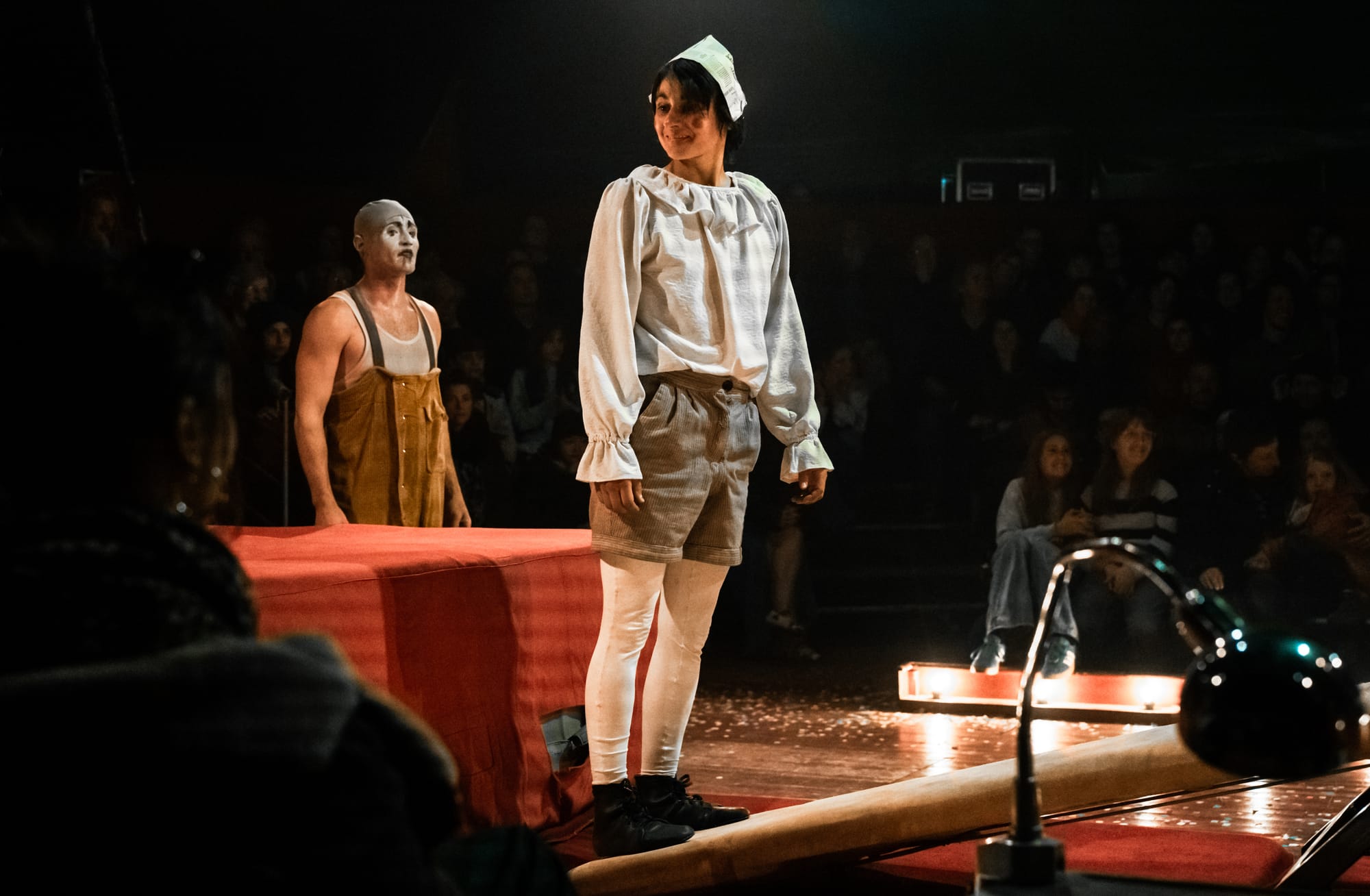
If Symbiosis carefully mines uneasy and uncanny locations in the relationship with the audience, Hourvari, by Cie Rasposo, fully embraces the eerie and disquieting dystopian circus space. Harking back to the circus heritage of tented performance, Hourvari is a world-building, architectural journey in which puppets and puppeteers engage in several scenarios of disobedience and chaos. In the balance between rule-led life and self-determination, circus disciplines become methods for liberation, as they tease disorder, while still providing the audience with dramaturgical gratification and aesthetic awe.
Anonymity in pieces: Solos
It is perhaps telling that some of the solo performances in the UP Festival are also to some extent performing anonymity; less as a desire to decenter the artist, and more as a reaching out towards lived, shared life, whether made up of fragmentary illusions we may tell ourselves, of stories we cannot be silent about, or the refreshing experience of losing oneself in routine and repetition.
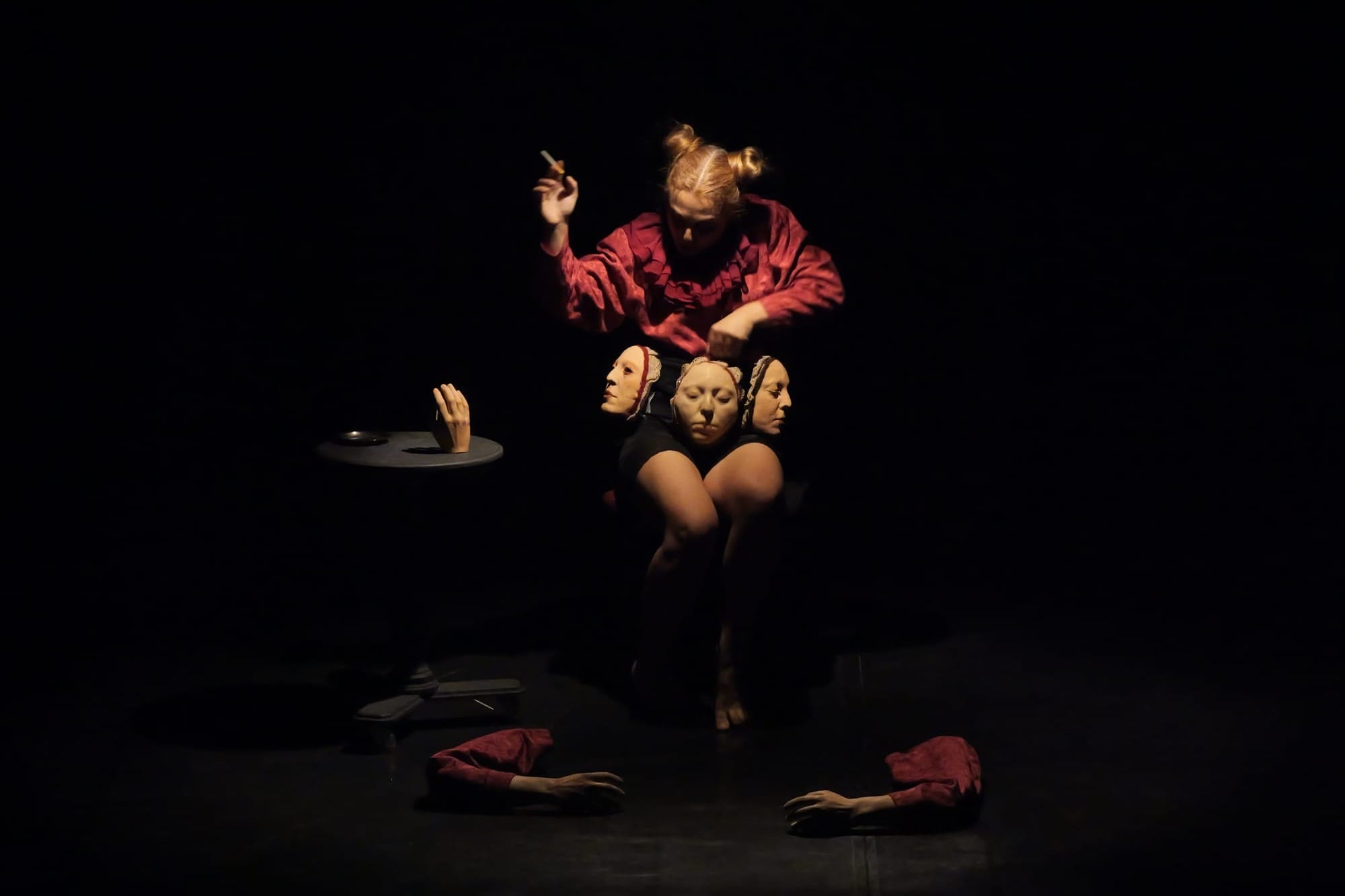
Fictions and fragments make up Lupa Maimone’s dystopia in Finzioni, presented at UP Festival as a short in the showcase Focus Italia. Simultaneously futuristic and retro, the performance brings to life “shifting figures and nonlinear situations” in an innovative take on props and prosthetics as body entanglements. Notable in the performance is an interest in reorganising the human body, the logic of movement, as well as the structure of perception through some new magic interventions, as well as the expectation from the audience. Finzioni is a dark and ethereal vista into a type of self-fashioning that is surreal and absurd, yet deeply equalising of the human and the transhuman.
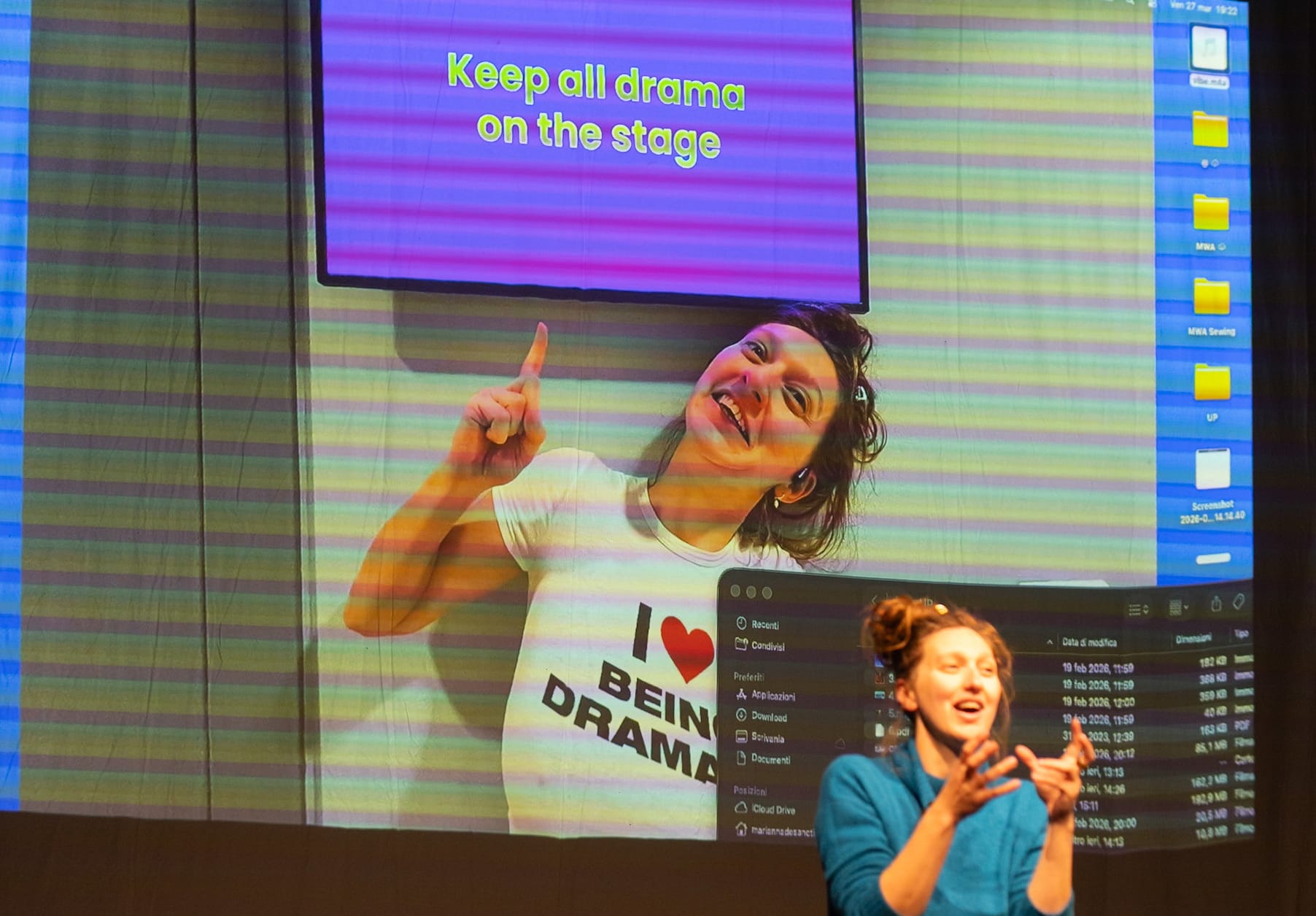
Fiction, on the other hand, is not the stuff of life for Marianna De Sanctis and her Mother, Woman, Artist performance. Genre-bending between clown, lecture, and stand-up comedy, the performance is raw and vulnerable, centred around the artist’s own personal and professional experience. In a hybrid performative structure, Mother, Woman, Artist carries the circus form from silent body on stage to speaking agent, in this case a singular voice, nevertheless containing multitudes. The performance is exemplary as a type of paradoxical anonymity, in which the artist uses her own life and experience to reveal implicit customs and conventions of the circus world, so widely present that they may as well go unnoticed if not loudly spoken.
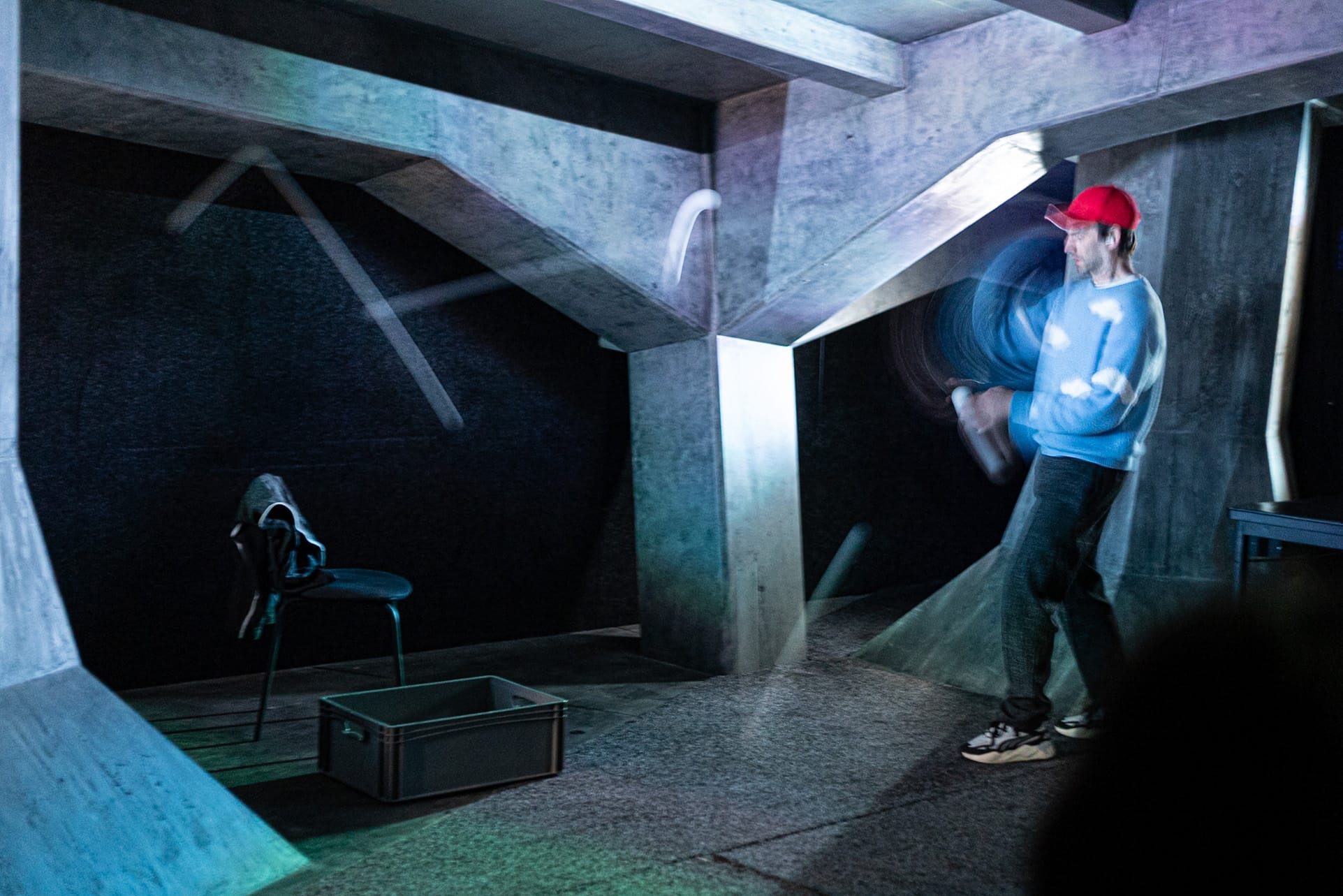
The unspoken fills the air in Ballroom by Post uit Hessdalen. A gentle, patient grounding in a funnily atemporal now, Ballroom transports its audience to a non-space; the set design builds an underpass, populated by a solitary figure, doing a monotonous job. Soon enough, and to everyone’s delight, the anonymous caretaker of this liminal space turns into a master of juggling. In this alternative space, the passing of time is mediated and kept in check by juggling alone, which is hyper-precise, controlled, and geometric. The colourless monotony of the set and first encounter is blown apart by the exciting bout of playfulness that the character leans into.
A decidedly quirky children's performance, Ballroom does not aim to problematize anything. It just is. Repetition, an otherwise expected form in juggling, is here driven to absurdity - the character repeats his task without achieving anything in the end, except completing (and winning) the solitary game he created for himself.
However, repetition is not alienating, but joyful. Is this perhaps an elegant, understated, very well-contained form of resistance? Does Ballroom stage a form of contemporaneity we all find ourselves craving? A wish to be absolved of seeking meaning in every little action? A need to indulge in routines, rather than chase perpetual newness? The underpass caretaker in Ballroom is someone, somewhere, fully embracing the liberating sense of anonymity that extends from space to character.
Much like the Ballroom character, the UP Festival audience, too, has a few days of just being someone, somewhere, enjoying something they had no idea they needed so badly.