Challenging Cosmologies: on the borders of circus with LA PAROLA AI CORPI
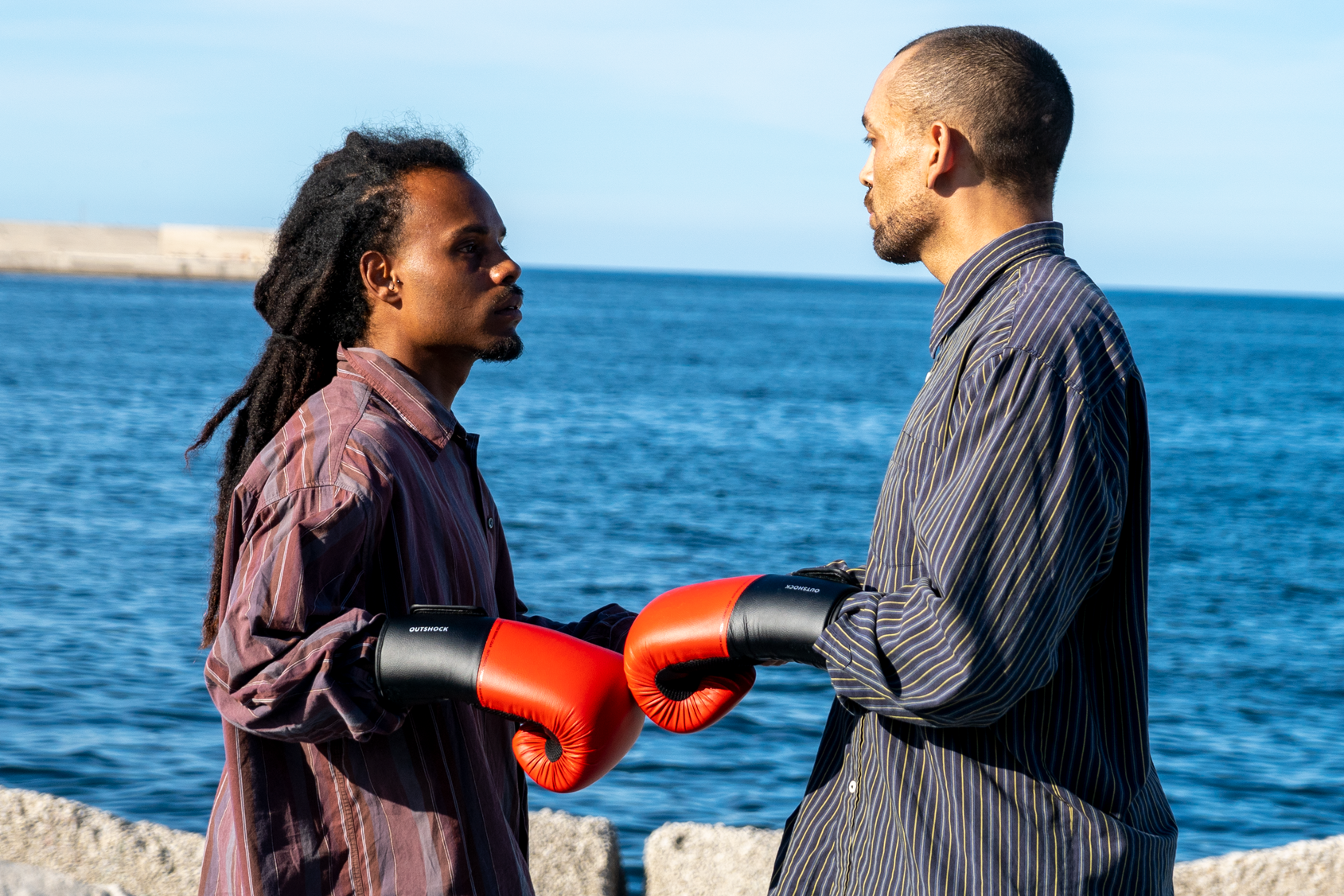
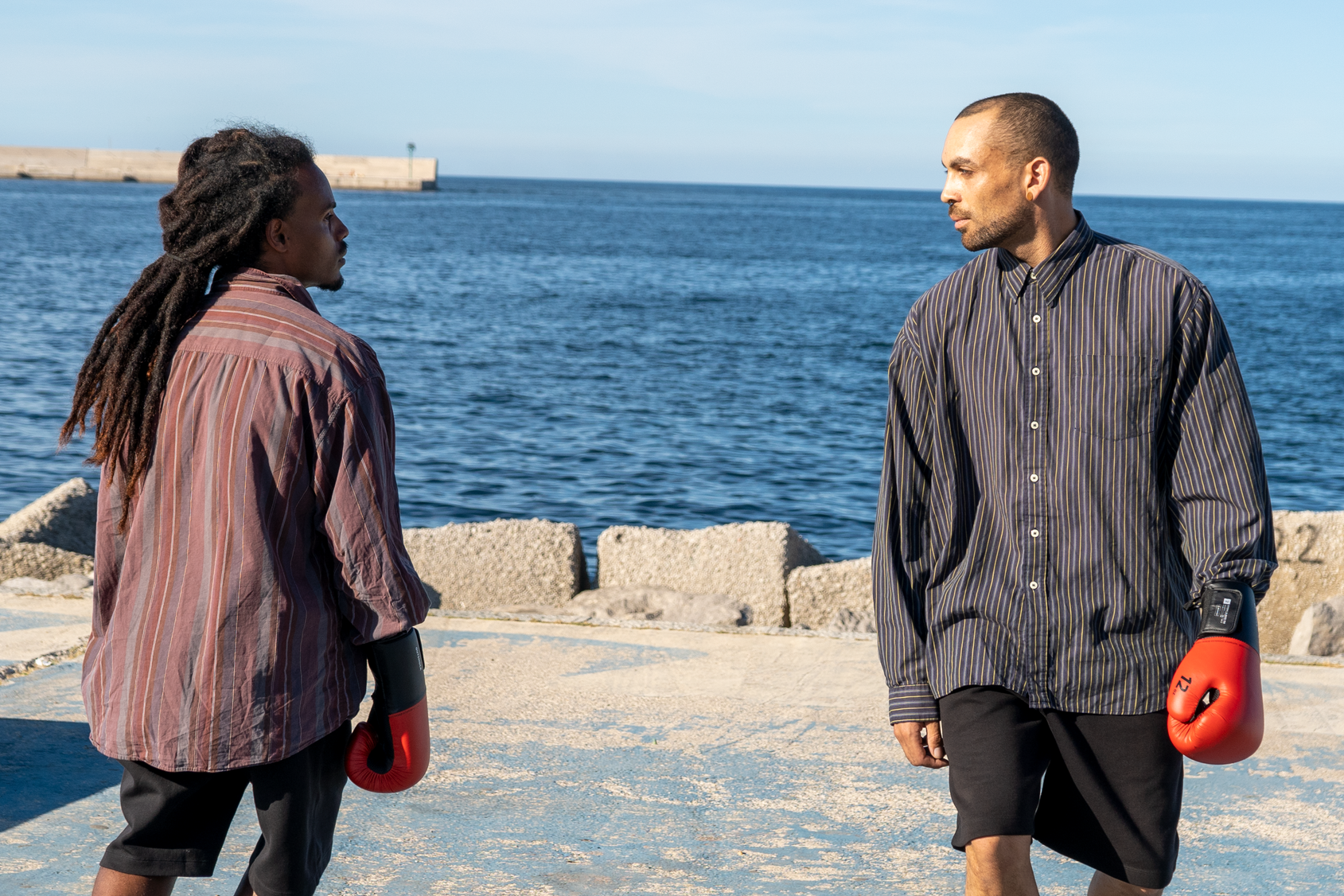
Because exchange means a watch for a watch, an object for another object, while in sharing we have an action for another action, a gesture for another gesture, an affect for another affect. And affects are not exchanged; they are shared.
Nego Bispo, A terra dá, a terra quer
Circus practice can be seen as a constant experimentation with the limits, edges and forces of the materials at hand. The scientific formula of repeatability is, however, haunted by the pressure of the imagination to create and not stay still. New possibilities always arise: inversions, subversions, reactions and counter-hegemonic versions of ‘successful’ results.
John-Paul Zaccarini, Falling – The Thought of Circus
In 2026, LA PAROLA AI CORPI reaches its sixth edition. Since its beginning, this research project has involved 40 artists and 7 co-curators. I wrote this text a few days after the conclusion of the sixth edition held in Palermo at Atelier 12. Thanks to the co-curators who worked with Gaia Vimercati before me and pushed the project this far: Anna Gesualdi and Giovanni Trono, Giorgia Zaffanelli, Ulisse Romanò, Amanda Homa and Majo Cazares.
Every empire establishes an order of the visible and imposes its own denominations. The Mercator projection, created in the 16th century and still widely used in the West, was designed to guide navigation and imperial expansion. On this map, some territories are enlarged, others shrink or disappear, revealing who occupies the centre of discourse, who remains at the margins, and which memories and narratives are privileged over others. What possibilities do our artistic practices offer for creating tension within – and shifting – dominant regimes of visibility? This edition, Challenging Cosmologies, delved into the topic and asked practitioners to engage with potential transformations.
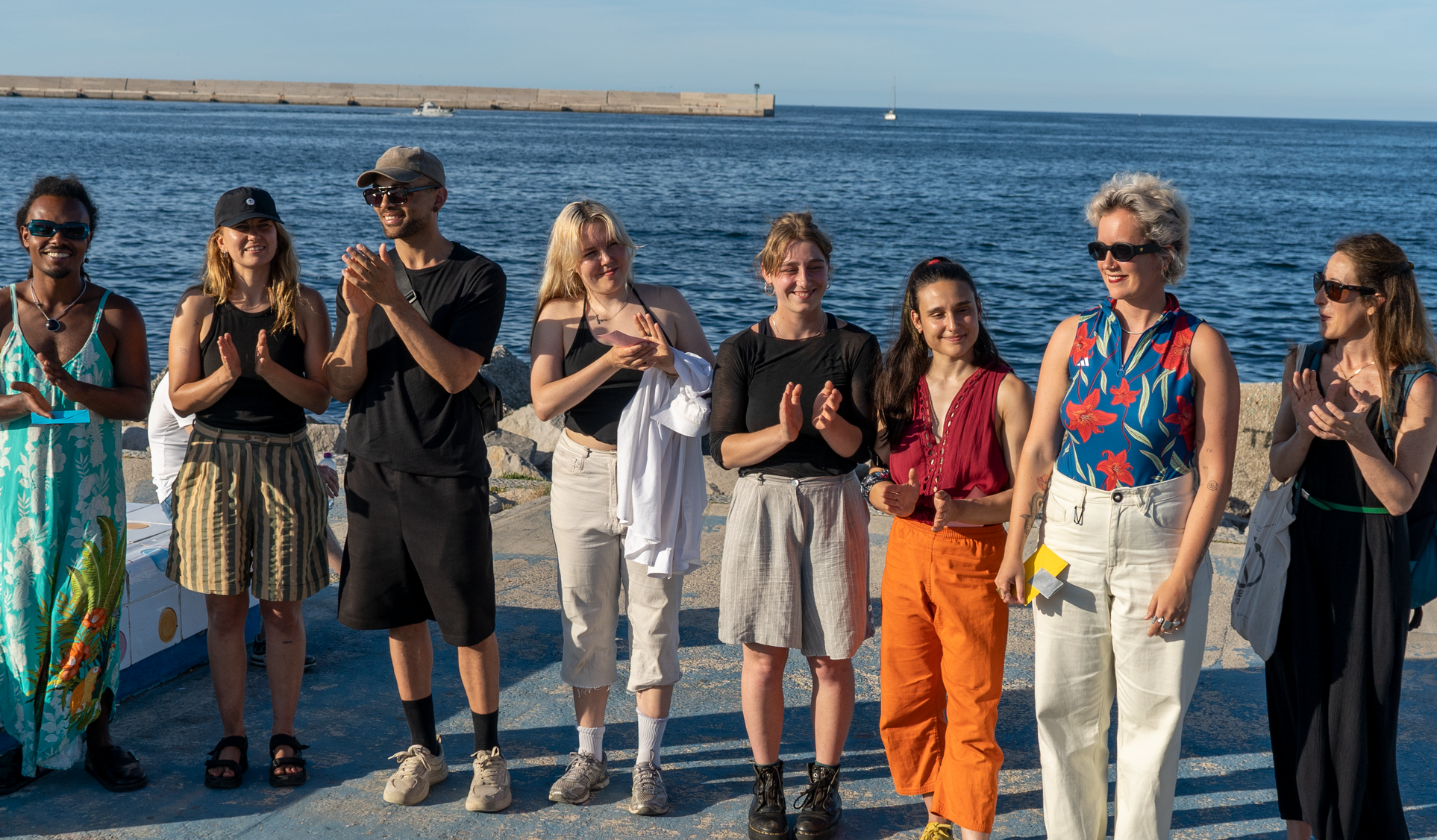
The research residency project brought together five selected artists on an international open call: Maria Baindurashvili, Yolande Sommer, Miradonna Sirkka, Romi Okewu and Sonsoles Tordable. The group spent one week together reflecting and practising through circus around questions related to the heritage of the colonial empire, the production of imaginaries, and how these structures can permeate artistic practices.
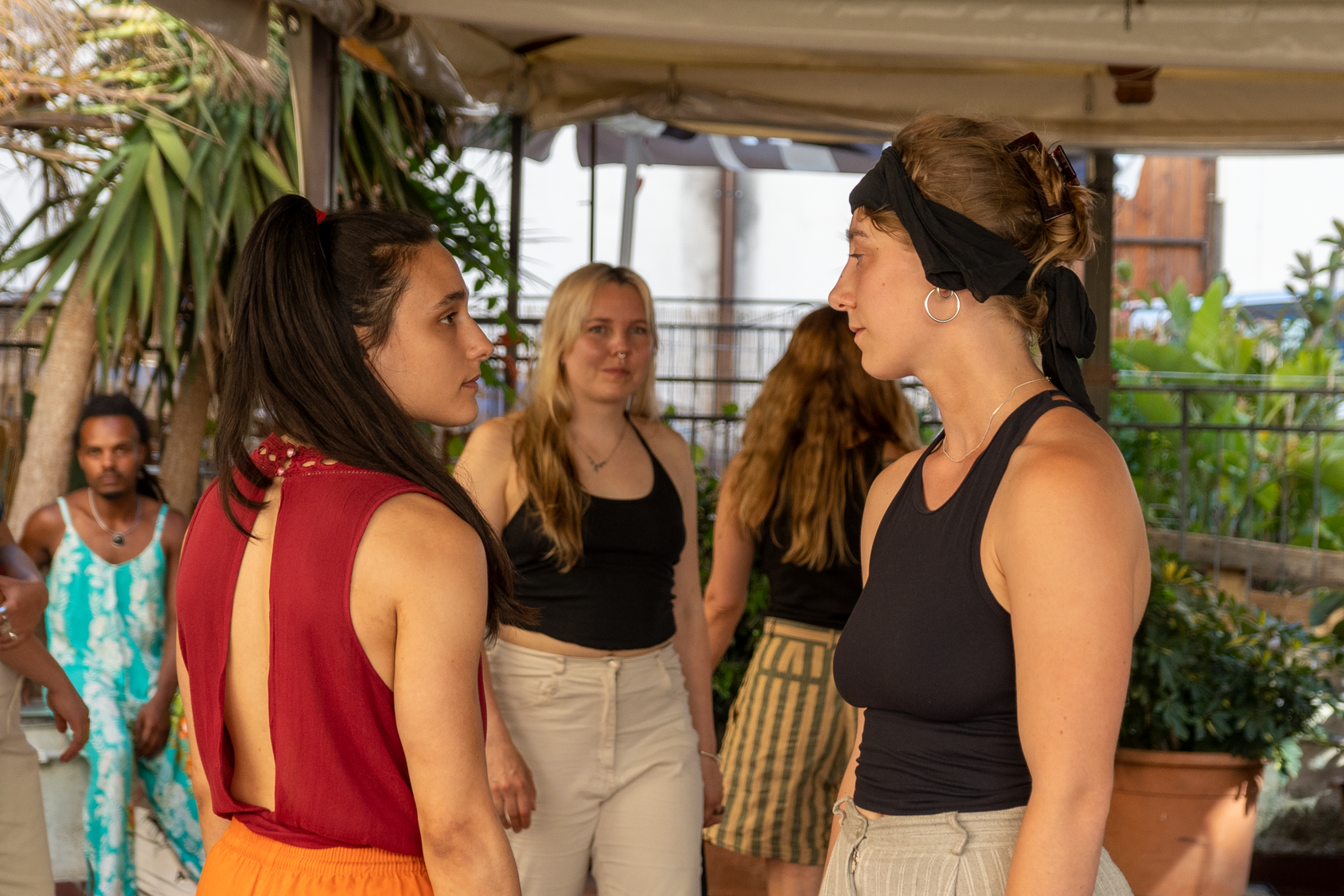
Fanon describes the colonial world as a world of compartments - mind and body, nature and culture, human and animal. Some time ago, I took part in the creation process of a performance that aimed to bring together circus artists and lecturers, philosophers or “thinkers”. I remember how this division became evident in practice: circus artists were often positioned as those who execute, while thought seemed to be assigned to other bodies, with theory considered more legitimate to speak.
The purpose of this yearly international circus research residency is precisely to challenge these separations as a shared field of investigation. LA PAROLA AI CORPI emerges as a counter-device: a space of collective research where thought is not separated from the body, but takes place through it.
In this sense, placing the body within LA PAROLA AI CORPI is also a refusal of this division. It is an affirmation of the body as a site of embodied thought, as a space of situated reflection within a collective process. From which place do we speak when we speak? And from which place do we see when we look?
We began the week of shared research with a collective imagination exercise: imagining a map of the world. Who is at the centre? Who occupies more space? What appears as near, what as distant? What is perceived as large or small? And what constitutes the periphery without ever (or rarely) being named?
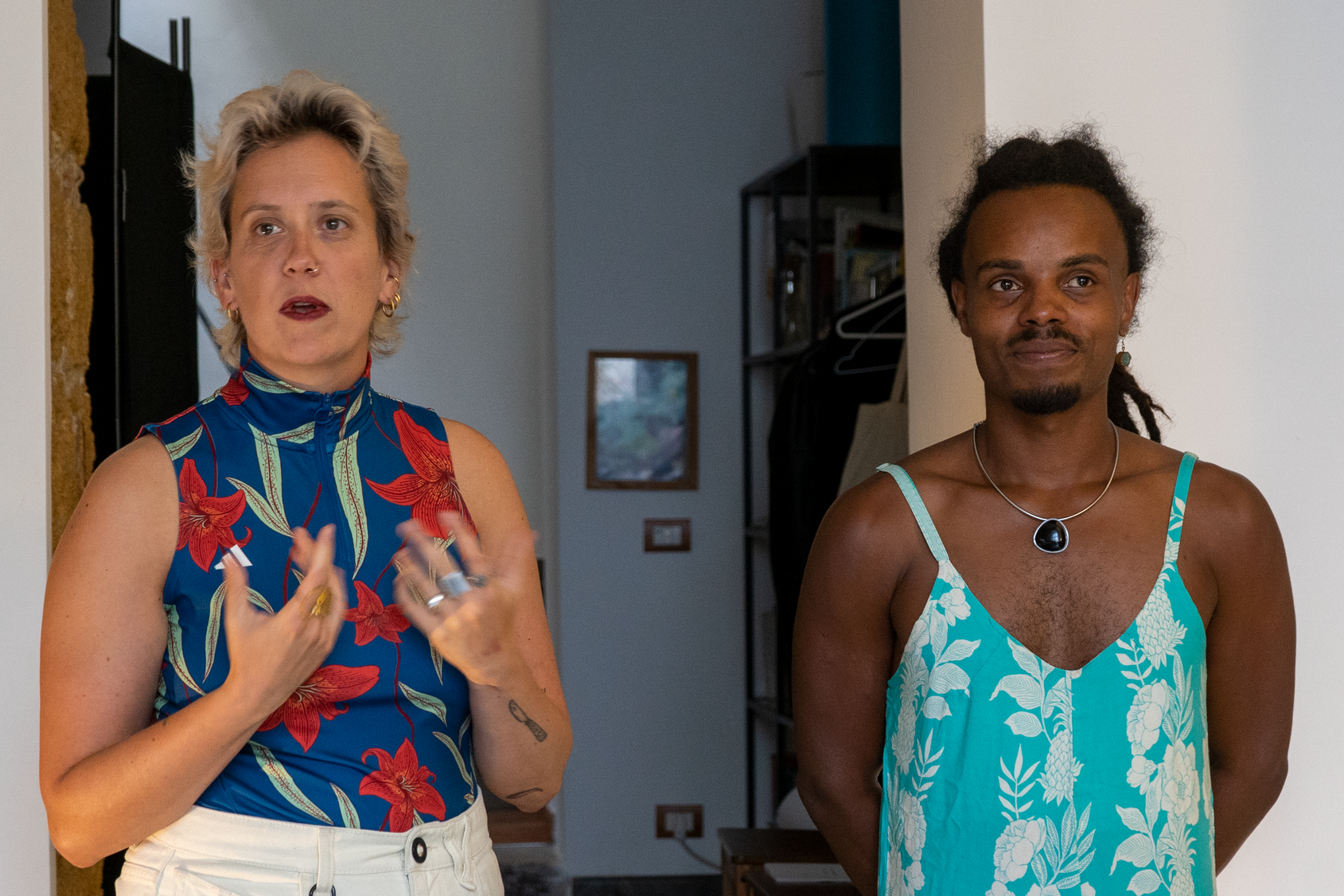
These images are not neutral. Their construction organises and shapes the way we perceive the world, even when we know they are constructed. And I, as a racialised and migrant artist, have been interested in how certain worldviews become universal, while others remain at the margins, as if speaking only about themselves.
The questions raised in that first encounter continued to resonate throughout the week. Recognising who occupies the centre of a map also implies recognising the place from which we look at it. After all, all perception is situated. Throughout the week, this inquiry expanded into other synesthetic practices, activating different modes of perception simultaneously: body, listening, image, and memory. Each participant also shared their own practices, turning the residency into a space where thoughts circulated between individual and collective construction.
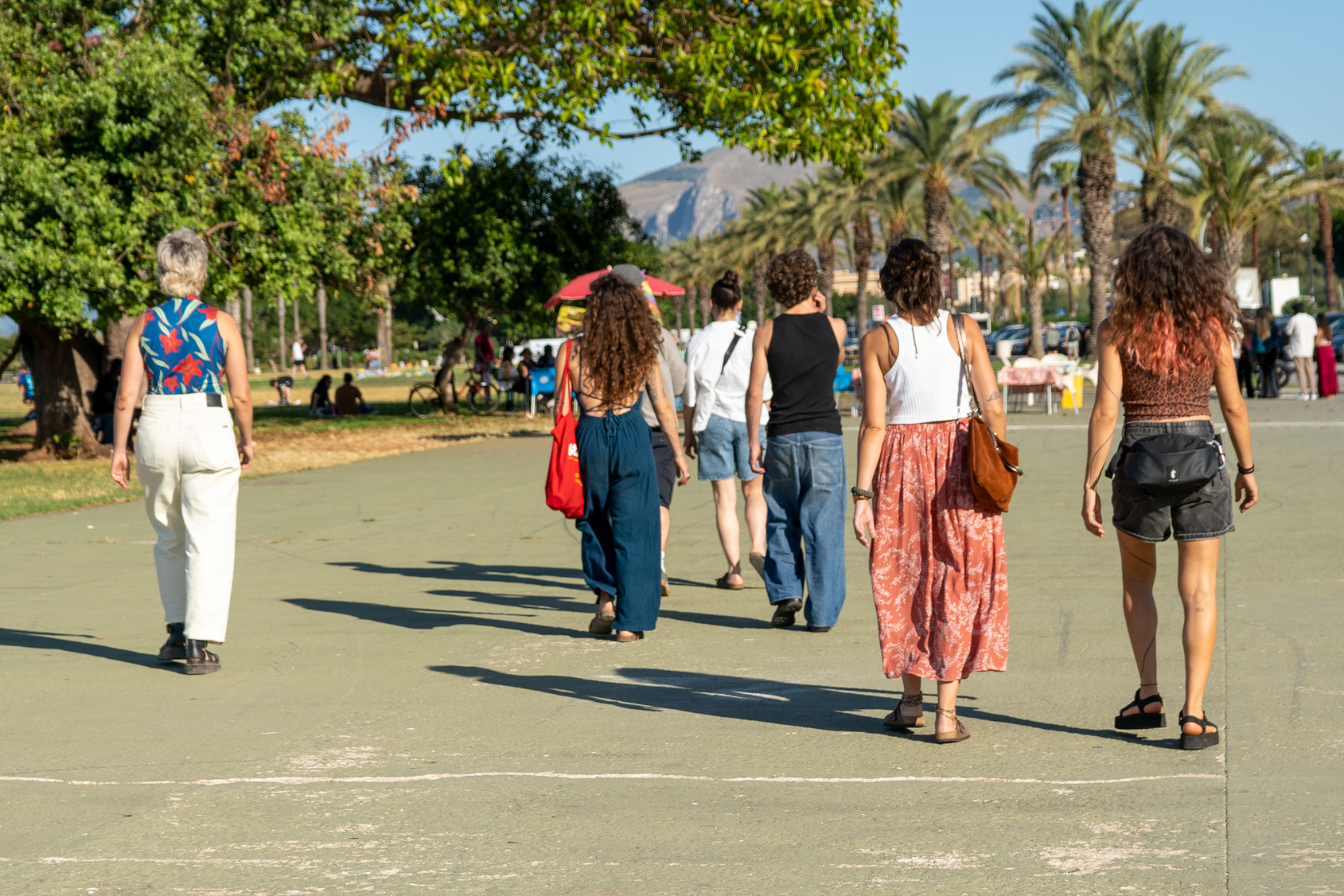
During the residency, we also undertook a journey guided by Vera Mormino through Palermo, a city in Southern Europe where historical layers, migrations and cultural crossings coexist in both visible and subterranean ways. Rather than a backdrop, Palermo revealed itself as a territory in continuous tension, where multiple narratives overlap without stabilising into a single story.
It was in this context that we experimented with the umbigada dance, a gesture of encounter and connection through the touching of navels from Afro-diasporic traditions, in which the body asserts itself as a site of relation and transmission: a simple gesture, yet deeply relational, which displaces the idea of encounter into an embodied plane.
Over the days, we also reflected on the forms we produce images, gestures, utterances and on how these forms participate in the construction of imaginaries, making visible the hegemony of the gaze and the way artistic practice can operate as a space of rupture and displacement within these regimes of visibility.
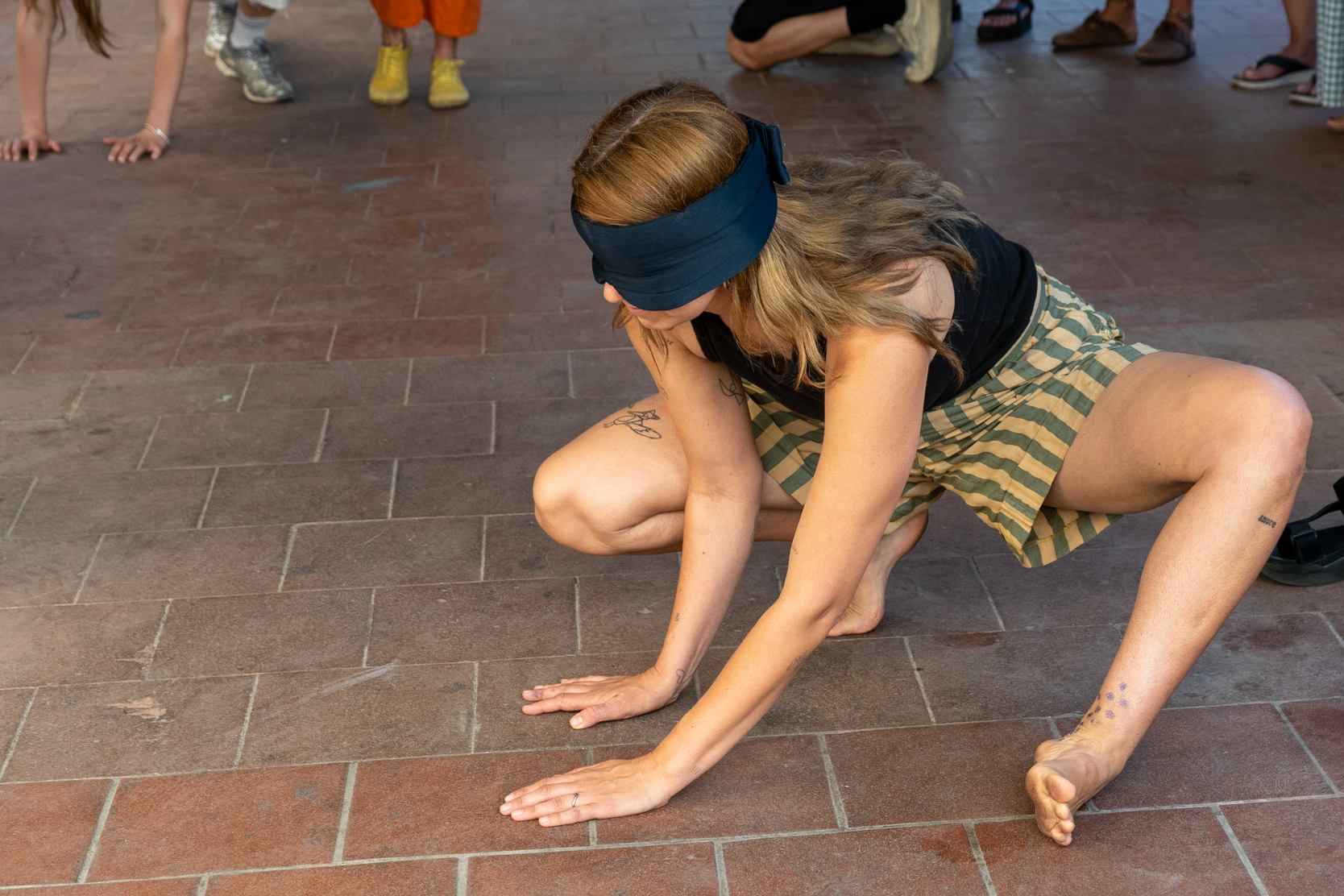
If imaginaries participate in the construction of the world we inhabit, then the forms we produce also carry responsibility. An image is never just an image. It shapes sensibilities, distributes visibility, and conditions what can be recognised, desired or imagined. Throughout the residency, we returned repeatedly to this question. After all, some bodies produce images, and some others have historically been turned into images. One of the tasks of artistic practice may be precisely to create fissures within these regimes of perception, opening space for other forms of existence, relation and imagination.
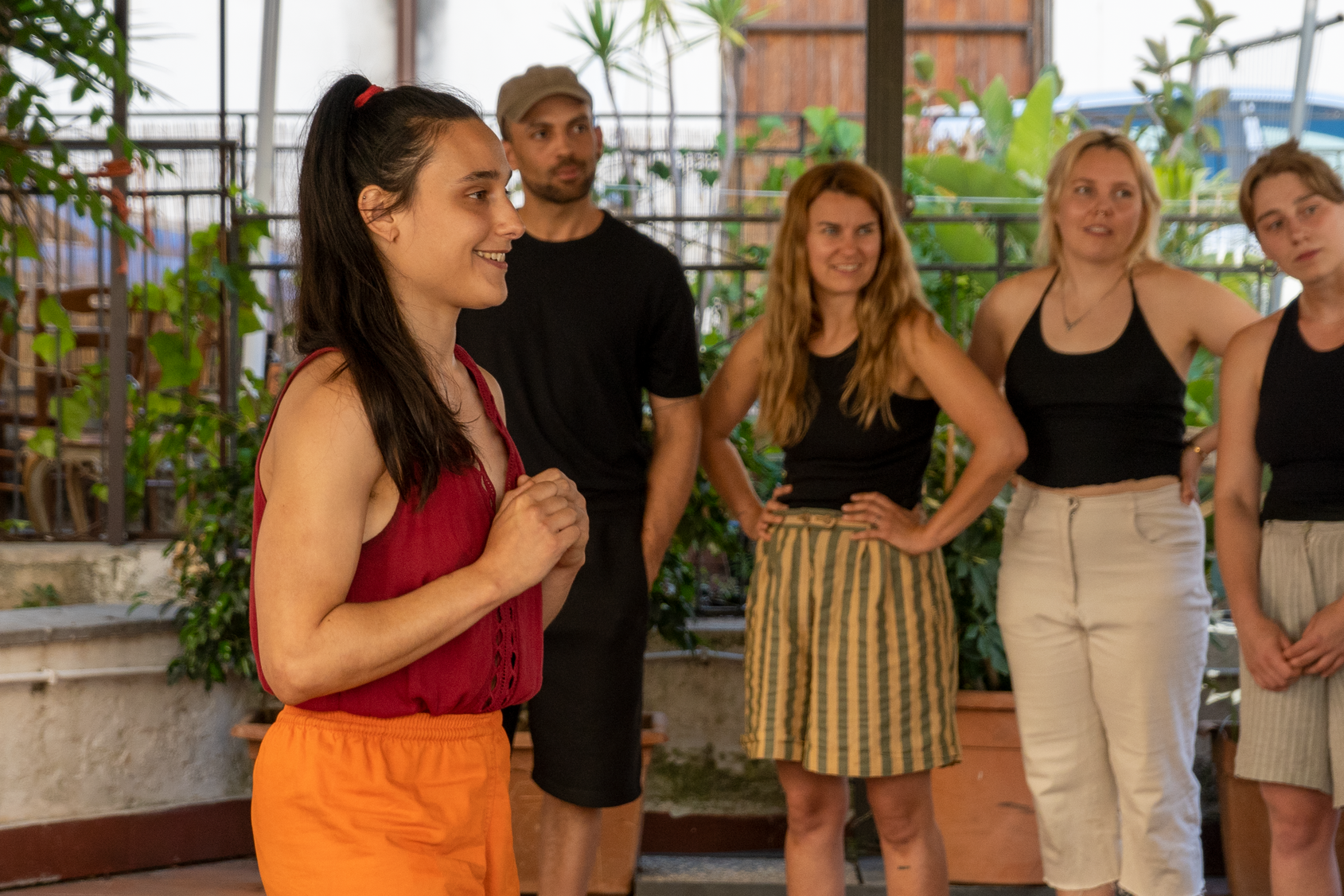
In this sense, the practices developed emerge as a potency for the reorganisation of the sensible: a field in which the body can produce other relations between form, perception and thought, opening space for imaginaries that do not necessarily reproduce those already established.
Colonial violence is not limited to territorial occupation. It traverses multiple spheres of life: the exploitation of land, the destruction of rivers, the extinction of species, but also the inscription of a logic upon bodies and ways of existing. The body itself becomes a territory, crossed by forms of exploitation, classification and hierarchization that persist long after the initial colonial gesture.
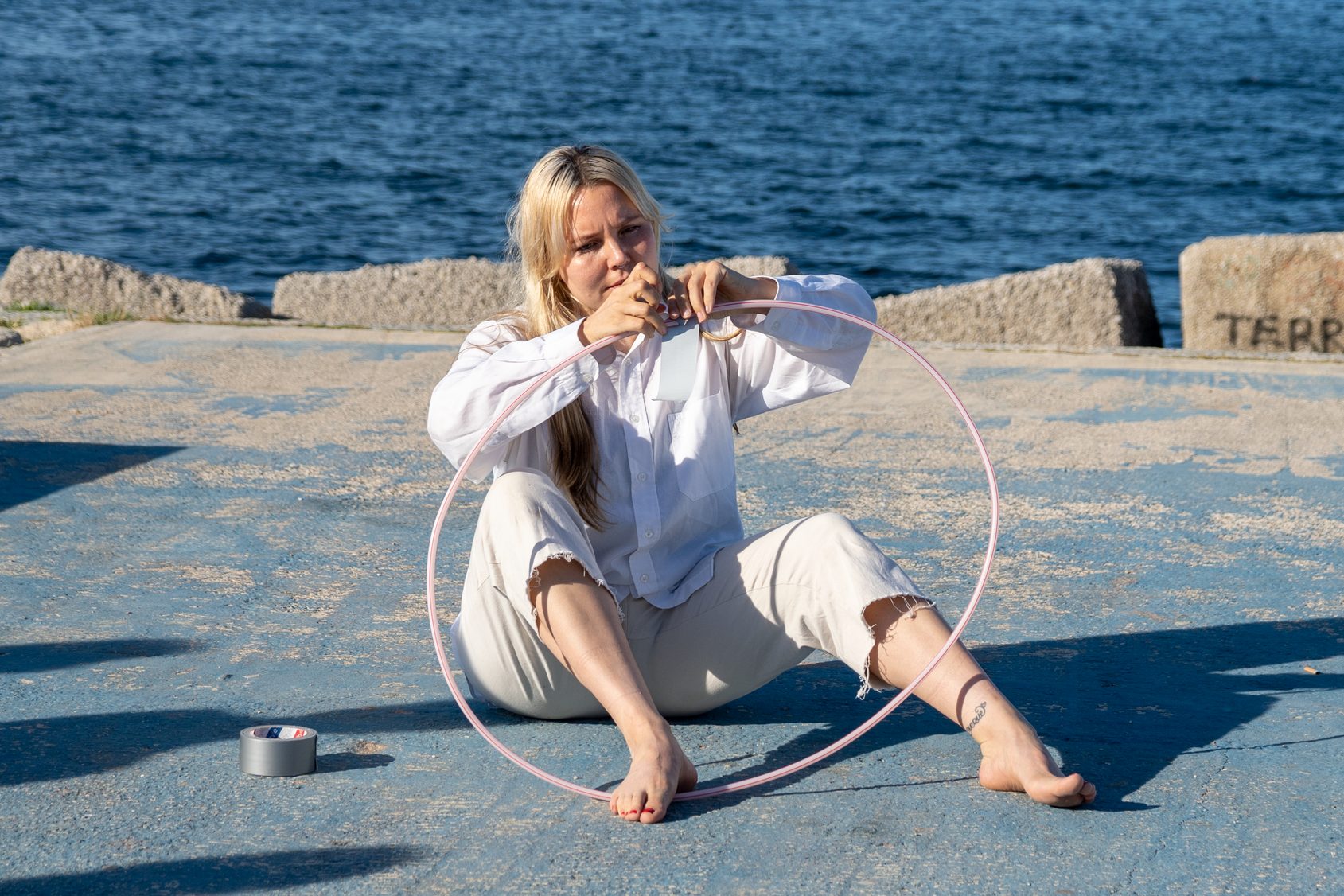
The colonial legacy does not operate only in the past. It remains active in the way we organise time, relate to other beings, naturalise inequalities, and produce ways of seeing, feeling and thinking the world based on separations and hierarchies.
These structures do not remain merely as historical abstractions. They traverse relations, opportunities, and forms of recognition and legitimacy that continue to distribute value unevenly among bodies. As often happens with violent episodes from the past that still trigger the present, they often manifest in more subtle ways. Making them visible does not mean resolving them, but it may be a necessary step to confront them collectively.
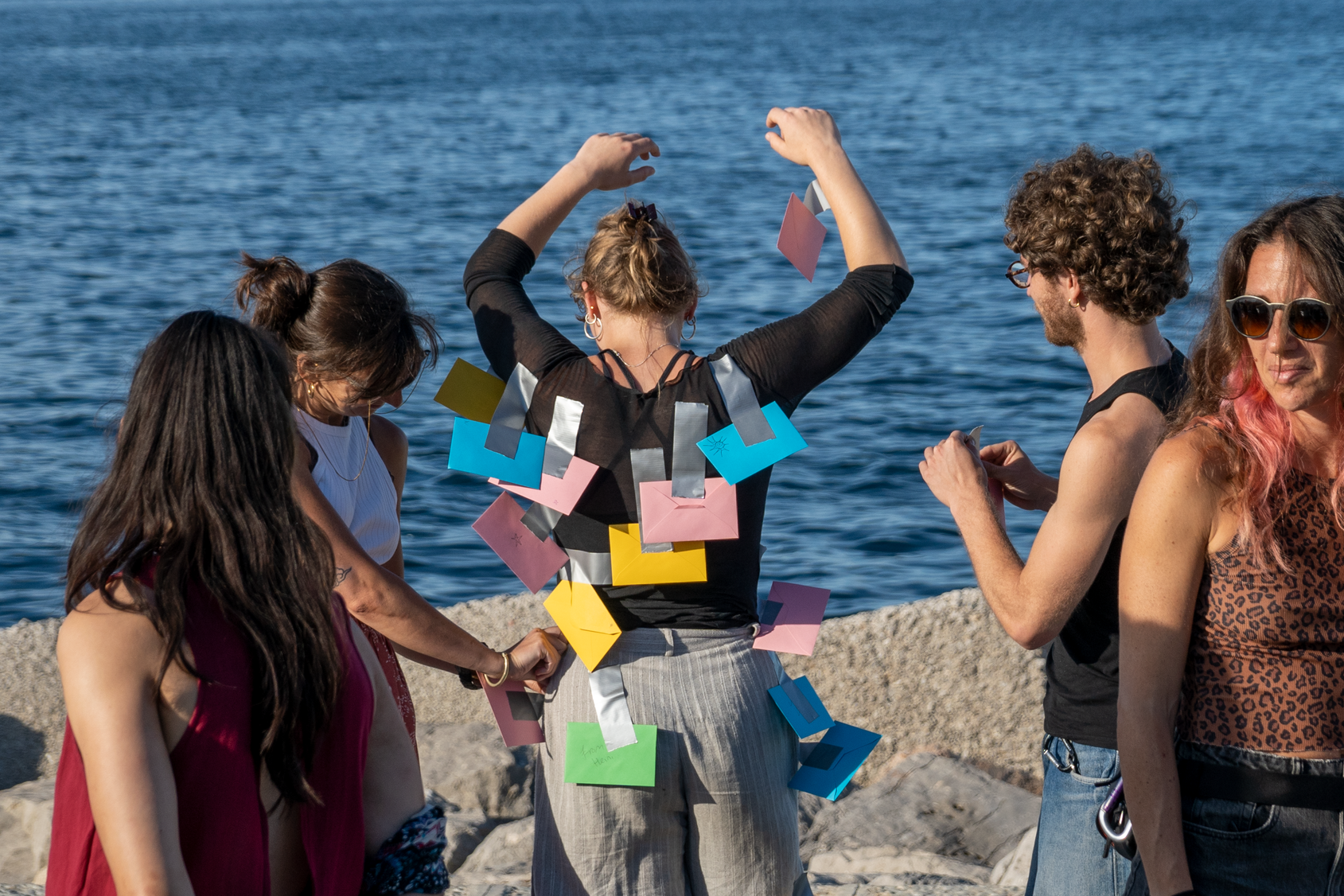
Throughout the residency, care became a fundamental dimension of collective work. Not as a theme, but as a concrete practice: a way of sustaining attention to one another, of keeping the space alive while allowing room for disagreement.
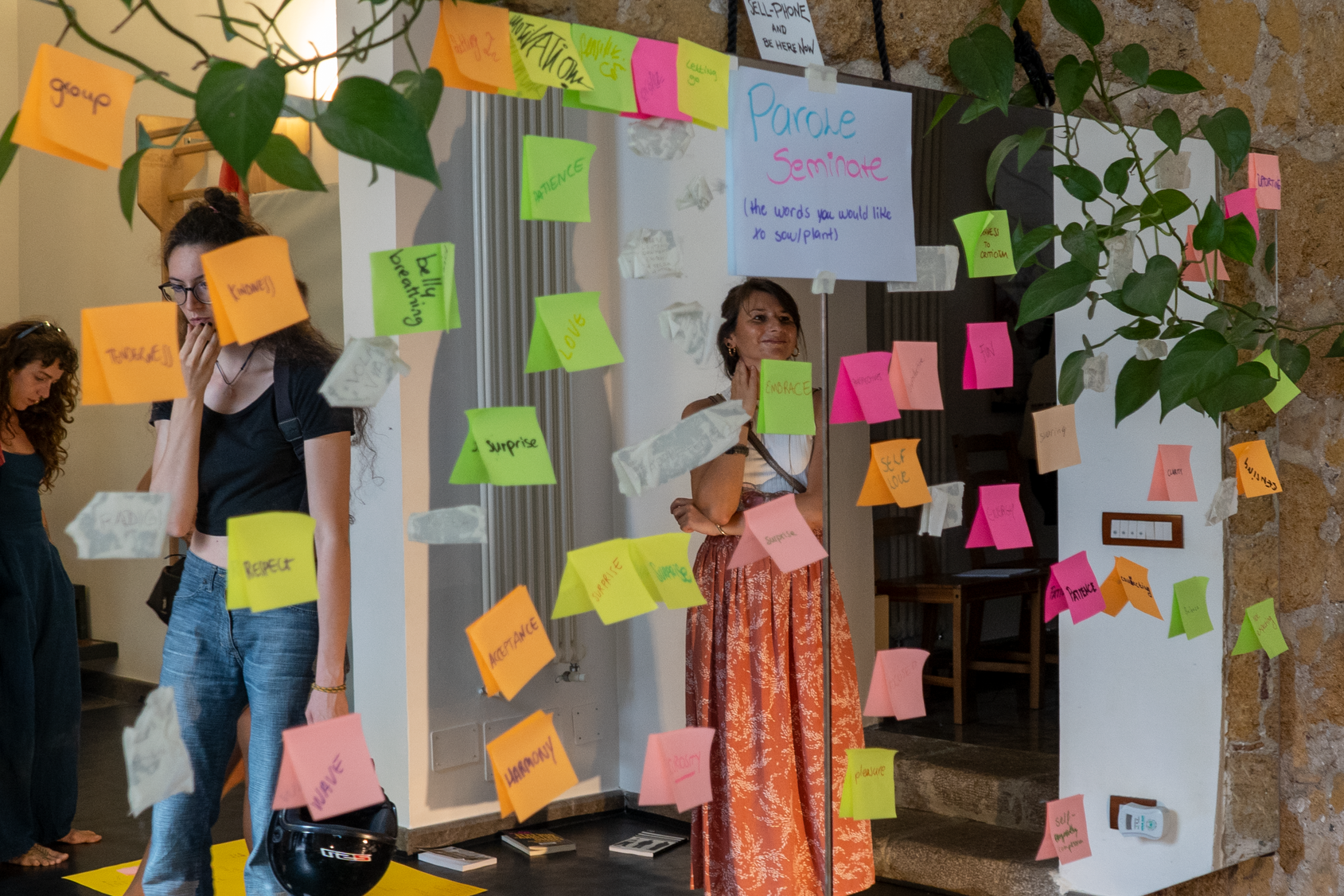
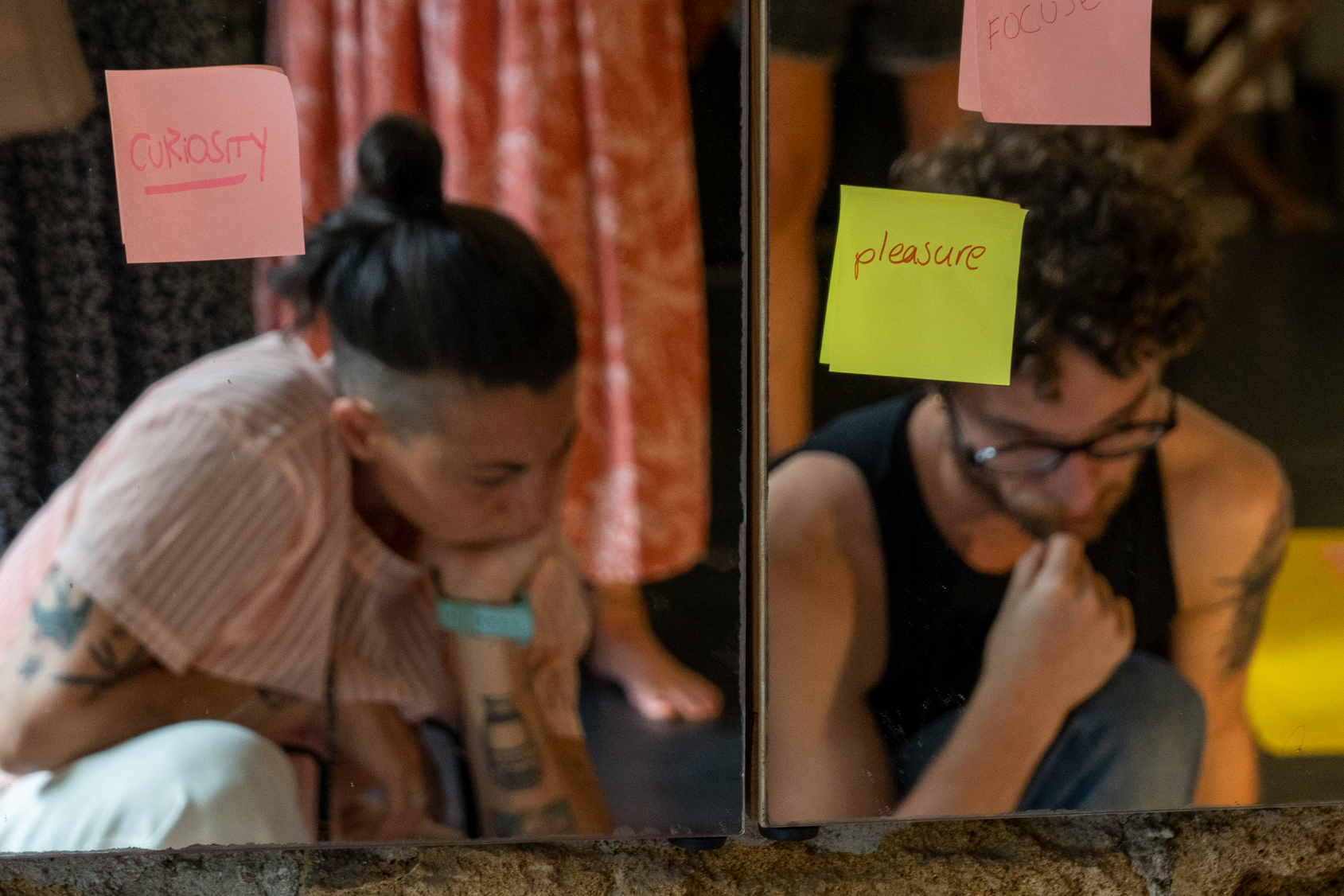
It was also in this context that the idea of planting words in space emerged. Words as germinated seeds, as proposed by master Nego Bispo. What remains are the words, practices and love letters that were planted within the space and continue to circulate beyond it.
What we worked on together was not only a set of questions but a way of inhabiting language as something that not only describes but sustains relationships and shapes how we remain together rather than alone.
REFERENCES
SANTOS, Antônio Bispo dos. A terra dá, a terra quer. São Paulo: Ubu Editora; PISEAGRAMA, 2023.
FANON, Frantz. The Wretched of the Earth. New York: Grove Press, 2004
ZACCARINI, John-Paul. Falling: The Thought of Circus. Stockholm: Stockholm University of the Arts, Circus Department, 2017.
MORE ON the previous editions of LA PAROLA AI CORPI
2025]
The Human Capital in the Arts: Creative Alchemy, Human Networks and Fairness
2023]
Dismantling Circus: research practices and radical change in the performing arts