
360° Circus & Dance: Public Presence as the Ultimate Rehearsal


Traditional theatre takes the audience as passive spectators; however, in the circus, the relationship between performers and the audience has never been confined to this single layer. From its very beginning, the circus has been a performance woven together by the shared breath of performers and the audience, with the spatial environment constructed by the circus creators serving as the starting point. The 360° Circus & Dance program from the CircusDanceFestival in Cologne uses its open-air format to inherently incorporate the audience into the performance's framework from its initial setting.
Regardless of how brilliant their previous works may be, the selected emerging artists must adapt to this venue, recalibrating the relationship between their bodies, the space, and the audience, which in turn influences the rhythm of the work's composition. On such a circular stage, how to enter, how to move, and how to choreograph the perspectives formed by objects and human bodies become particularly fascinating aspects of this program. It is also where astonishing creativity and vivid originality can often be witnessed in these works.
If public presence is the spirit of the circus, this year's selected program leverages this characteristic to its fullest, making it impossible for the audience seated around the stage to remain detached. Instead, their emotions are allowed to flow with the spatial atmosphere cultivated on the circular stage.
Humour as a Democratic Bridge
In the context of the circus, humour is a democratic bridge that is both sharp and inclusive. Within the circus's inherent publicity, it is also the trait that is most capable of breaking the fourth wall and fostering audience interaction. The 360° Circus & Dance program is packed with performances that effectively use humour to captivate the audience.
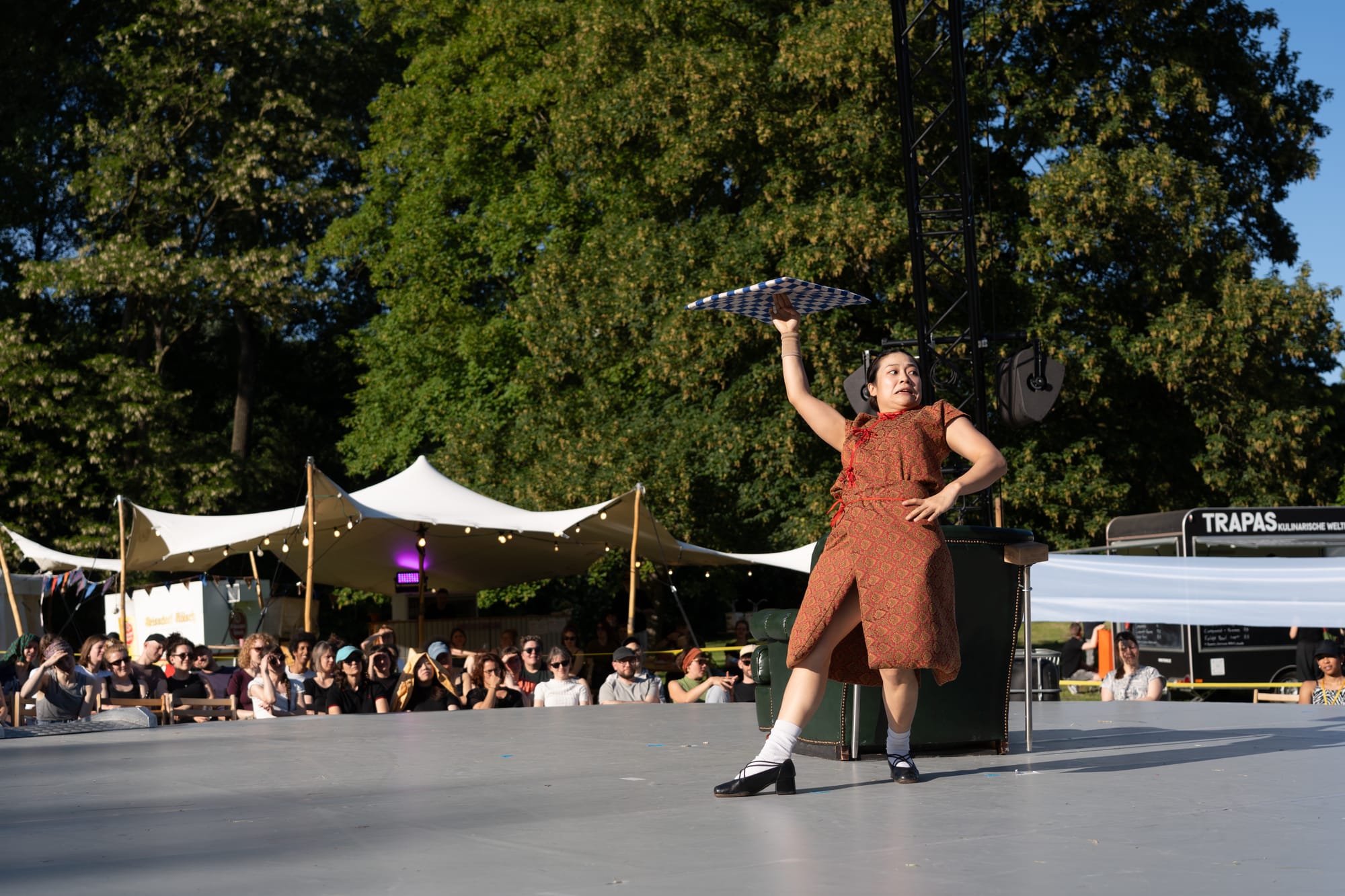
As the classic folk song ‘Rose Rose, I Love You’ plays, Shu-Huan Chang (BE/TW), dressed in a modified cheongsam, stumbles and tumbles onto the stage with her armchair. With a standard smile and precise movements, she performs the stereotypical woman, until suddenly diving headfirst into the armchair, accompanied by bursts of laughter from the crowd. Sous le sourire merges a clownish figure with traditional female imagery, using the armchair as a fulcrum to showcase exquisite foot juggling with a carpet. Wearing classic bright red lipstick and striving to maintain her pose, her limbs purposefully slip and stumble through masterful circus techniques, yet her facial expression never falters. It is a performance that perfectly balances irony, humour, and technique.
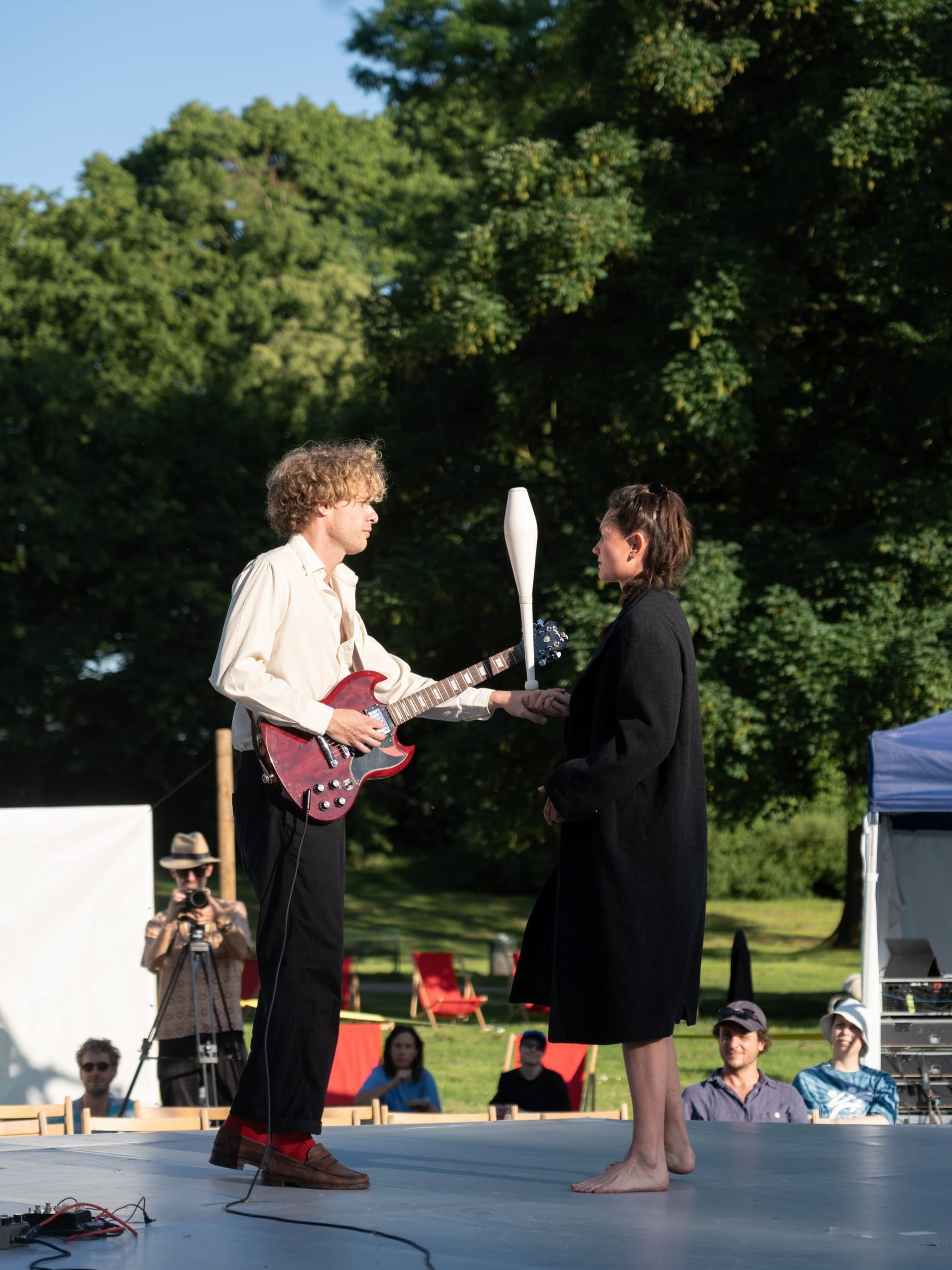
Exhibiting a similar comedic rhythm is Inside Out by Liza Van Brakel (NL) and musician Roel Vermeer, where music acts as the key, driving the entire performance's rhythm. Wearing an oversized jacket, Liza’s juggling clubs appear and disappear unpredictably through the garment, conversing with the music and guiding the audience's focus. Together, the stage and the audience weave a unique and highly engaging atmosphere.
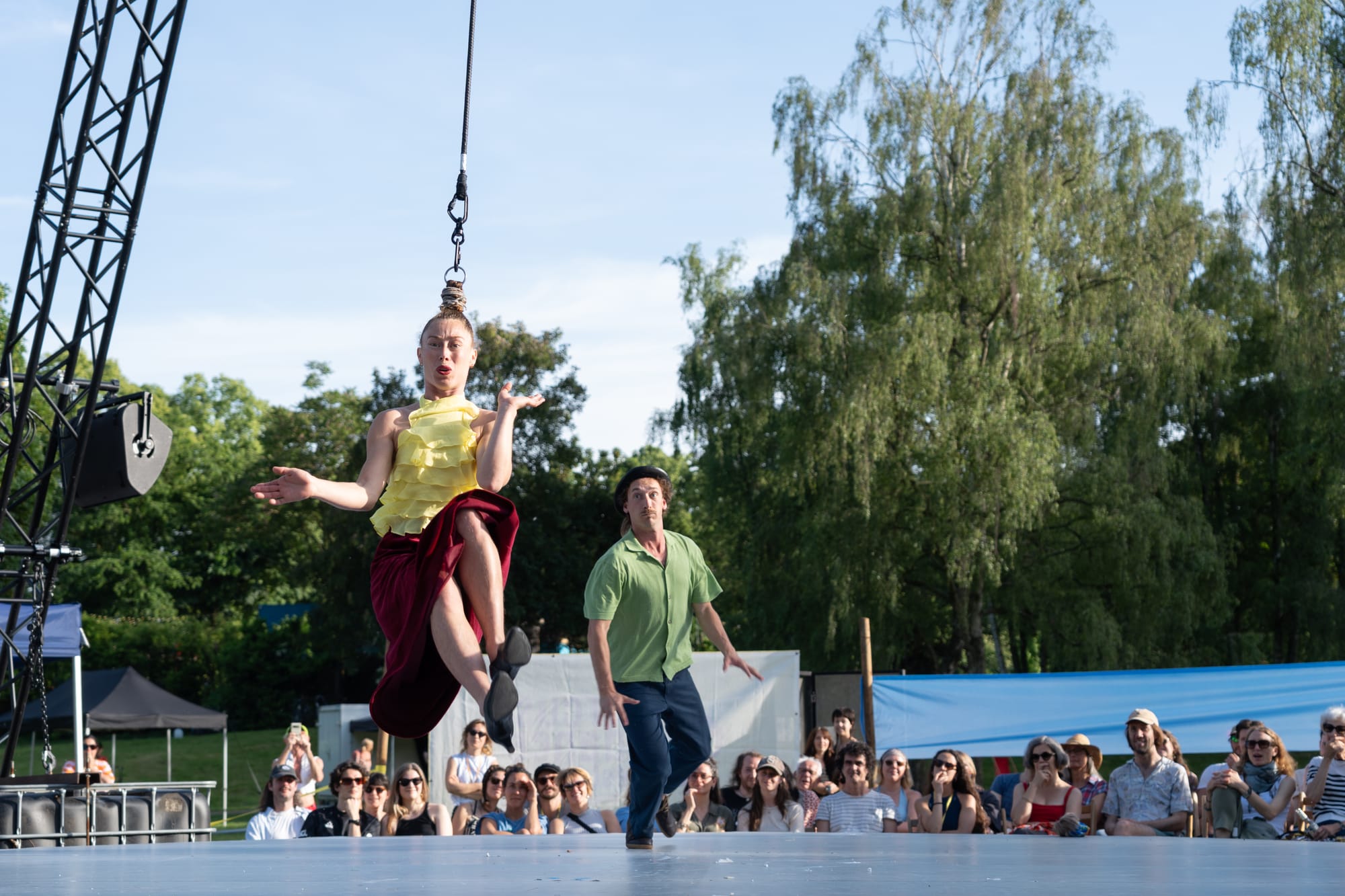
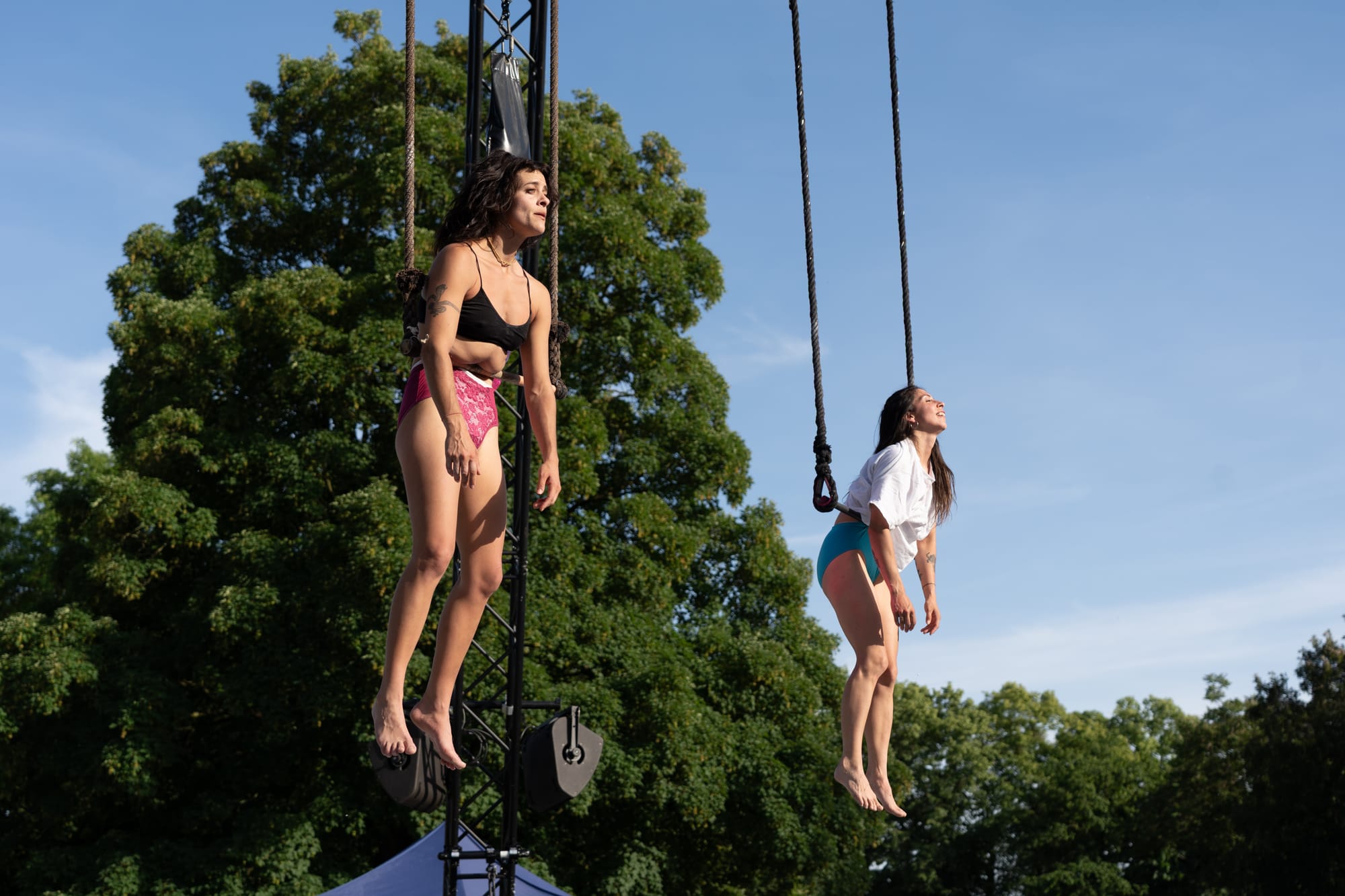
When speaking of Catalonia, one must mention the humorous DNA ingrained in their bones! They’re good at transforming mundane daily life into absurd and comical scenarios, and their use of ambiguity and linguistic humour is highly visible in the works selected for the Catalan Focus. The duo Cia Express, in Tango en suspenso and Otra Vez Lunes in This is not a love song, flawlessly execute self-mockery and an absurd physical vocabulary, respectively.
The former, using Tango as a foundation, blurs the boundaries between circus and slapstick theatre, incorporating abundant crowd interaction to command the audience's emotions with precise comedic timing. The latter presents the stark contrast of a heartbroken aerialist: no matter how profoundly emotion shakes their faces, their bodies remain as impeccably precise as machines. This contradictory friction interprets cliché romance in a deeply captivating way.
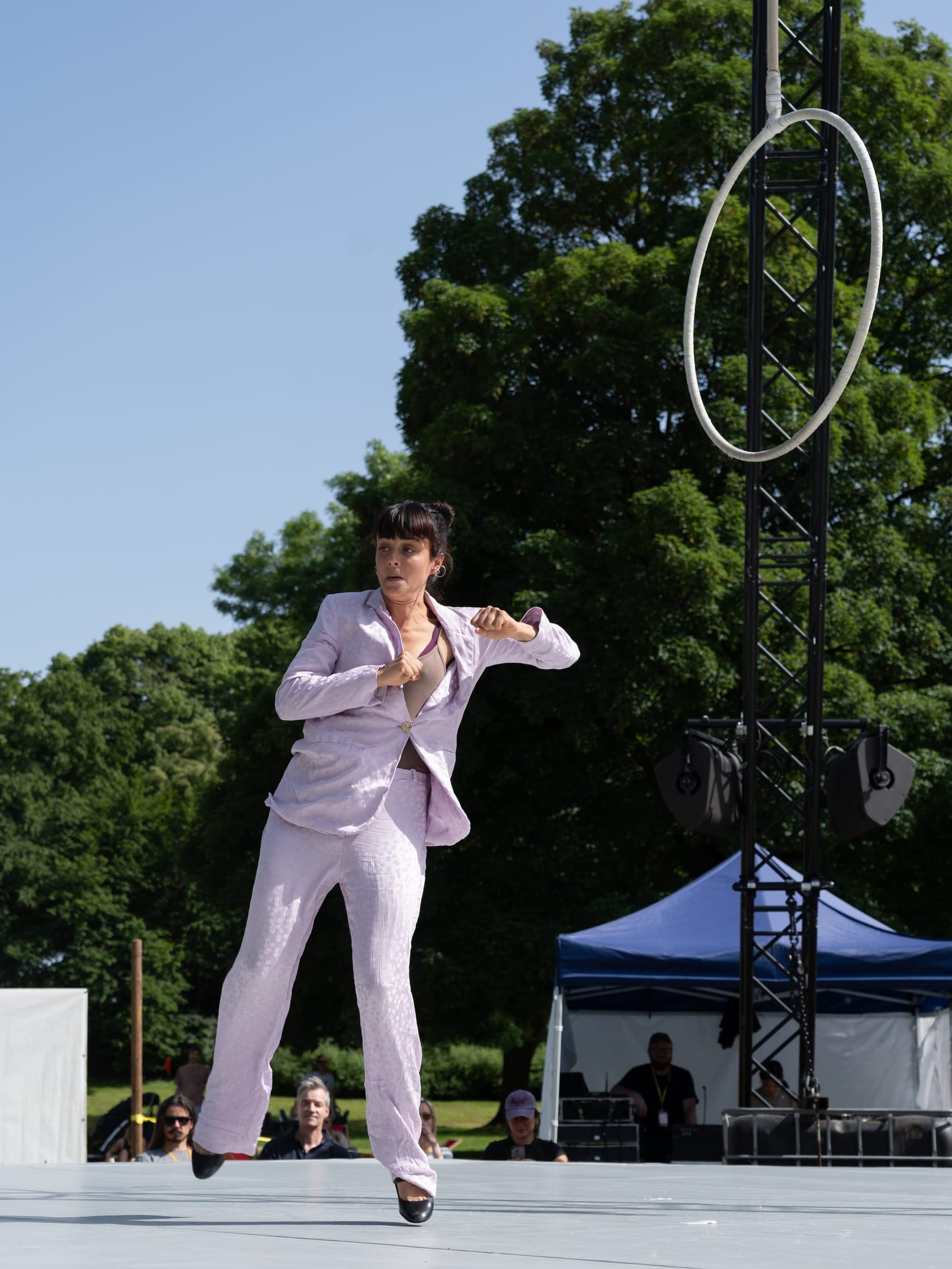
Similarly featuring aerialists, La signature by Company ATA (FR/BE) amplifies the unmasked personalities of the performers amidst endless leaps and gasps for air. It allows the audience to witness the true state of the performers in their pursuit of the extreme, evoking a sincerity that brings both laughter and tears. Through a highly humorous format, it satirises the mechanical training hidden behind the spectacle. Through masterful physical performances, these pieces cultivate a shared sense of absurd emotional resonance. They remove the invisible barrier between the stage and the audience, leading the spectators to surrender their full attention amidst laughter and quietly become an integral part of the performance.
Poetic Fusion in Between Circus and Dance
As a display of acrobatics pursuing absolute control and precision, the circus represents bodily order. However, when the circus intersects with contemporary dance, the introduction of "instability" shifts the pursuit of spectacular perfection toward a physical loosening. It unveils the inherent vulnerability and beauty of a body teetering on the edge of gravity and loss of control. Woven together into a highly poetic performance practice, this fusion grants the audience a space to breathe, think, and experience beauty while holding their breath.
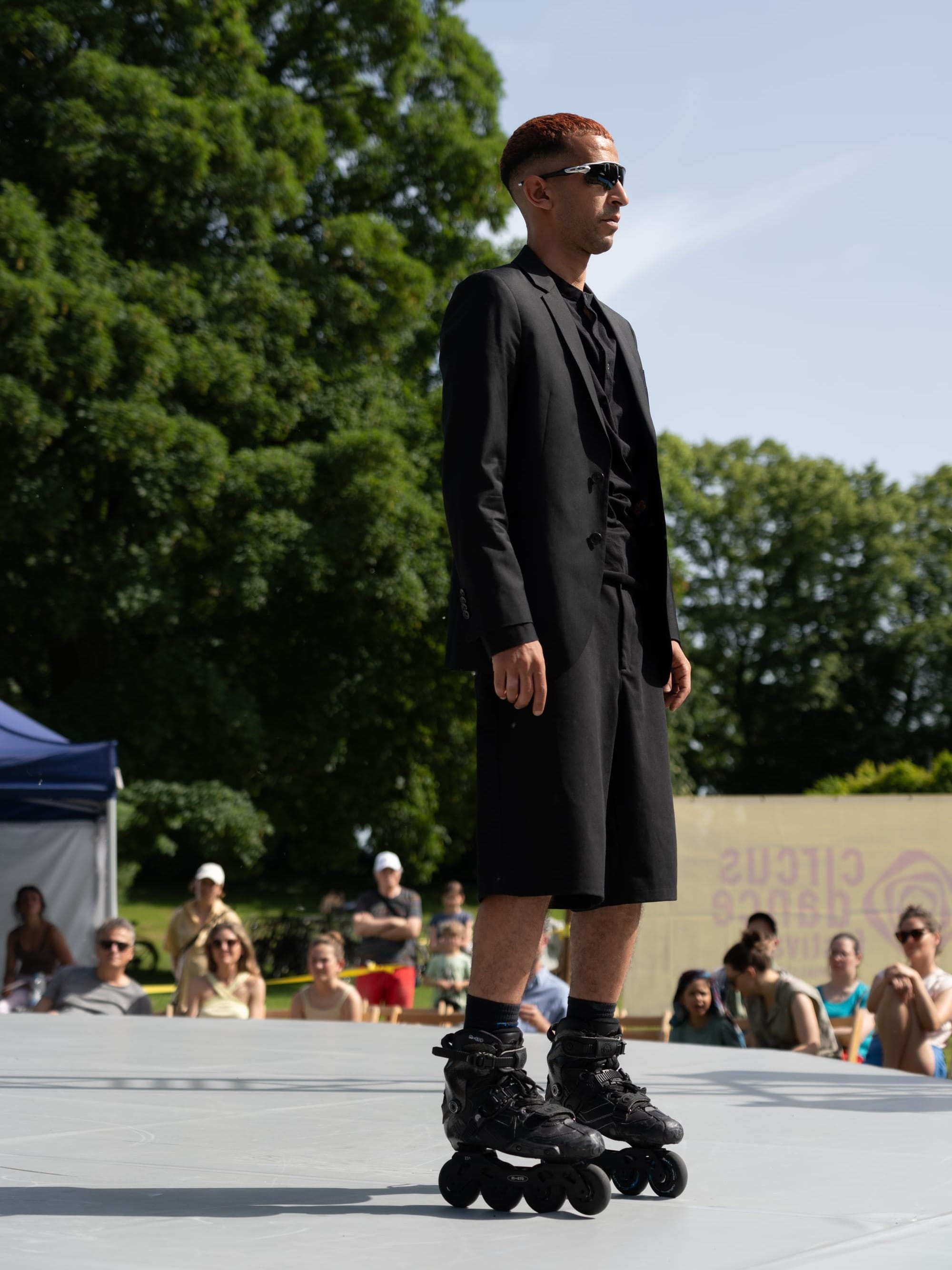
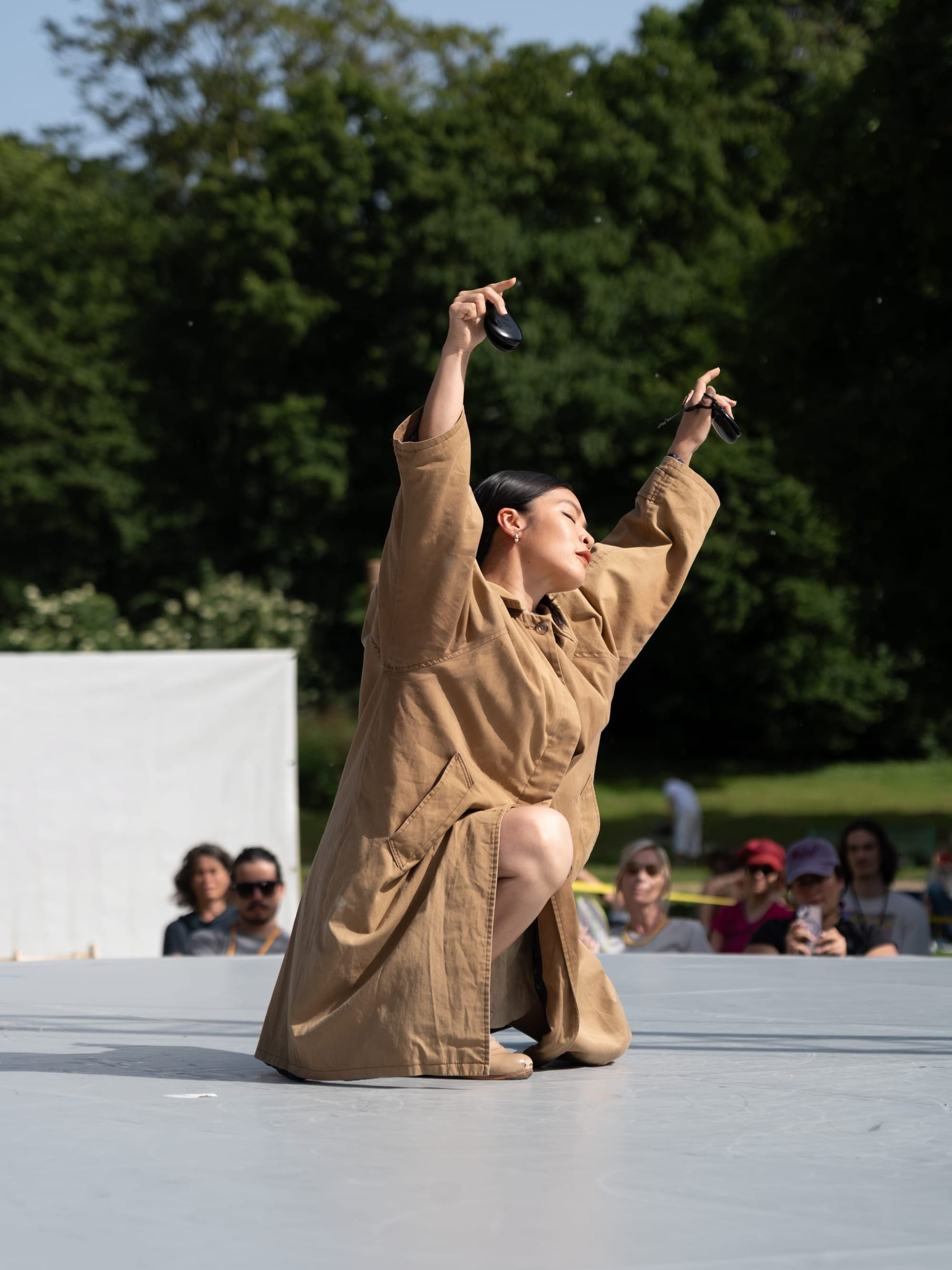
Mohammed Ech-Charquaouy (MA/FR) in Traces and Yu-Hsien Hsueh (ES) in Risa y olvido / Of Laughter and Forgetting broaden the scope of dialogue on stage using their native dance disciplines—hip-hop and classical Spanish dance, respectively. Using inline skates, Mohammed initiates a physical conversation with gravity and space, translating it into a poetic visual vocabulary. Meanwhile, Yu-Hsien interprets a poem through the forceful and dynamic techniques of Zapateado, drawing the audience deep into her inner world through her movements.
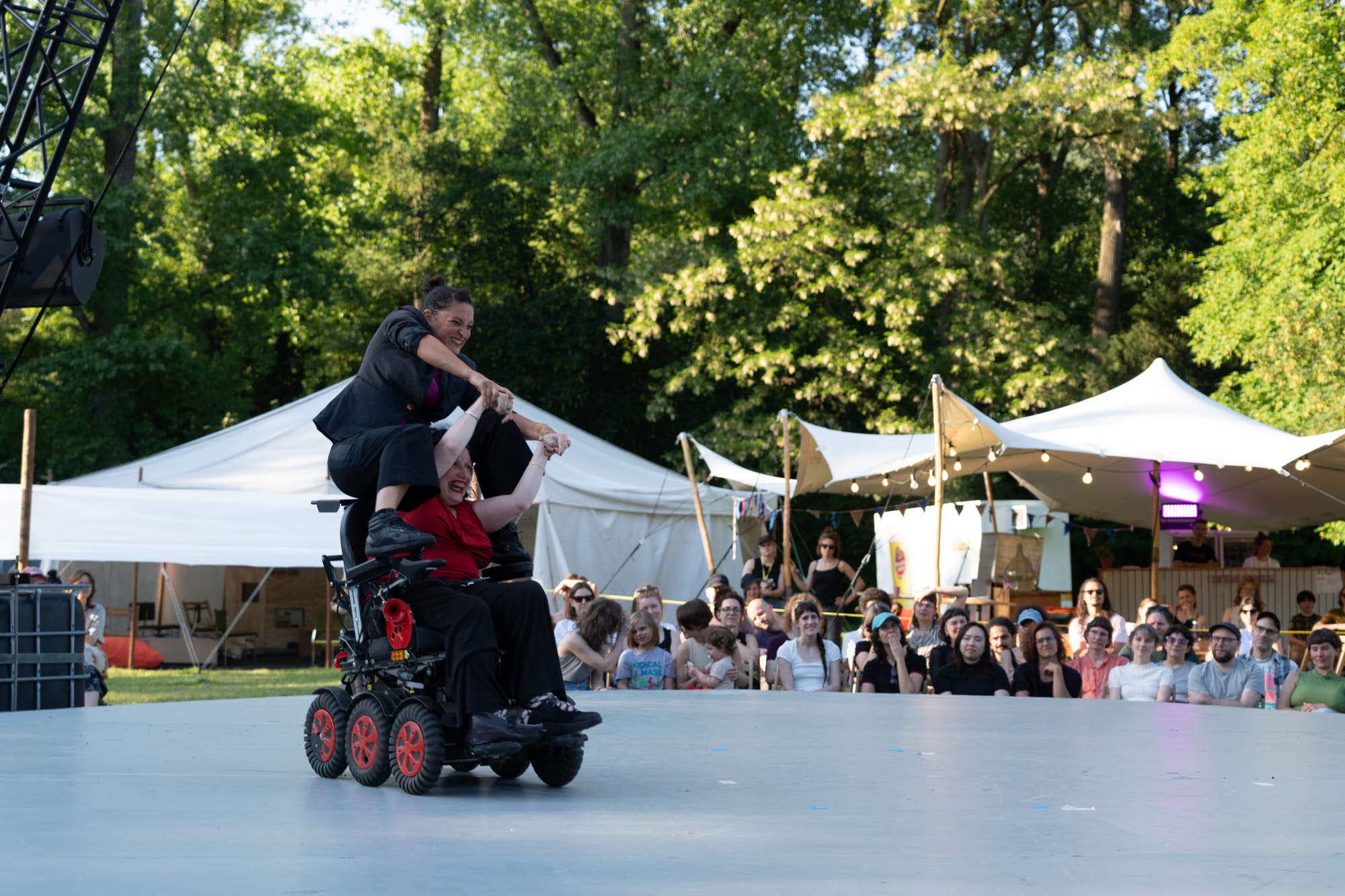
Duets also demand mutual balance, complementarity, and the flow of energy. It’s a poetry perfectly interpreted in both And I throw myself in your arms and CLINCH. Starting from different body states, Marie Mercadal and Sophie Lombard encounter one another, testing each other's speed and limits while seeking balance in the middle. They blur the lines between circus and dance, turning their fragile connection into the key that draws out the audience's emotions, revealing a unique beauty within their respective movements.
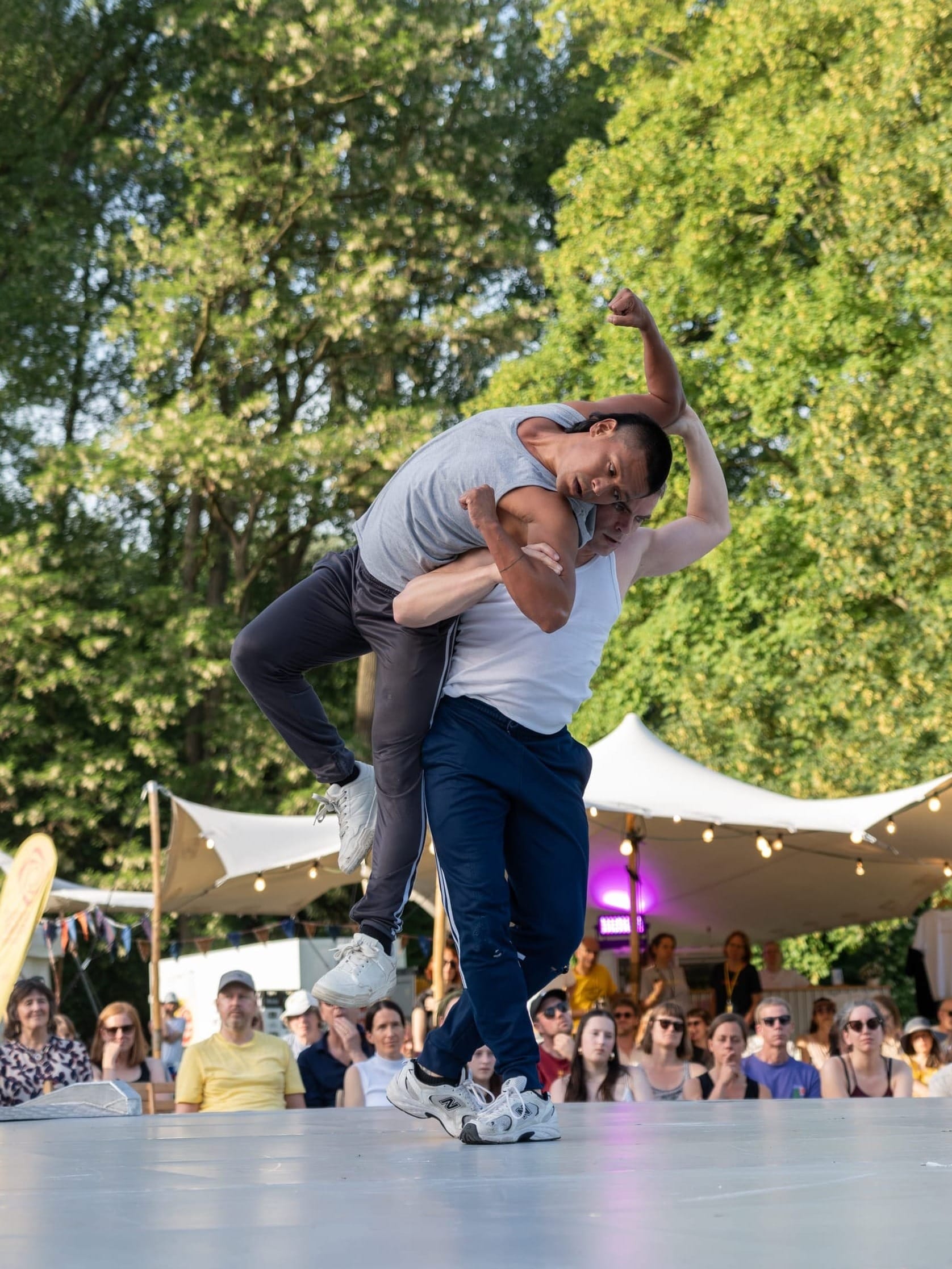
Subtitled "Men don’t touch, they hit", Yeinner Chicas and Angèl Duran in CLINCH display a masculine duet that rejects intimacy, suspended between confrontation and repression. Rather than attempting to move the audience with beautiful, fluid choreography, they question contemporary toxic masculinity through a tension fraught with contradiction and discomfort.
Objects as the Second Body
Returning to the core realm of the circus, allowing objects to become the performer's second body is an eternal, mesmerising charm that makes it impossible to look away. Years of cohabitation between circus artists and their objects strip the props of their status as lifeless tools, sometimes even reversing their subjectivity to become another body. This allows creators, through their interaction, control, and submission to their second body, to guide the audience in re-reading the relationship between circus artists and their objects.
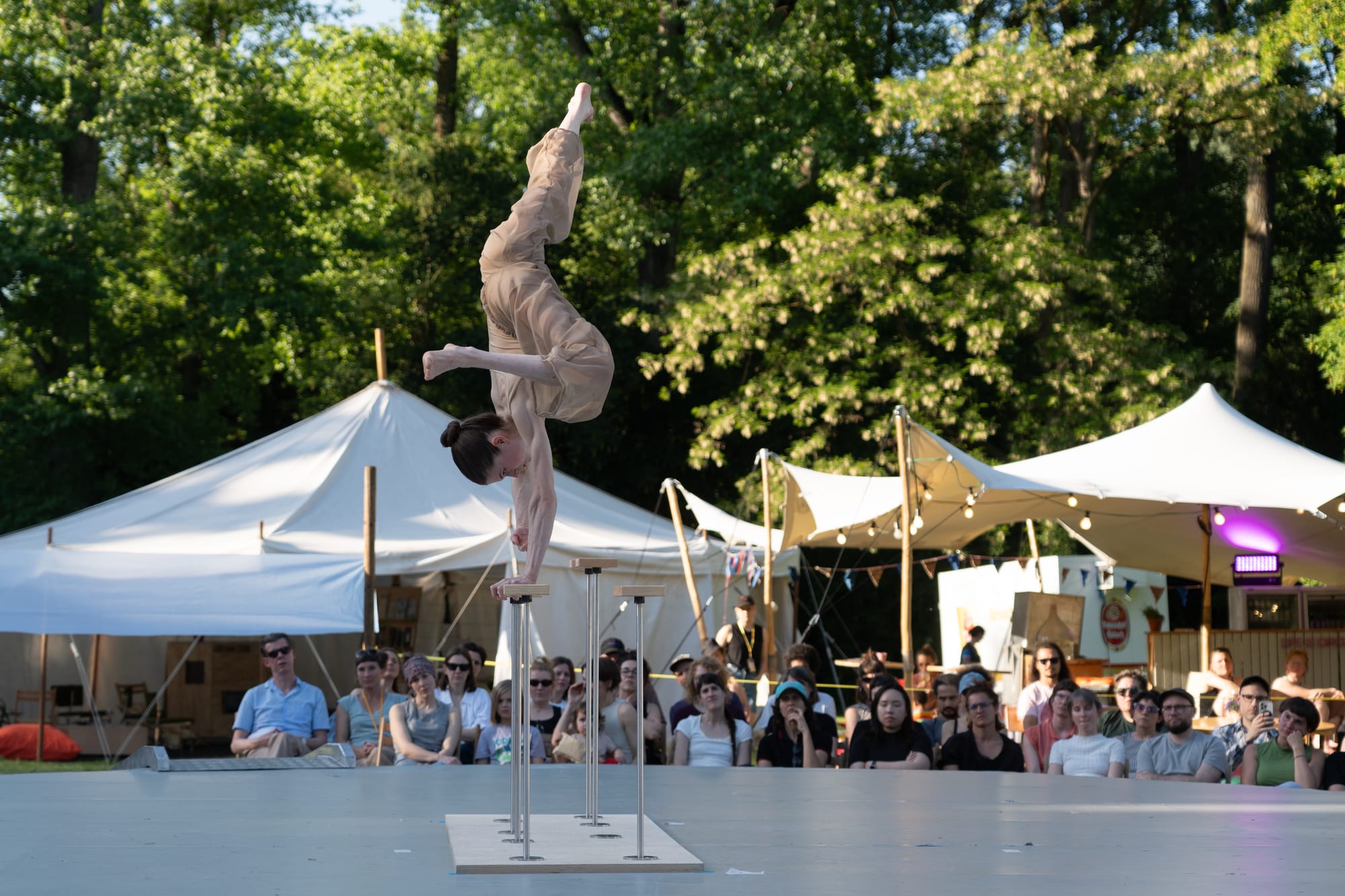
In Still dwelling, Johanna Gorzellik (DE) uses handstand canes to construct a precarious, fragile, yet profoundly tranquil space for herself. Unlike the usual tension associated with hand-balancing acts, her inherent serenity and gentleness transform the space into an entirely different character. What the audience sees is not intense acrobatics, but a slow, stabilising power, much like a steady, flowing stream.
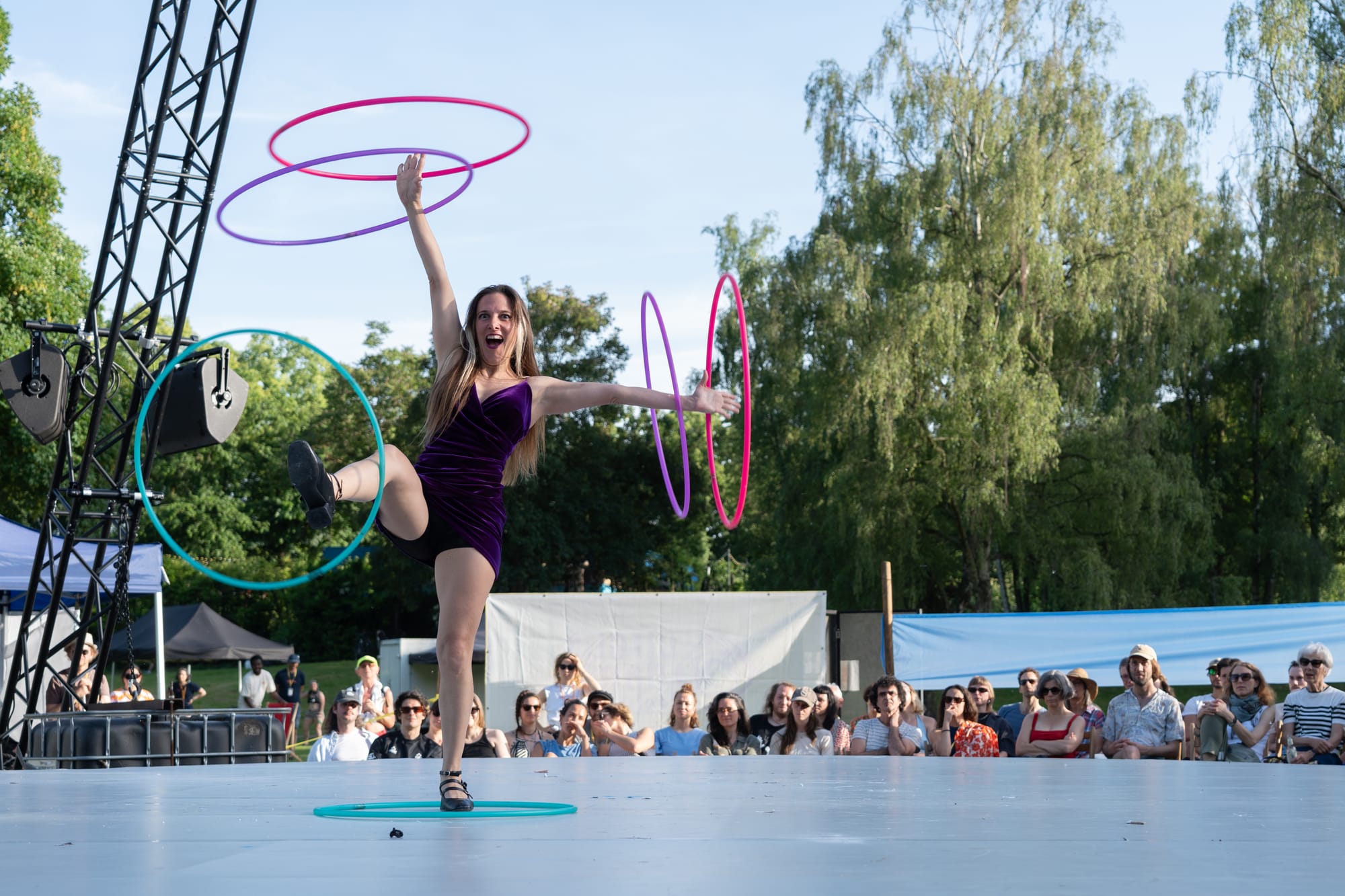
Nuria Luna Llena (CAT), who ties her hair to a hula hoop, merges with her object from the very beginning. Universal, sal! unleashes the performer's own passionate and vibrant energy. Using learning as its narrative, it illustrates the process of an object gradually becoming a second body through continuous, progressive challenges. Historically, the circus was regarded as a dangerous art form where performers pushed the human body to its extreme limits. However, this year's works reveal that contemporary circus artists care deeply about the embodiment of participatory aesthetics. Through humour and character setting, they freely exhibit irony and absurdity, questioning the contemporary situation; yet, they do not do so in a serious or preachy attitude, but rather in a relaxed, humorous, and captivating way—a distinctly circus way.