Imago Mundi: the speculative minimalism of SYMBIOSIS

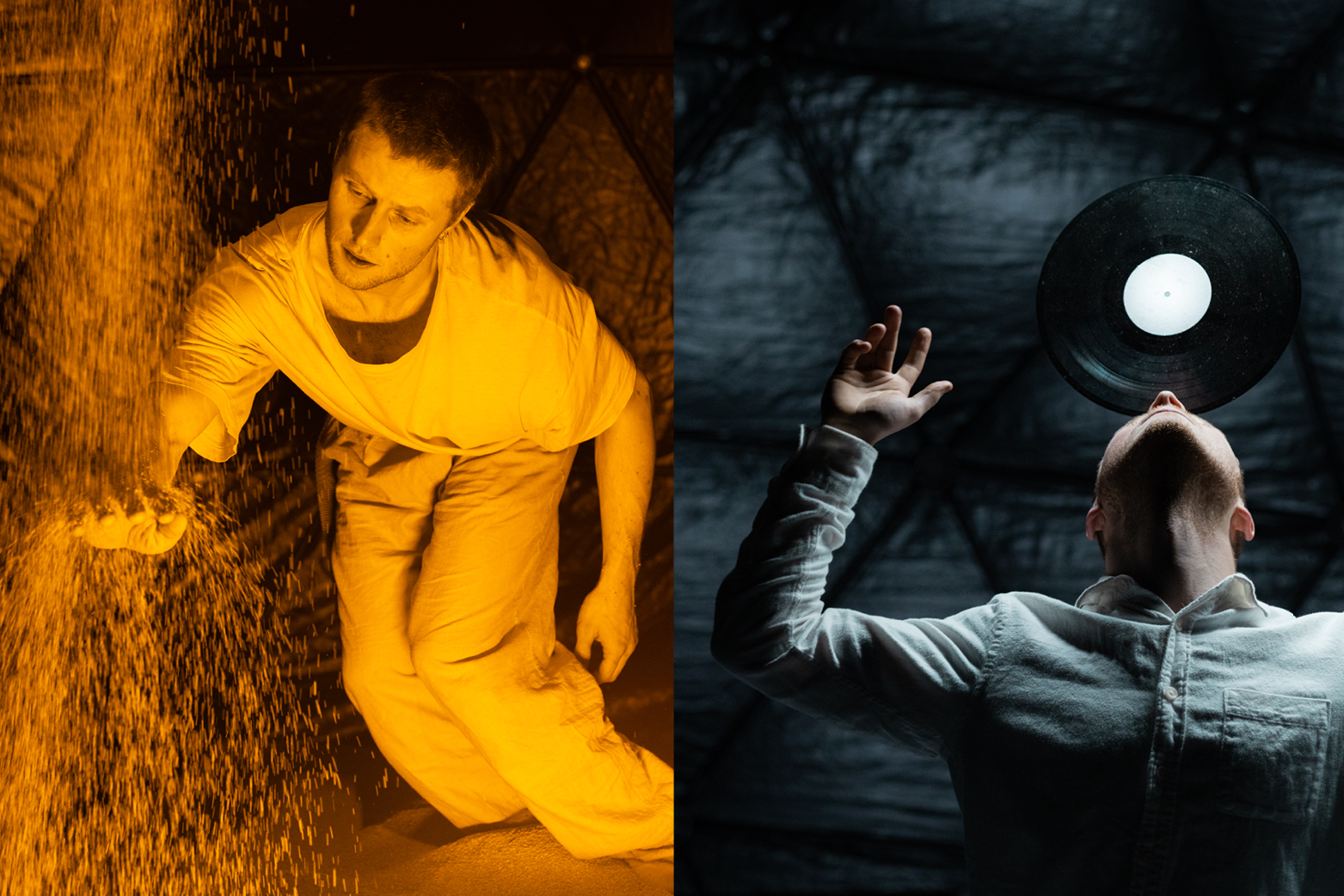
Presented at the 2026 edition of UP Festival, SYMBIOSIS by Luuk Brantjes and Kolja Hunek proposes speculative, futuristic, and at times dystopian engagements with object manipulation, suspension, juggling, and balance work.
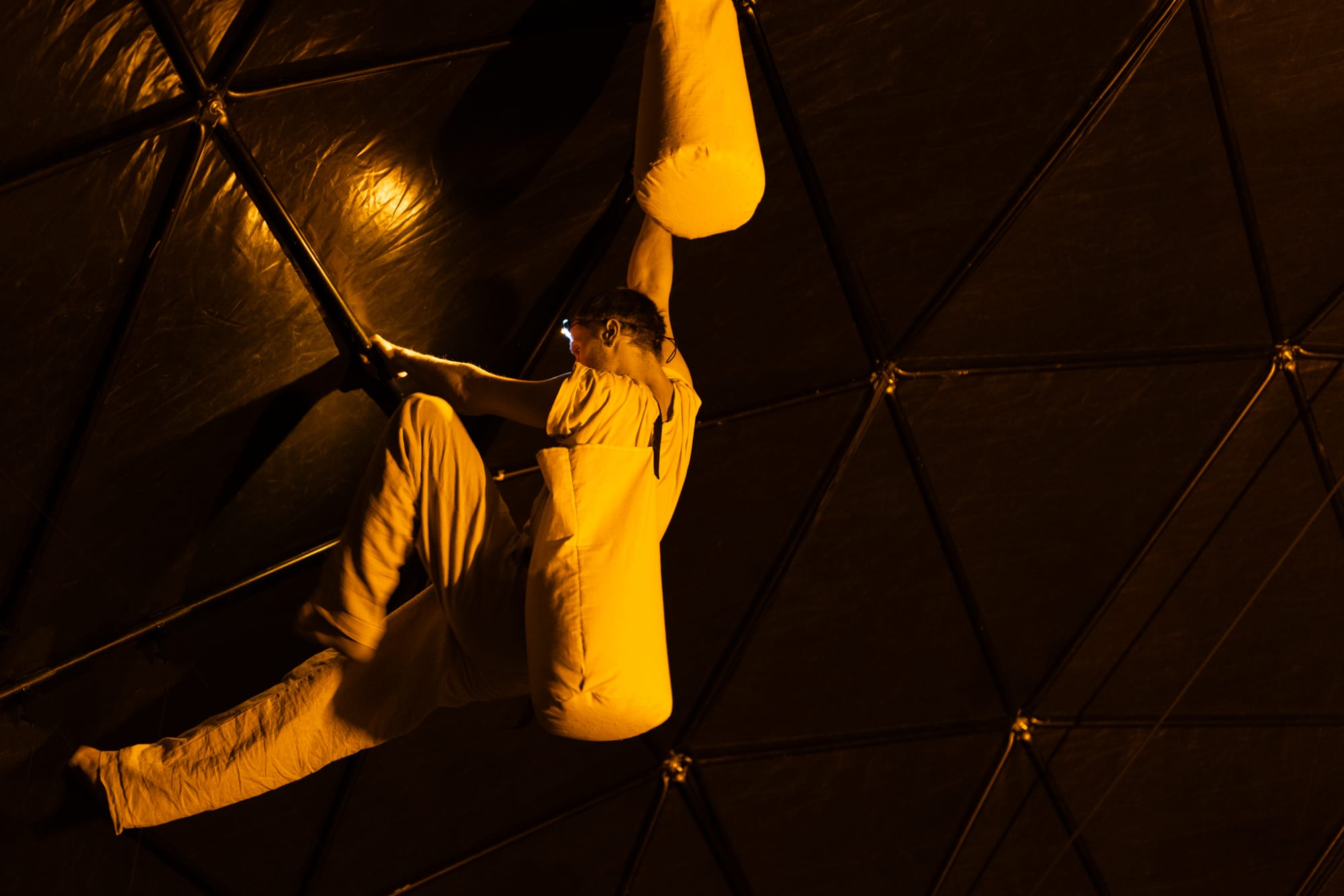
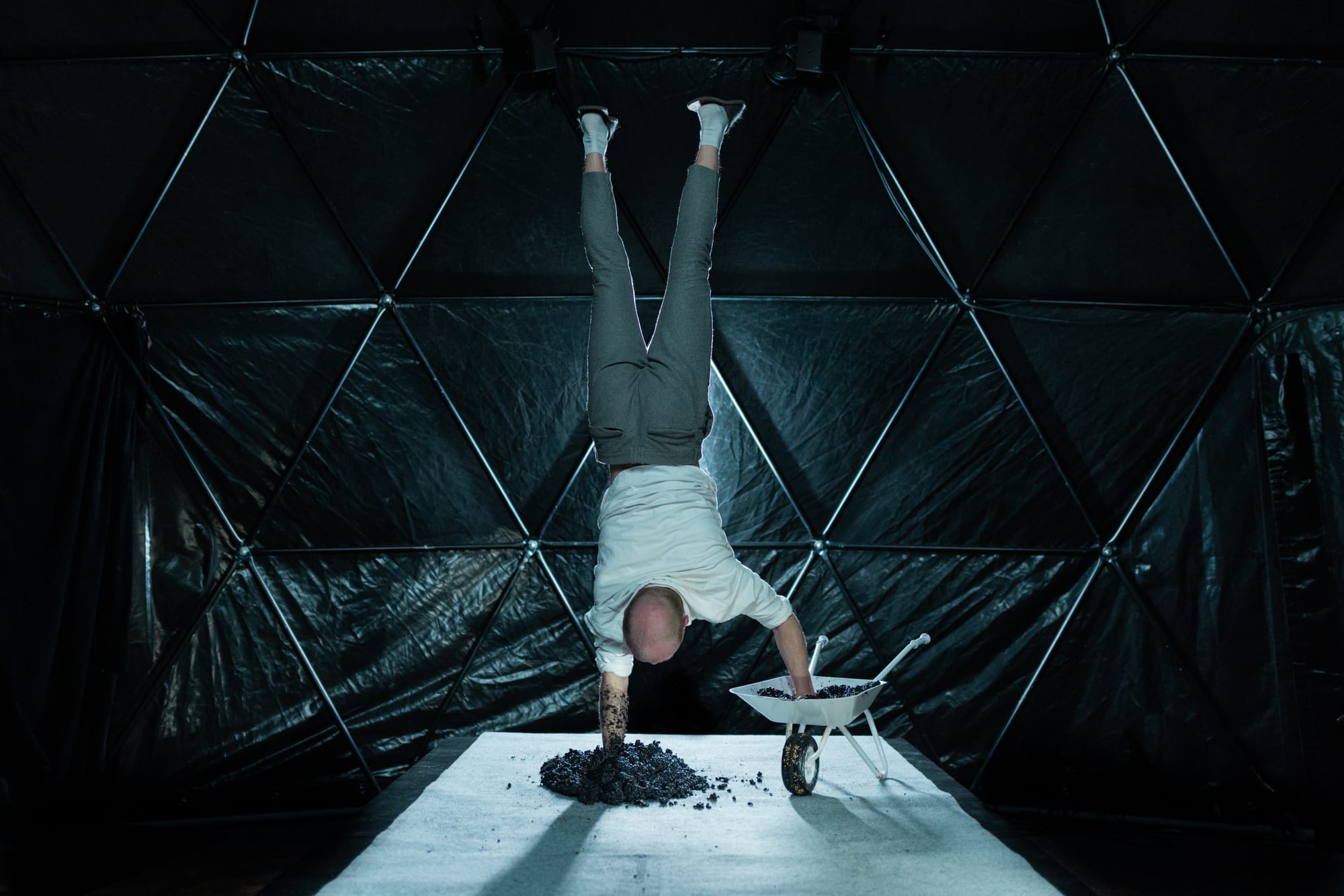
World-building in intention and effect, the performance offers a “non-hierarchical” view on what encountering non-human elements and forces may look like; earthly elements (cork, asphalt) journey from their functions in stage design towards new lives as circus dispositif: materials are generously allowed ample space; granular elements are present in their plurality, which provides volume and movement, thus dramatically enhancing the encounter with the artist on stage. The circus work itself is self-effacing, carefully balancing its own virtuosity in this universe built on attention, aesthetic discipline, and stylistic caution.
Monochrome, minimal, and controlled, SYMBIOSIS respects clear spatial axes and operates within an autonomous temporality: the vertical and horizontal are organised and activated by specific rules, while the time of the performance is more formally defined by duration, repetition, and engagement, rather than succumbing to normative narrative rhythms.
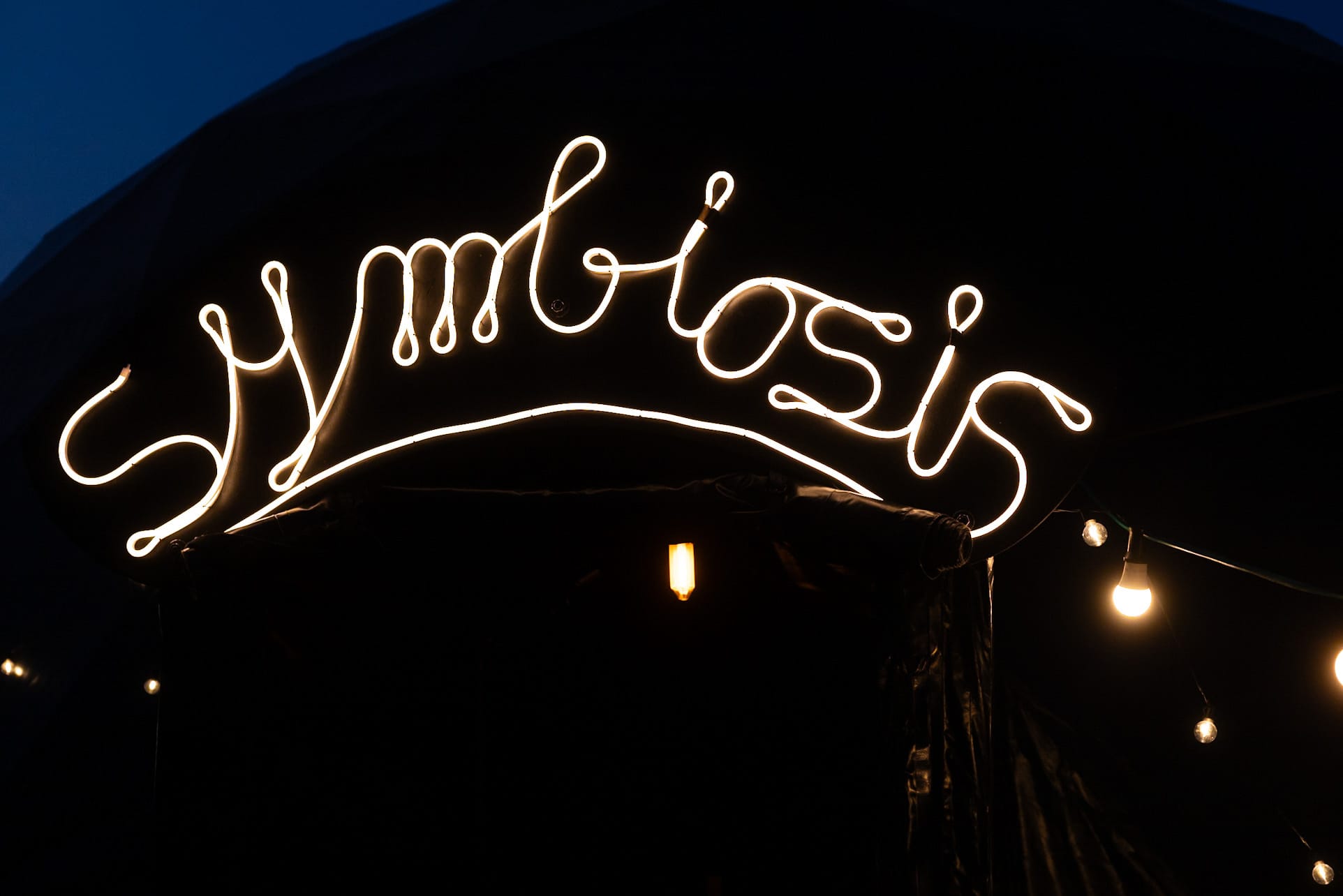
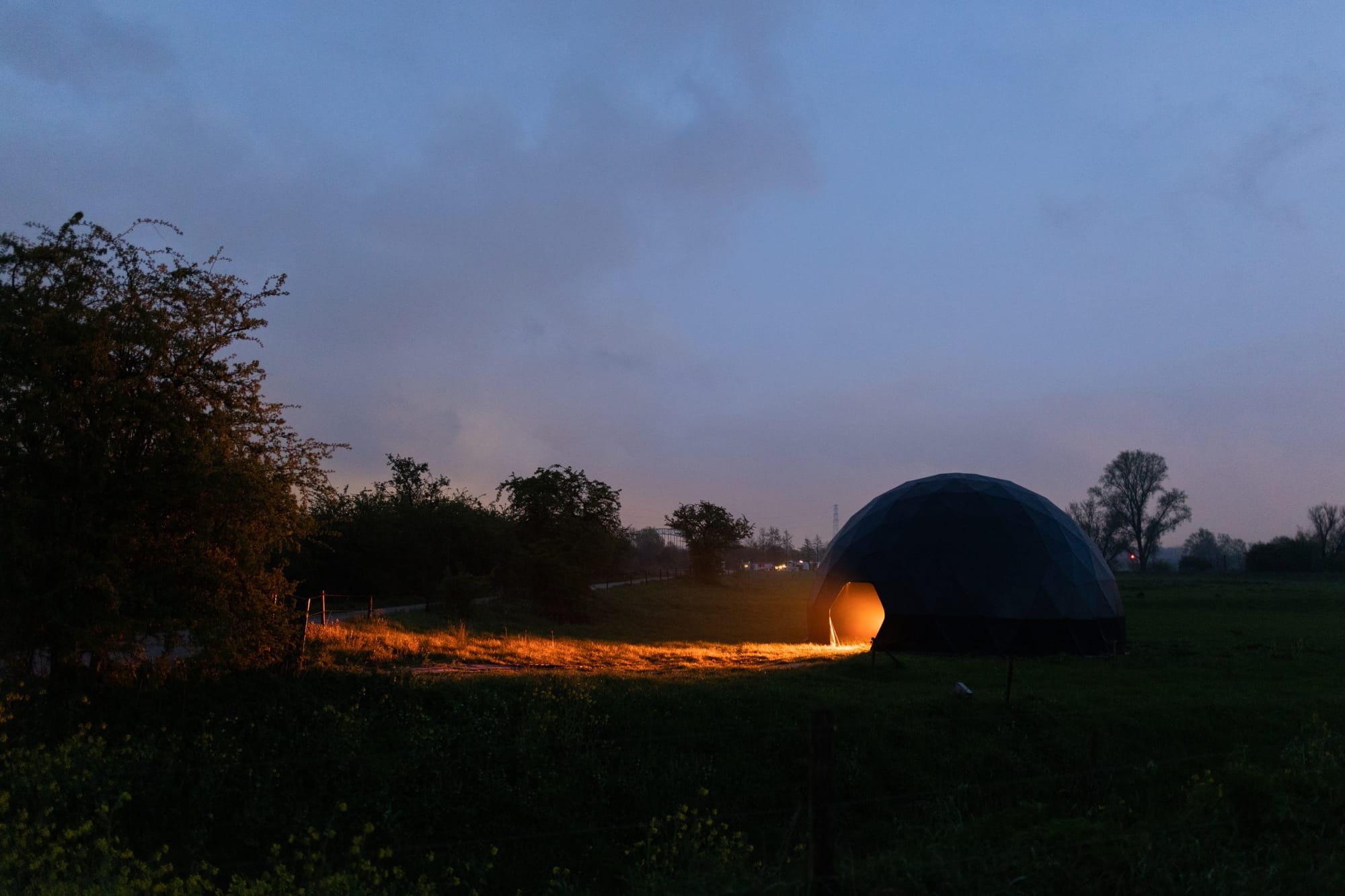
A more practical aspect to support the overall cosmology of SYMBIOSIS is, of course, the custom dome in which the performance takes place, which allows full control over the formal and affective conditions in which the performance meets its audience. The structure itself becomes an apparatus, a source of stability, and a membrane that shields the different symbiotic relationships it fosters.
Somatically, the performance creates striking images, likely to become long-lasting imprints with the viewer; the design and stylisation overall seem measured and meticulous, as they resist becoming decorative. Although defined by minimalism, the performance is not austere; rather, it is peppered with quirky dualities and witty contradictions, which may leave one with a healthy suspicion that things are not what they seem. But this is circus, so they likely are!
Curious, intrigued, and overall delighted, I wanted to hear from the two artists themselves on what brought them together, what the process of creation was, and what inspired this noir circus gem, now touring. Enjoy, below, an interview with Luuk & Kolja!
Is this your first collaboration on stage? What brought you (and kept you) together? How do you complement each other when it comes to creative methodology? Where in your careers and circus practice did you individually come from to join the building process for SYMBIOSIS?
LB&KH: Yes, it is our first collaboration on stage. We have been studying together for two years at Codarts Circus Arts in Rotterdam and have stayed in close contact, also when Luuk continued his studies at SKH/DOCH in Stockholm. After our graduations in 2019 and 2020, respectively, we both started solo projects - I created CM_30 and Luuk created LONE - in which we supported each other technically, artistically and emotionally. At the same time, we individually strengthened our experience with new magic; Kolja followed the course at CNAC and Luuk through BETA Circus. This common interest was one of the starting points of SYMBIOSIS. We were dreaming of touring with our own venue, where we always have the same conditions, audience angles and can play in all directions and dimensions. For us, it really opened up the possibility of shaping a universe, not just a performance. We were also intrigued by the nomadic touring style with a mobile venue and the possibility of bringing contemporary circus to regions with limited cultural infrastructure.
Both of us have backgrounds in different circus disciplines. Luuk as an acrobat with the teeterboard and Kolja as a juggler with various objects and materials. With these two different artistic languages, we fertilised each other's research and discovered overlapping fascinations, such as the interaction with cork in Luuk’s universe and Kolja's manipulation of asphalt.
What artistic principles/values underscore your work for Symbiosis?
LB&KH: We both enjoy pushing the boundaries of our existing circus practice, objects, materials and apparatuses. Interacting in a humble and listening way with non-human elements and being moved by the agency of objects and materials were the core principles that accompanied the creation of SYMBIOSIS. We worked towards finding cross-pollination between the objects/materials guiding us and us guiding the objects/materials.
SYMBIOSIS is a “diptych” - which expectedly may lead the audience to search more actively for meaning and connections between the two artistic proposals; the viewer may be more attuned to contrasts, juxtapositions, and everything in between the two elements. How have you landed on this format? How did this format impact the dramaturgical work on the show?
LB&KH: The term originates from two paintings or artworks presented just next to each other, and form one bigger artwork that can not be ripped apart. The diptych format of SYMBIOSIS was developed throughout the creation process. What started as a double bill or a performance with two completely separate chapters became one intertwined piece with two contrasting universes. We continuously found more and more possibilities to link our two worlds and scenographies, so that the atmospheres, performers and materials meet throughout the piece. In the finished piece, the universes and bodies need each other, for example, to be in the light. The title SYMBIOSIS is based on collaborative life in nature, for example, when a tree exchanges nutrients with a certain fungus in the ground and both benefit or depend on each other, even though there is no direct communication.
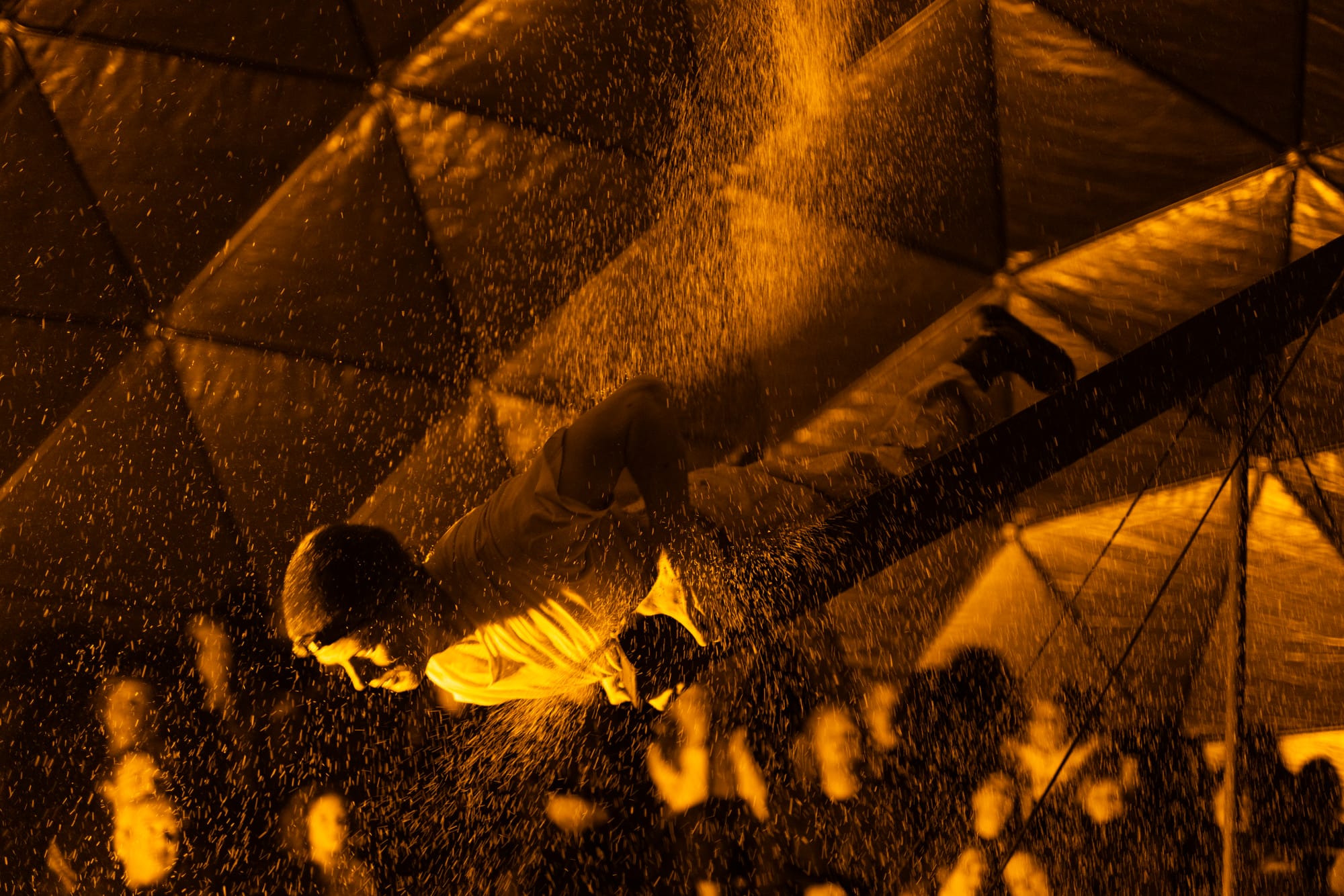
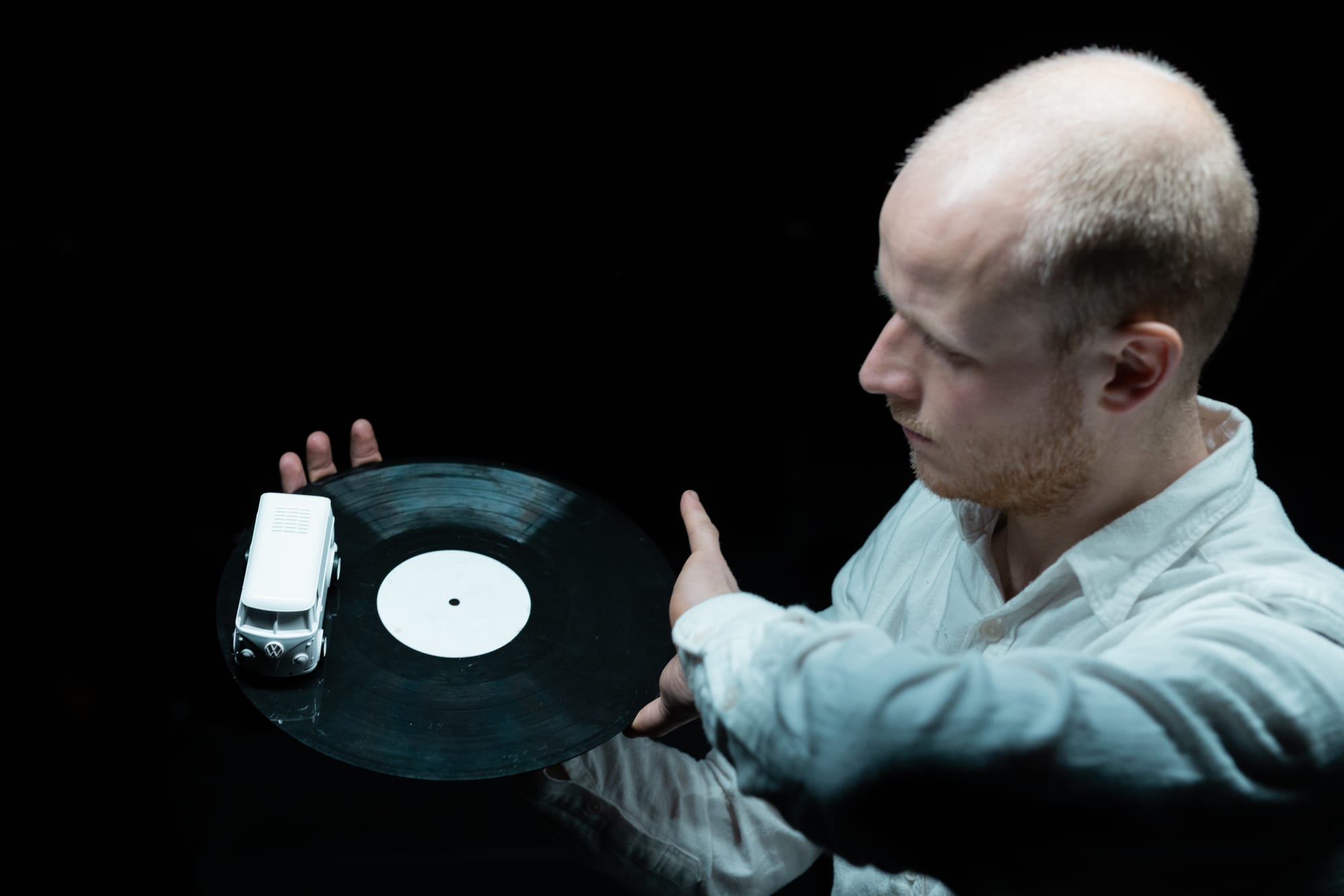
It was challenging to puzzle all ideas together into one coherent dramaturgy and to foresee the dramaturgical impact of the order of actions. At the same time, the technical and logistical restrictions were also influencing the flow of the piece. For example, once the sandlike material of Luuk’s world is introduced, it influences Kolja's rolling the vinyls on a surface full of grains.
What can you share about character work in the performance?
LB&KH: We are both individual characters within our universes, but still meet through looks and directing focus and light on each other. Through our specific circus languages and a deep connection to our grainy transforming materials, we differ from the traditional heroic circus performer who masters his materials. One goal was to enter a non-hierarchical dialogue with the non-human elements on stage.
When it comes to repertoire and a sort of “expectation” of what your disciplines or apparatus can deliver, your performance takes some interesting steps towards interrupting the viewer's expectations. How do you position yourselves as circus creators when it comes to innovation and the factor of surprise? How do you search for new scenic material?
LB&KH: We both love being magically surprised, moved and immersed in art, but also in nature, so we also like to create moments like that in our work. To play with the audience’s expectations, to give the stage to everyday objects such as vinyl, but also to modify and extend circus apparatuses; it all presents a nice challenge for developing a new artistic language. Through improvisation with the vocabulary, new ideas appear that then evolve into scenic material - often accompanied by technical inventions and crafting sessions.
There’s a luxuriant presence of material and textures in the performance, which seems to drive the movement work, as a type of embodied curiosity towards these materials - what draws you towards the materials you use? Do you see them as an organic aggregate, as debris? Are you seeking to build something, or revelling in the aftermath of a breakdown that left you with all this sediment and rubble?
LB&KH: While Luuk’s research with sand and similar materials started as a physical counterweight for his solo teeterboard and turned into a stage-covering playing partner, Kolja was captivated by manipulating different transforming materials such as ice, slimy liquids and wax. Some materials just create a fascinating feeling when you interact with them, while others have surprising or repulsive qualities for the audience. Shapable materials such as piles of sand or clumps of asphalt open the possibilities of changing debris into something beautiful or magical. At the same time, asphalt and sand have a very destructive and drying-out impact, especially on nature, which can create interesting associations for the spectator.
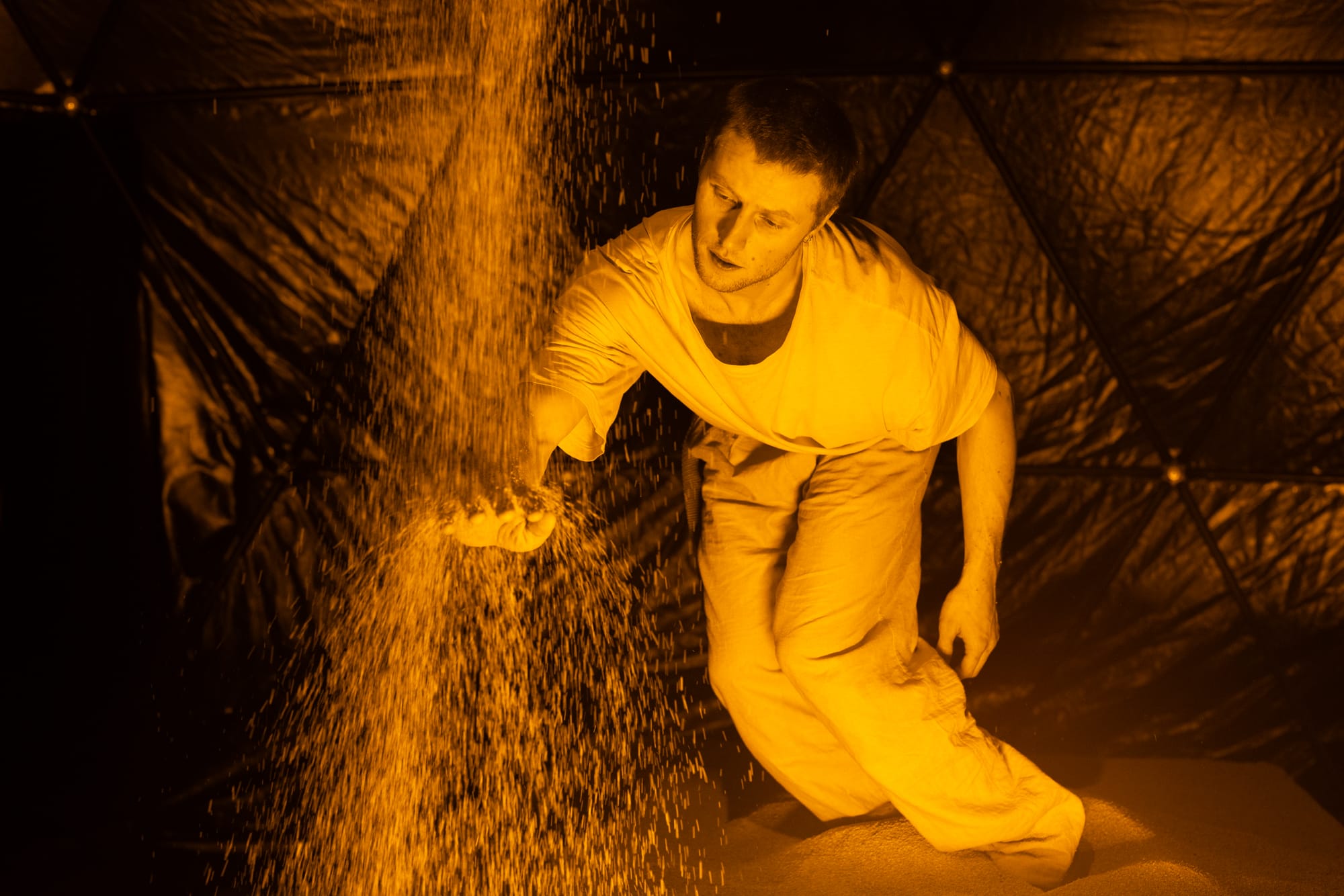
The aesthetic proposal in your performance is quite striking, and it stirs the audience affectively and somatically, but some elements may remain (maybe preferably) unexplained. Can you share more about this aesthetic of the absurd, the inexplicable, and the purposefully obscure?
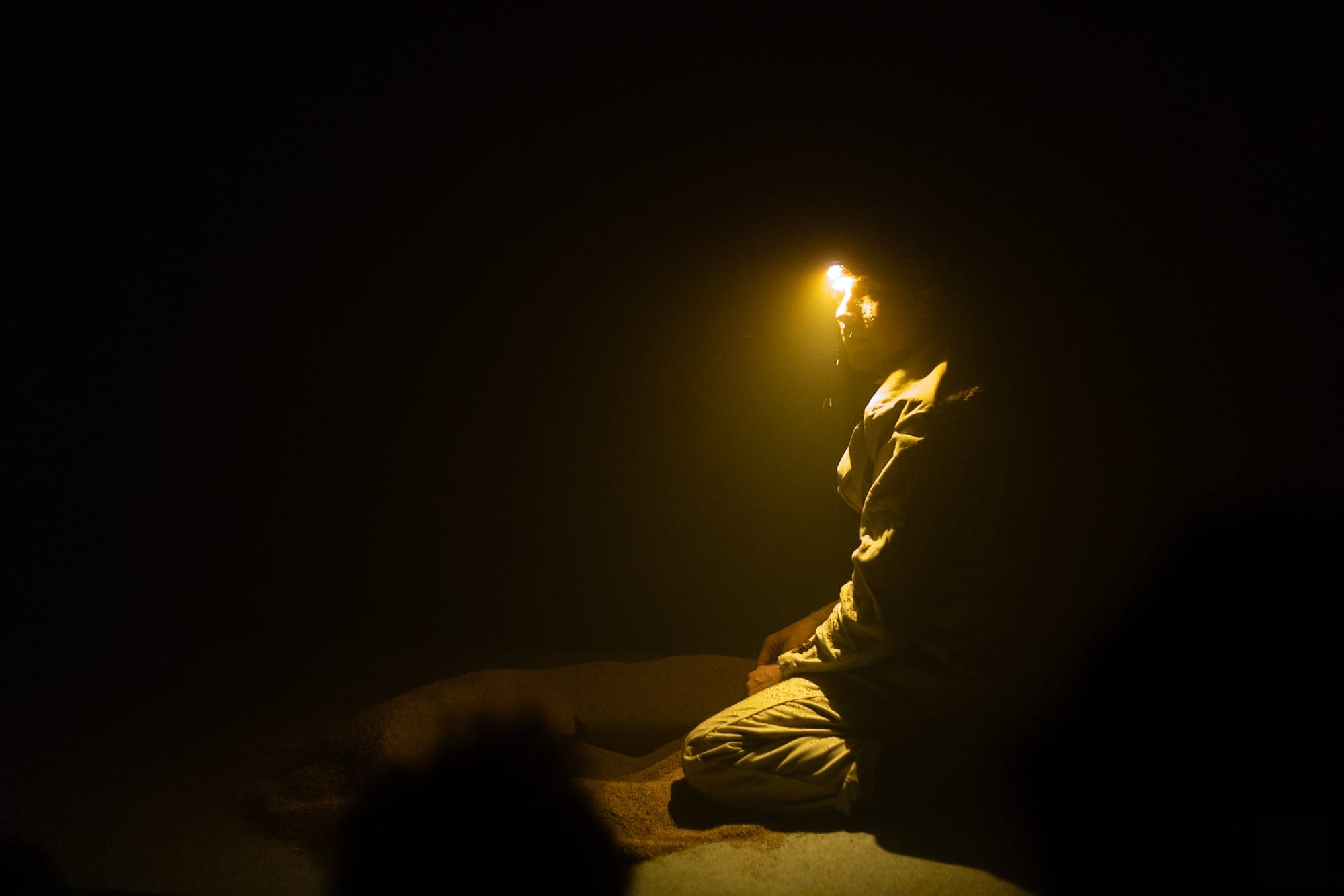
LB&KH: While the general atmosphere in the dome tent is quite dark, we think that the magical surprises, but also the absurdity, bring a bit of light and twist into the piece. Even if you don’t really know why an absurd action makes you giggle, it helps digest the seriousness and inexplicable moments.
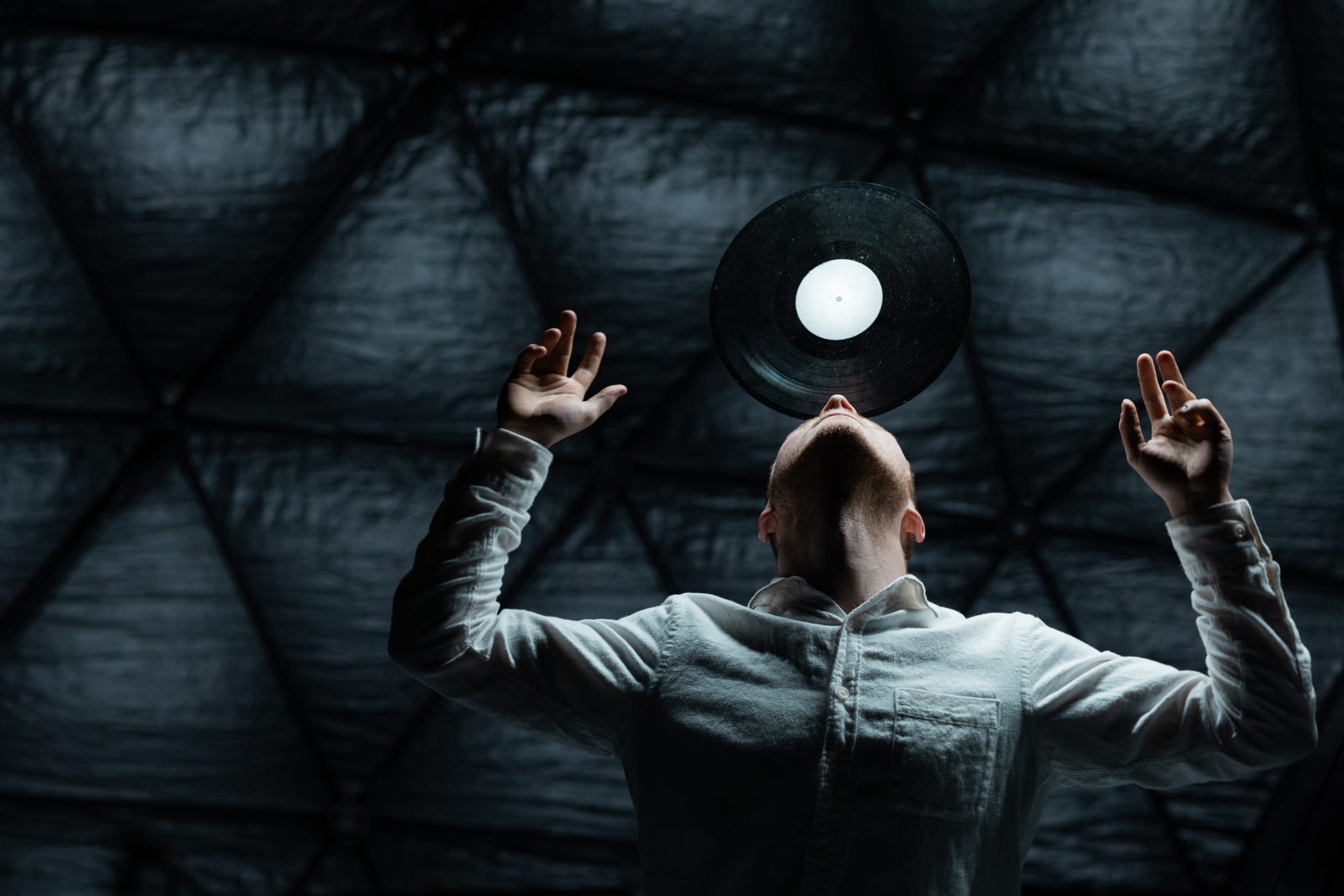
You designed your own tent for this performance. What does that give you, functionally and aesthetically? How do you situate your performance in the broader culture of tented circus?
LB&KH: Next to the consistent and controllable technical conditions mentioned above, we very much enjoy inviting the audience into our very specific universe. It would be very difficult to create the same experience in typical theatre buildings, where the entrance or audience placement is always different. Of course, in a tent, there are other changing factors such as weather, temperature, and sounds from the outside, but still, the audience feels they enter a cave or a molehill where they are absorbed by different physics, smells and sensations. With the special geometry of the tent - it’s a geodesic dome - and the black tarp, the tent is very different from traditional circus tents, so we don’t think the audience enters with expectations that a typical tent would evoke.
What’s next for SYMBIOSIS and for you?
LB&KH: First of all, we will tour SYMBIOSIS - next to our other solo and collective works - as much as possible in the upcoming years and hope to reach diverse audiences and many places with the piece. After all the work we have put into the infrastructure and the creation, the piece grows and develops through performing. While Kolja is happily carrying around his little son in between touring finished works, Luuk is part of the new collective creation of Cirque Galapiat Il va pleuvoir, premiering in 2027.