Zeit für Zirkus Cologne 2025: a contemporary scene in the making

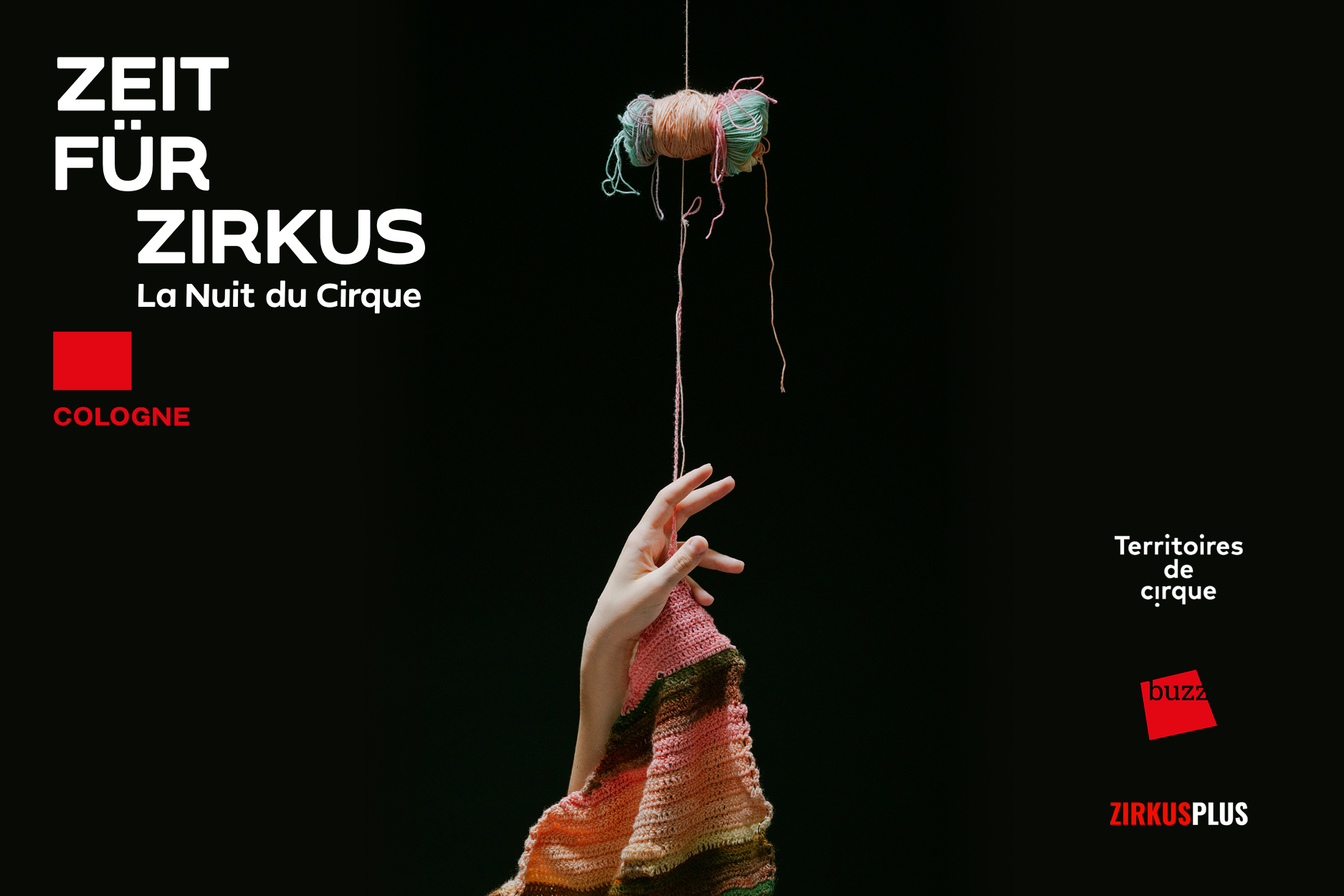
Last year, from November 14 to 16, Zeit für Zirkus presented contemporary circus on stage in several cities across Germany and brought it to life at the international La Nuit du Cirque. Over the course of a weekend, a diverse programme of performances, workshops, exhibitions, parties, online formats and activities has been offered across the nation, accompanied by the format Zeit zum Reden [Time to Talk], this year's discourse programme, which has organised discussions, encounters and exchanges in collaboration with seven national venues. As an artist and writer myself, I contributed to covering the 2025 festival edition in Cologne with the initiative Zirkus-Blog. Together with a pool of writers, we produced seven articles, now translated into English for Around About Circus. Here’s the first of a series, dedicated to contextualising the initiative and introducing the opening night of Zeit für Zirkus Cologne 2025.
Zeit für Zirkus has begun. The festival takes place simultaneously in several cities across Germany, with the Cologne edition opening at the CCCC - Creation Centre Contemporary Circus. Warm and inviting, the building glows through its large windows into the night, drawing in a steady stream of visitors. Over the past months, local circus artists have been in dialogue with venues throughout the city, developing a varied programme. This diversity now unfolds over three days and across Cologne: at the Kölner Künstler:innen Theater, the House of Architecture, the Heumarkt subway station, Latibul’s circus tent, the Kulturbunker Mülheim, and Schauspiel Köln.
This year, Zeit für Zirkus in Cologne welcomed my initiative, Zirkus-Blog, which aims to increase visibility for contemporary circus in Germany and connect the genre to a broader audience. When I gave shape to the idea of the Zirkus-Blog, it was with a simple goal: to give contemporary circus artists in Germany more visibility and to open up this vibrant, young art form to a wider audience. The idea arose during my research on how circus performances are covered in German media. I realised there were very few reviews and even fewer writers able to see beyond technique. As an artist myself, I wanted to create a space where stage and text could meet, offering fresh perspectives. That gap inspired the blog format: a platform for different voices, with no fixed format—each of us chose how best to capture and share our experiences.
For the first edition, I brought together a group of five people: Mareike Lyssy, Vanessa Melde, María Arenas Romero, Thaddäus Maria Jungmann, and myself. Some of the collaborators have particular experience in writing on dance and other forms of performance, while our combined perspectives, including my background in contemporary circus, allowed us to approach the festival with a wide-ranging view. Cologne is the perfect place for this pilot project: alongside Berlin, it is home to one of Germany’s most active circus scenes. With its CircusDanceFestival and the CCCC, the city is calling for national and international artists while building visibility and better professional structures for the circus field. -Before the festival weekend, we met for an inspiring workshop led by Thaddäus Maria Jungmann.
Through our articles, we’ve aimed to capture not only performances, but also their current social and political context of contemporary circus, as explored in the festival’s accompanying discourse program Zeit zum Reden. The texts were published on ZirkusPlus and Zeit für Zirkus’ website.
The discourse program Zeit zum Reden called for dialogue, which responds to an ongoing movement within the German circus scene to establish more platforms and networks for contemporary circus on a national scale. Eleven events were curated by the BUZZ, in cooperation with regional partner venues such as the Chamäleon Theatre in Berlin, the LOFFT – DAS THEATER in Leipzig, the Societaetstheater in Dresden, and Tanzfaktur in Cologne. The format provided a space for artists, cultural professionals, audiences, and stakeholders from multiple German cities to come together. Topics covered included expanding and improving working structures for freelance circus artists, possible strategies for navigating an increasingly precarious cultural landscape, and the role that circus art can take in today's society.
Zeit zum Reden created spaces in which these perspectives could be actively questioned by bringing together a wide range of stakeholders from the cultural field. In Cologne, for example, local artists and representatives of the circus scene — including Suse Beschorner of CCCC and Daniel Patschovsky of Latibul — met with members of the city’s Cultural Space Management, representatives of performance venues and city councillors. The discussions focused on the precarious situation of freelance circus artists, due to a deficit of sustainable structures, adequate venues and long-term funding. At the same time, the meeting sought to make visible the scale of Cologne’s circus community and to underline the urgent need for improved working conditions for this innovative art form.
In an international context, the structures of contemporary circus in Germany still differ considerably from those of leading countries such as France and Belgium. For many years, artists and advocates have been striving for greater visibility, more stage space, and better financial resources from cultural policymakers. In many German contexts, 'the circus' is often still perceived as a fixed, traditional entity, rather than as a dynamic, diverse field within the performing arts. However, the German circus landscape continues to undergo significant change as it seeks to claim a stronger position within cultural policy and public discourse.
Zeit für Zirkus Opening at CCCC: A Multi-Course Evening of Contemporary Circus
The 2025 festival edition in Cologne opens with brief glimpses into the diversity of contemporary circus, shaped by punk, poetry, and playful precision. The opening night at the CCCC is a format in its own right, a taste of all the performances scheduled for the weekend, where you can sample the variety of shows on the programme.
At the CCCC, the hall opens up like a labyrinth. Four stages extend behind partition walls. On one side, a bar; on the other, a Chinese pole framed by hanging clothing racks. Countless meters of black rope run through the space, threaded over pulleys, through carabiners, knotted along the walls, or pooled on the floor. The audience searches for pathways behind large tarps to reach the first performance area. Once there, they move through the evening as a multi-course composition, encountering eight short excerpts from performances to be presented over the coming festival days. Works by fragil und kollektiv, Duo Fort Willy, Kollektiv UNANiM, Pamela Banchetti, Clara Köpf, Hippana Maleta, Benjamin Richter, and others offer an initial glimpse of what is to come.
A hilly landscape at the edge of a forest. In its midst stands the artist Benjamin Richter, dressed in a suit, a scarf blowing in the wind. Or is it a scarf? It turns out to be a long strip of paper. He lets it glide through the air until the figure in the wind seems to become paper itself—crumpled, curved, constantly reshaped. Human and object shift their relationship, and new images emerge in a continuous flow.
The evening unfolds as a layered experience of fragments, impressions, and shifting moods: clownish punk; a race against a treadmill; electronic soundscapes; videos from subway stations; reflections on the fast-fashion industry; children appearing both on stage and in the background; a DJ at work; stories from an older generation woven into knitted patterns. As an appetiser, a few words are offered by the organising team, the RheinEnergie Foundation, and representatives of the city. For around a year and a half, the former industrial hall on the Osthof grounds in Cologne-Kalk has been transforming into a space for contemporary circus. The opening act is Peter Pan by the Aerial Angels. Afterwards, the audience is guided through rooms within rooms, as multiple stages and studios form the performance and exhibition spaces of local artists.
It keeps running and running. The treadmill moves without pause, while Jonas Schiffauer and Alex Allison of Hippana Maleta balance at its edge. Electronic sounds set the rhythm. This time, white and red balls become the centre of attention, rolling onto the moving belt. The rule is clear: don’t let them fall into the void. While the treadmill sets the pace, hands guide the balls back to the start, rescuing them from the edge. Sometimes they roll back on their own; sometimes they are carefully repositioned, one by one, in rhythm with the music—synchronised, crossed, parallel, lying flat or stacked. What begins as a seemingly effortless game transforms into a pulse-quickening, almost living race against time.
Another shift of location leads to the clothing rack. From behind a deep blue velvet curtain, Clara Köpf steps forward, transforming the curtain into her dress. With a slightly forced smile, she poses for us like a doll. She takes a few steps, stops, rearranges her arms, and sways briefly. Her head turns toward the audience, and the smile distorts. The showroom moves upward, onto the Chinese pole. Long, flowing fabric coils around the pole with every movement, echoing the performer’s motion in material form.
From children’s pieces to emerging artists to seasoned performers, Cologne’s contemporary circus presents a layered composition of performances, each showing creativity, skill, and vision across generations. The local and international artists unfold a sequence of experiences, where every act brings its own spark of imagination, movement, and inspiration.
This article is part of the German project ZirkusBlog, which took place during the Zeit für Zirkus 2025 edition in Cologne. The coverage of Zeit für Zirkus - Zeit zum Reden, organised by the BUZZ - Federal Association of Contemporary Circus, is sponsored by the Performing Arts Fund and the Cultural Office of the City of Cologne. The original German texts were published on ZirkusPlus and on the festival website.
Read more on Zeit für Zirkus 2025 in Cologne
Ready, Set, Juggle: Hippana Maleta’s Runners at Schauspiel Köln
Time to Talk [about] Circus in Cologne: Matchmaking and cold feet
RAPT: a piece of paper for observant minds and thoughtful gazes
High (on) Fashion: In the frenzy of the fashion industry
ANGELS Aerials: How Not to Forget How to Fly
Pamela Banchetti’s Forget Me: A Thread Without Hold