The Human Capital in the Arts: Creative Alchemy, Human Networks and Fairness
Co-curator’s afterword on We Don’t Dream of Labour, 5th edition of the research project LA PAROLA AI CORPI 2025
A few years ago, I was complaining to a colleague that a job I had the perfect profile for had just gone to someone who was already known and liked by the project runners. The person fit the project call profile less than I did, but was already personally and professionally known and liked to the project runners.
The colleague, older and more established, shrugged. They said, “Well, that’s how it works. The human aspect matters as much as the artistic one, and most people will go for someone they know and get along with rather than pick a stranger and risk a mismatched team. You just gotta put yourself out there more, get out of the studio and hit a party now and then.”
Needless to say, the colleague in question was one of those nearly universally liked, easygoing, gregarious extroverts. I, on the other hand, was a noise-sensitive, socially awkward (and, I’d later find out, autistic) introvert. I was equally outraged and terrified by his statement. I went on a long tirade about how unfair it was.
“Perhaps, but that’s how it is, you’d better get on with it”, they said. Years would prove them right, but incompletely so. In this piece, I explore some of the intricacies, nuances and complexities of these dynamics, many of which are left out of the usual conversations about creative power, fairness and merit in the arts.
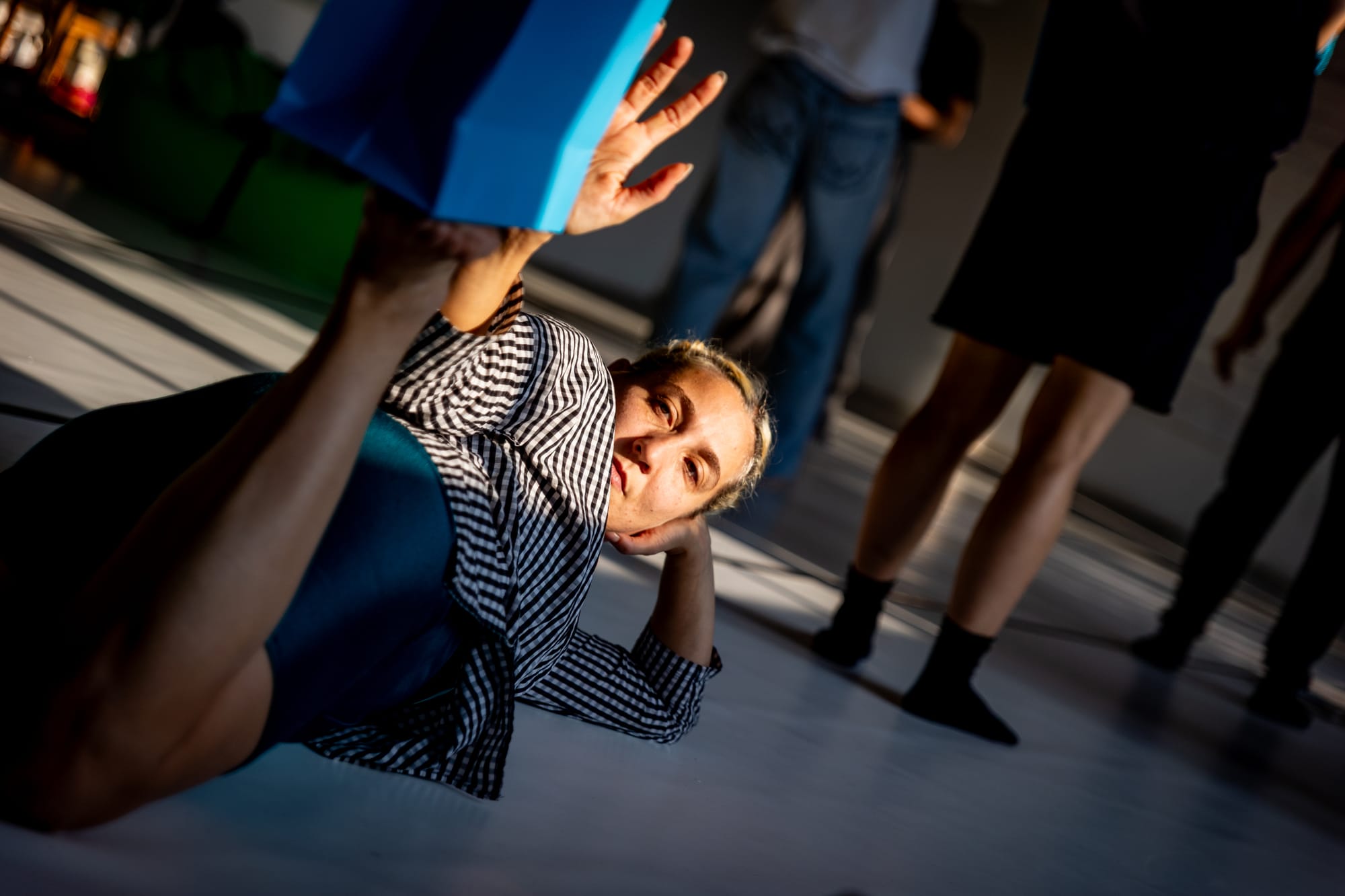
Artistic and creative work often relies strongly on collaboration, trust and effective synergy. In the circus sector, this is particularly true; not only do we need to collaborate to ensure everyone’s safety as acrobats, but creating and touring are also highly interpersonal and emotionally intensive. Professionalism aside, true symbiosis can be the difference between a project succeeding and lasting, or failing and taking a toll on everyone involved.
It is extremely rare for projects to have enough funding to truly cover all needs and expenses, both human and material. Unpaid labour is virtually impossible to avoid. For most projects outside of the highest circles of public funding and commercial work, human connection and friendships are the underlying force holding it all together. Call it the fifth element, if you like.
Relationships take time to build, nourish and mature, and artistic collaborations are no exception. Having shared history and experience with your teammates also makes processes more efficient, a precious asset when the creation time is limited. The trust, care and affection formed by these shared histories can, particularly at times of high stress and fatigue along the process, be the thing holding a project together and preventing crisis.
Most of us have been involved in projects with poor synergy, as well as with excellent team dynamics. Perhaps controversially, but realistically, most people would (and do) make the same choice as the company I mentioned at the beginning of the text; going for someone who perhaps is not a perfect match on paper, but with whom they know the dynamics will be good. Along the same lines, it is not uncommon to request references from previous employers or colleagues. Bad reputations, but also interpersonal feuds - sometimes old - can close doors regardless of pure professional competence.
The smaller the teams and the more horizontal the power structure is, the truer these things are, because you work much more closely with one another. Soleil-style mega productions involving dozens of people and a more explicit, rigid hierarchy tend to follow different paths, but they are also relatively rare in European contemporary circus. In the face of limited - and oftentimes shrinking -means, most projects are small to medium in scale. Human connection, as well as shared sense of meaning, faith or investment in the projects themselves, greatly determine if projects see the light of day.
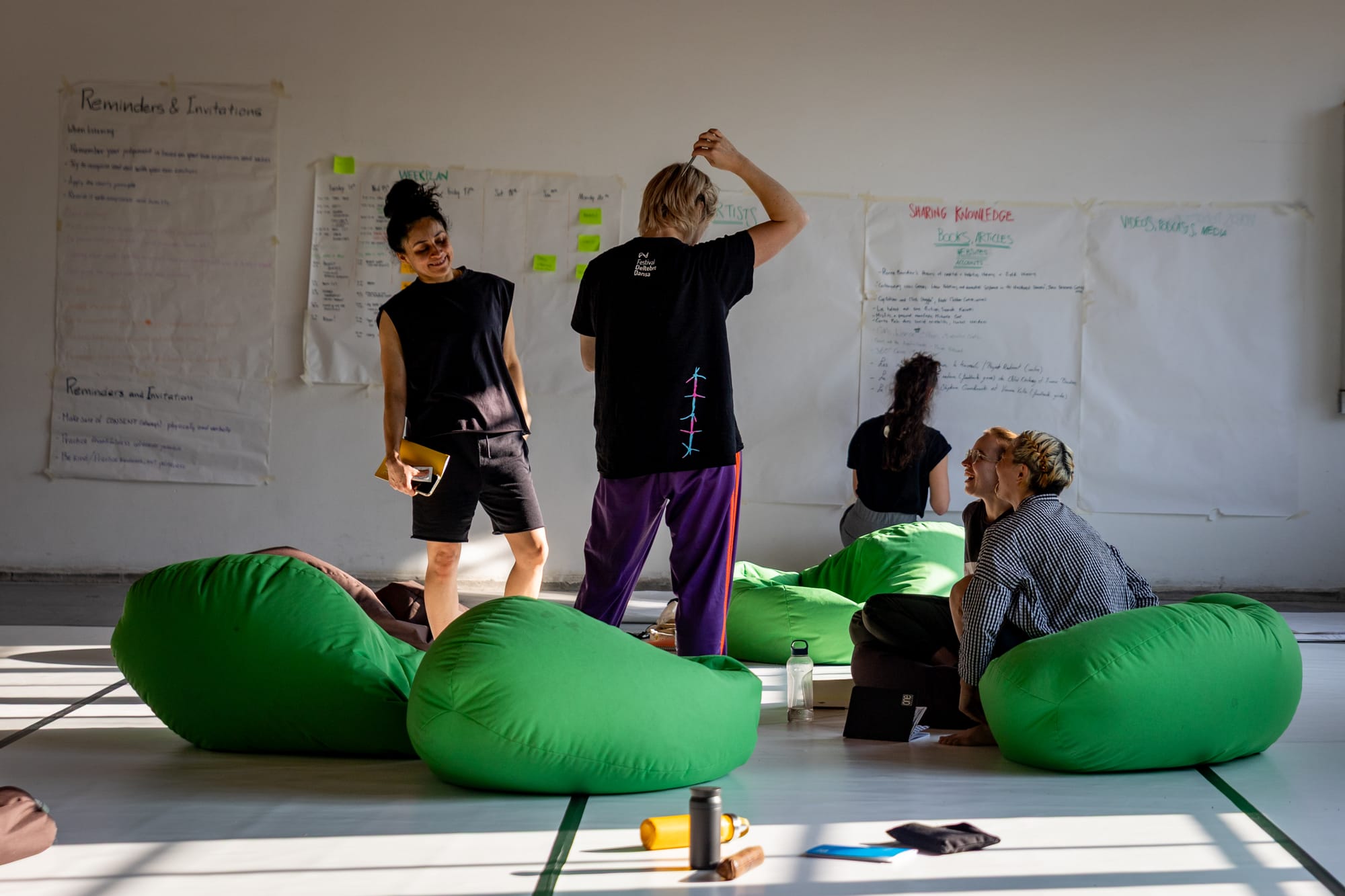
The 2025 edition of La Parola Ai Corpi is a good example of that. Gaia Vimercati and I met in 2023, as two of the ten “fellows” selected for the New Horizons Leadership Programme, aka "NHLP EU”, a project led by Cirkus Syd (SE), Rigas Cirks (LV), and DYNAMO (DK), and co-funded by the European Union.
We bonded pretty quickly over a shared sense of humour and, as the program went on, about a similar ambiguous relationship with institutional prestige and power. We both negotiated and built our paths with structures we needed as much as we conflicted with many of their dynamics. In March of 2025, Gaia invited me to be her co-curator for the fifth edition of La Parola Ai Corpi, a yearly research project she designed, supported by circus organisation Quattrox4 (that she also co-founded), and financed by the Italian Ministry of Culture.
The theme - class, labour, art and circus - firmly reflected our questions and conversations since we met and navigated NHLP-EU, and she thought I would bring to the project complementary skills, knowledge and lived experience to hers. The preparatory work built on our pre-existing dynamic, based on trust, respect, loyalty towards and knowledge of one another. During the project, Gaia and I pulled more than 10-hour workdays, on top of multiple days of nonstop preparation before the participants’ arrival, largely exceeding our payroll hours. It was no small feat. Had we not been friends and known each other well before the project, I am positive we wouldn't have managed to go as deep into the project as we did, work as efficiently, or deal with the inevitable challenges that arose as well as we did.
While I think it is natural for personal compatibility to matter as much as pure competence in fields like circus and the creative arts, it gets complicated in how social and socio-professional spaces form and function. Europe has undeniable and proven socioeconomic class inequalities. On top of that, the high-investment, uncertain reward model of the arts -contemporary circus included- as a field makes it so that those who can put in the years of work, training, internships and afford expensive equipment while at it are usually socioeconomically privileged people.
While we have yet to openly and collectively reckon with the type of family, class, social background, and resources behind most successful artistic careers, most of us can see these things playing out throughout our experiences.
If compatibility and chemistry between people are highly prioritised in hiring practices, then it’s fair to ask who those in charge of building teams come into contact with. Who do they know, and how does that happen? Who gets overlooked in the process? If someone has all the right qualities, skills and talent, but nobody knows them, do they stand a chance? Where does legitimate creative alchemy end, and cronyism (favouritism towards friends) begin? How is this shaping our field? How do we find the sweet spot of powerful creative synergies and fair opportunity?
French sociologist Pierre Bourdieu extensively explored the cultural field, recognising and describing many of its dynamics, from cultural reproduction to the different forms of capital. Social capital, which can be summed up as the networks of relationships someone has at their disposal, is a particularly useful tool to understand this issue.
For La Parola Ai Corpi, these were questions central to our process throughout the brainstorming, open call, planning, structuring and carrying out of the project. Gaia and I aimed at opening the scope of who would be involved, pushing through our own and our partners’ networks to spread the open call.
During the selection process, the explicit intention was to create porosity in networks. We thought of La Parola Ai Corpi as a balancing force to others in the field, and with that in mind, we took special care with the applications of those who came from outside the network of European professional circus schools, aware of the headstart those of us who belong to those networks hold over others in the field.
We sought to build a group with people who didn’t necessarily know each other but who, in our eyes, complemented each other. Our final group was composed of artists Juan Esteban Amaya, Vinicios Debs, Swantje Kawecki, Steph Mouat, Miriana Nardelli, Danka Sekulović and Maristella Tesio.
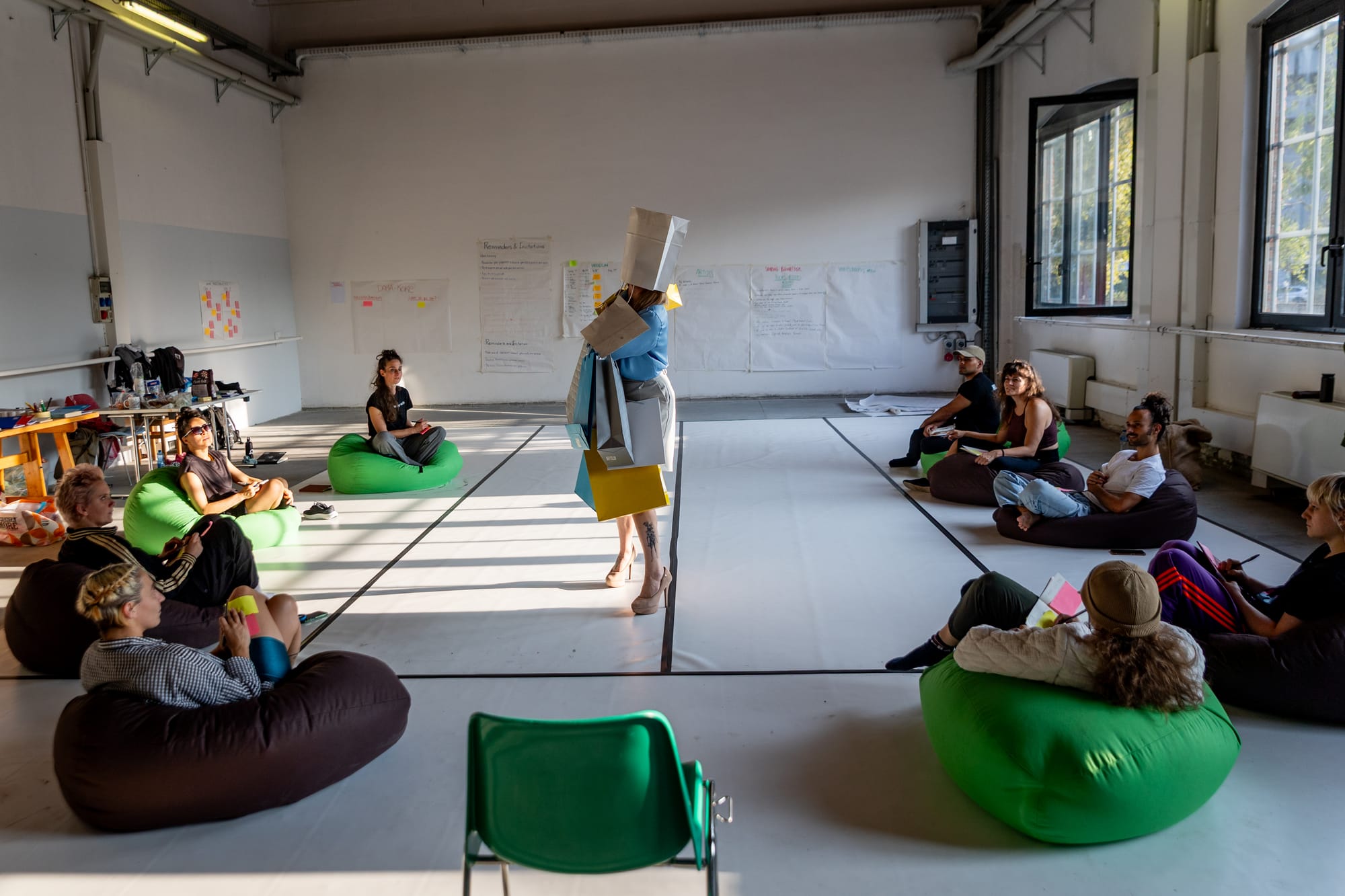
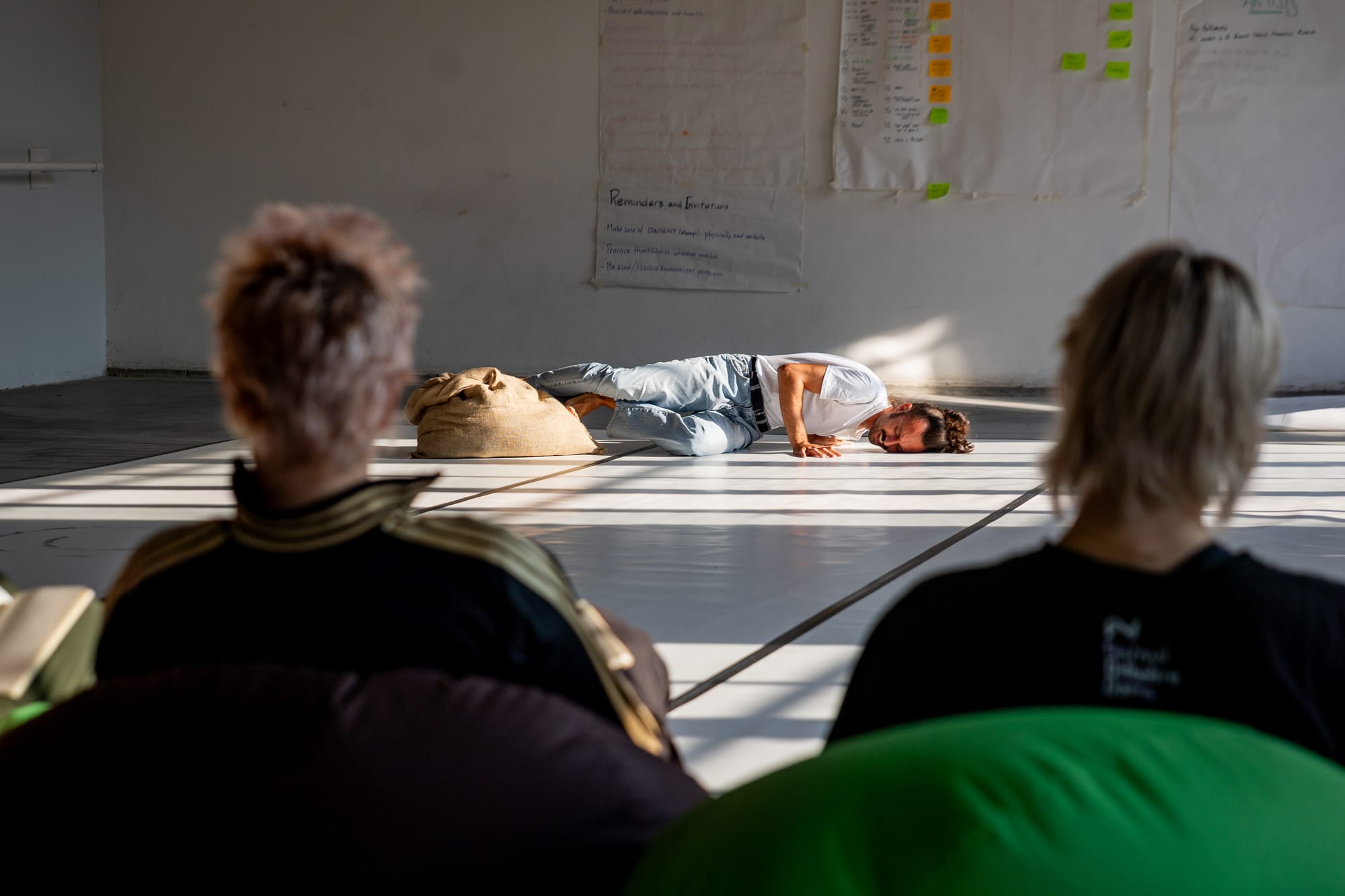
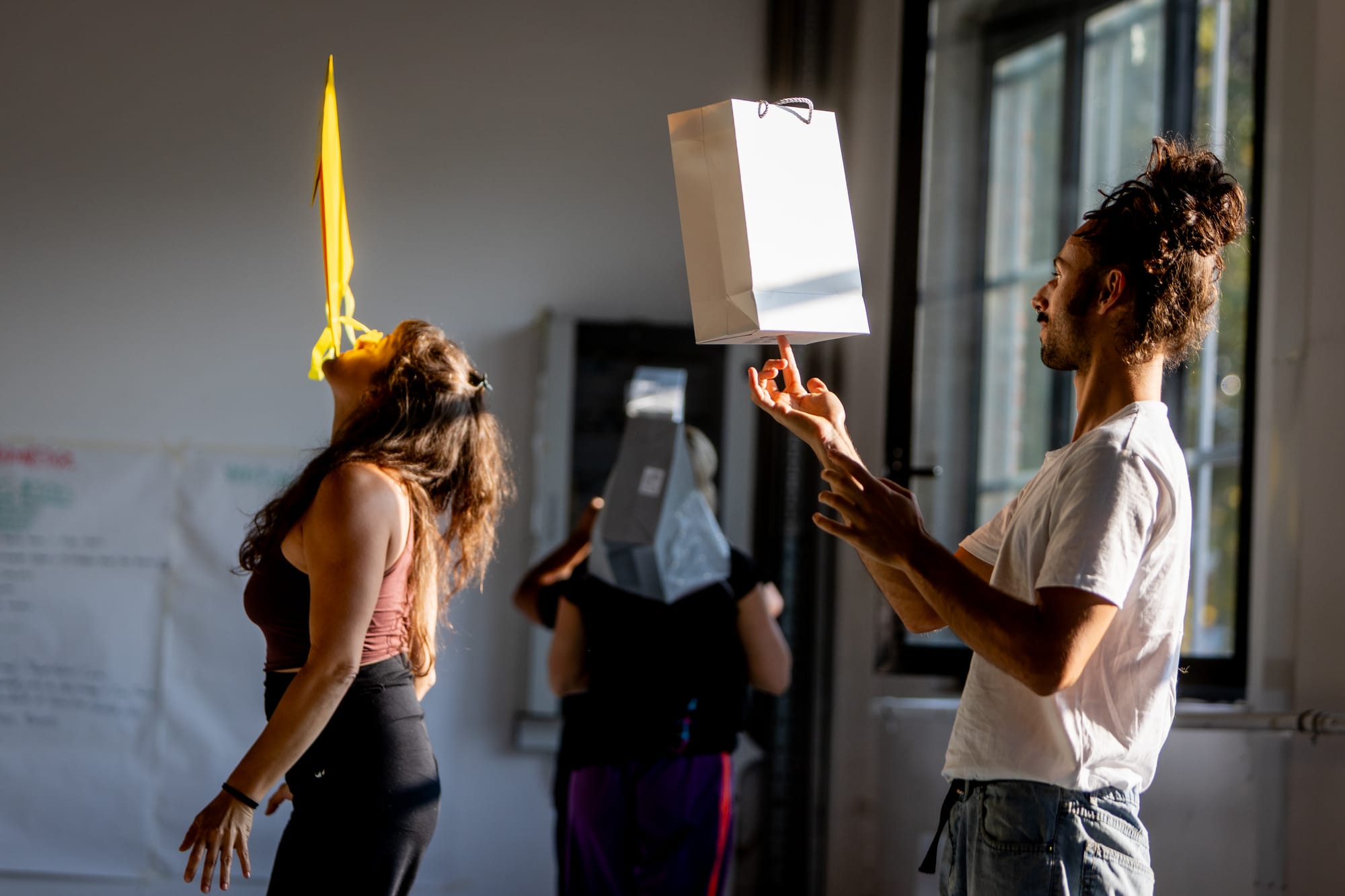
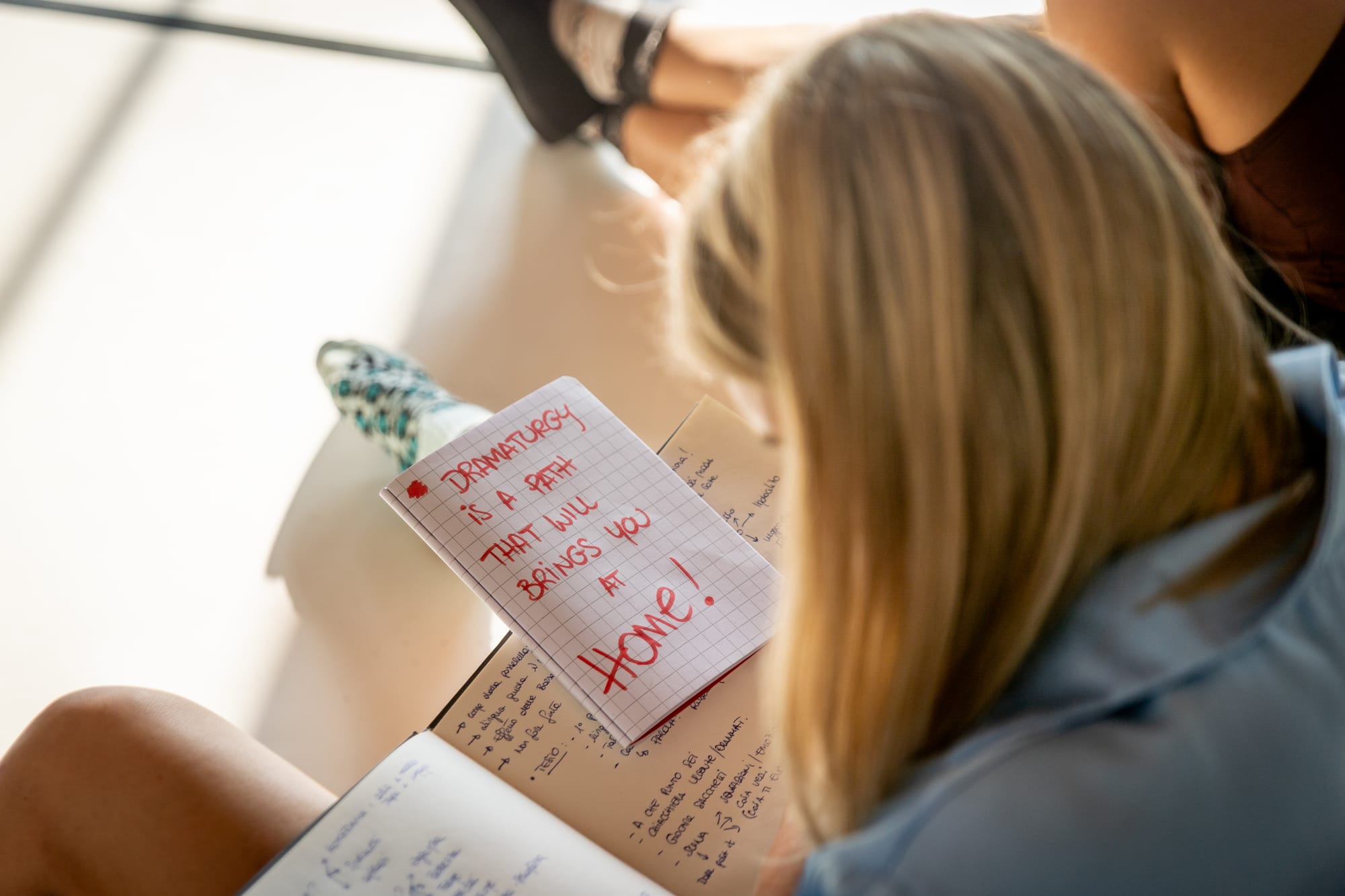
When the laboratory week came along, we focused on skill and experience sharing, and on the building of collective knowledge, both with our participants and among them. We paid special attention to the power dynamics and imbalances in the room, and did our best to counterbalance them to create an even playing field for everyone. Each day began with someone sharing some of their practice. We divided the work into practical and theoretical sessions, paying attention to the shifting energy in the room and adapting to it, focusing on building the groups’ relationships and trust early in the week, building frames of discussion, collaboration and disagreement.
The end of the week consisted primarily of “nanoresidencies”, spaces in which each artist could work on the project they had applied for, with the help of others in the group, based on the project’s needs at that point, and the skills and strengths present in the group. Our chosen participants complemented each other in their skills, perspectives and experiences, but they also demonstrated extraordinary generosity toward each other, and willingness to take an active role in building the trust and collaboration the work relied on.
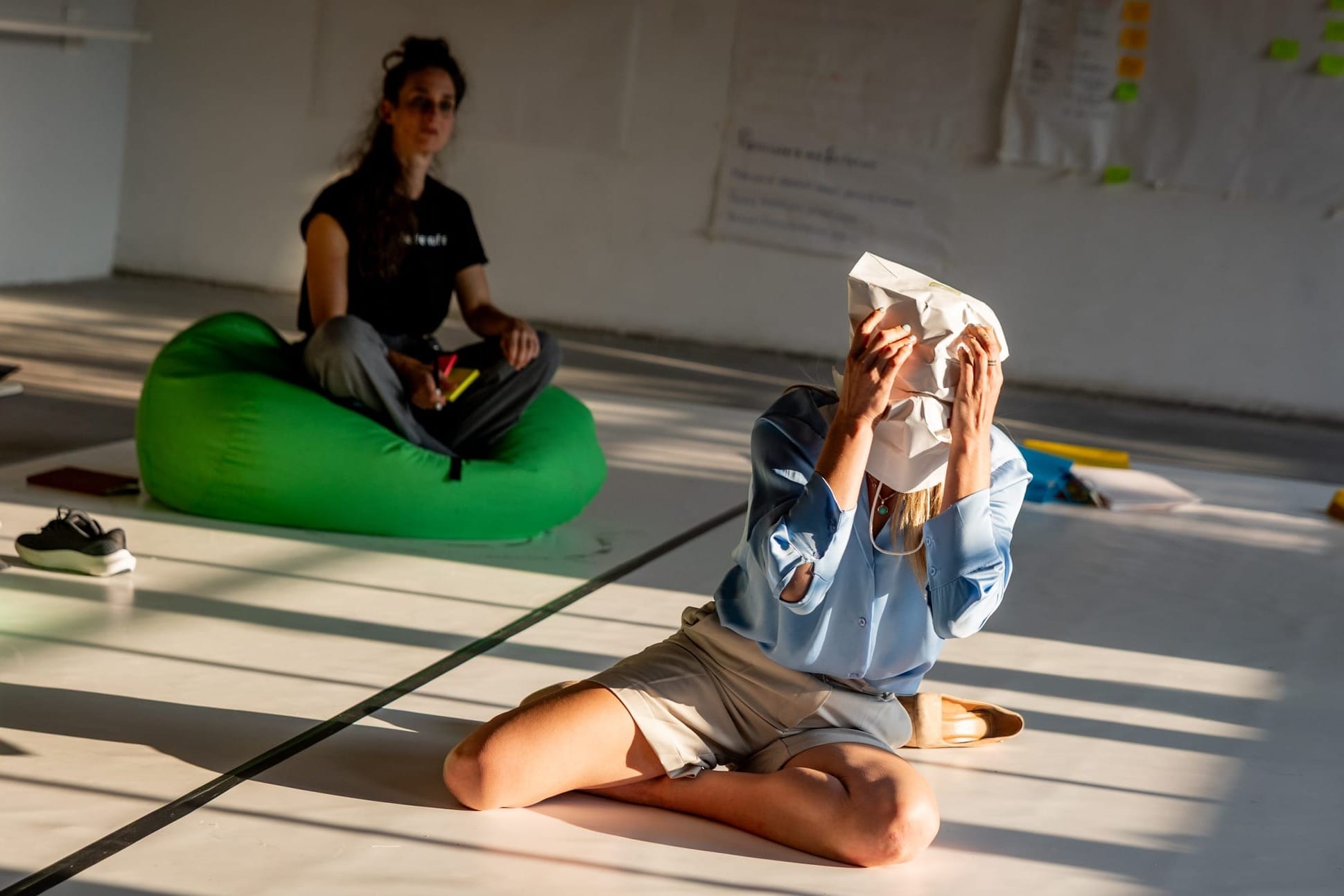
We invited artist and researcher Tania Simili, who was in Milano at the same time “shadowing” Quattrox4 under a grant from the Swiss Institute, to join at specific points of the week, adding to our collective pool of practices, lived experiences and knowledge. To us, the project proves that it is possible to create powerful synergies and collaboration from scratch with a solid enough frame, intentionality, emotional intelligence and attention to the process.
As short and small as a week of laboratory work can be, we hope that whatever glitches in the system we could create become amplified, as we hope to continue creating them.
Years after my conversation with my colleague, I can say that they weren’t entirely wrong, but their version of things isn’t the only option, nor is it enough to take it at face value. Human networks and synergy are essential to artistic creation, but breaking with our highly sealed, often elitist and inbred circles is what will allow truly meaningful work to happen. Beyond who we do this with, the question becomes how we learn to build and nurture relationships and networks beyond what’s already there, obvious, and easy.