I Wanna Circus With You! Two Days at the ON THE EDGE 2025 Symposium in Vienna

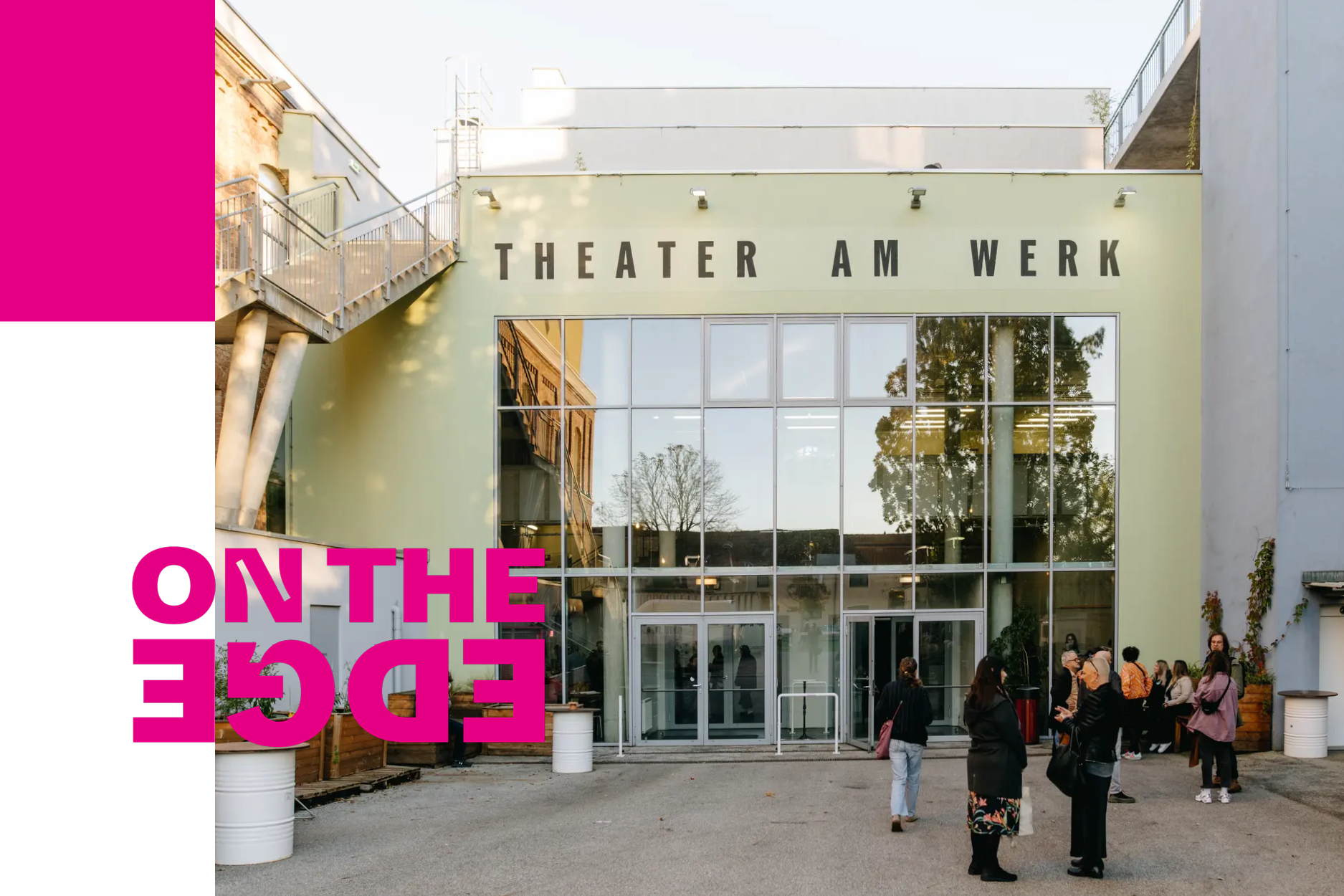
On 7 and 8 November 2025, I visited Vienna’s 5th edition of festival ON THE EDGE, curious to witness an event that marked a milestone for the Austrian contemporary circus scene. For the first time in Austria, the festival hosted a symposium to represent and make visible contemporary circus professionals, especially by bridging the gap between national perceptions and their current artistic proposals. The two-day conference drew a diverse audience and served as a networking platform for circus artists, presenters, and cultural workers active in the education sector. International perspectives enriched the discussion with guests from Croatia, Hungary, and Germany joining panels and talks. This report captures some of the exchanges, insights, and reflections that emerged.
A theatre venue hosting a circus festival and symposium
It is thanks to ON THE EDGE’s ongoing collaboration with venues and the performing arts scene that contemporary circus in Vienna is increasingly recognised within a broader curatorial landscape. Contemporary circus policy in Austria began in 2017, and in less than ten years, the country has developed training spaces, residency programs, and new artistic productions.
Initiated and managed by the organisation KreativKultur, ON THE EDGE began as a focus on circus arts at WUK performing arts in 2019, evolved into a full festival, adapted to a hybrid format during the pandemic, and returned to in-person programming in 2022. In addition, its artistic director, Arne Mannott, continuously contributed to the development of the art form nationally and internationally, bringing a Europe-wide perspective to the sector through his participation in the circusnext European Circus Label, the Circostrada network, and other European networks and juries.
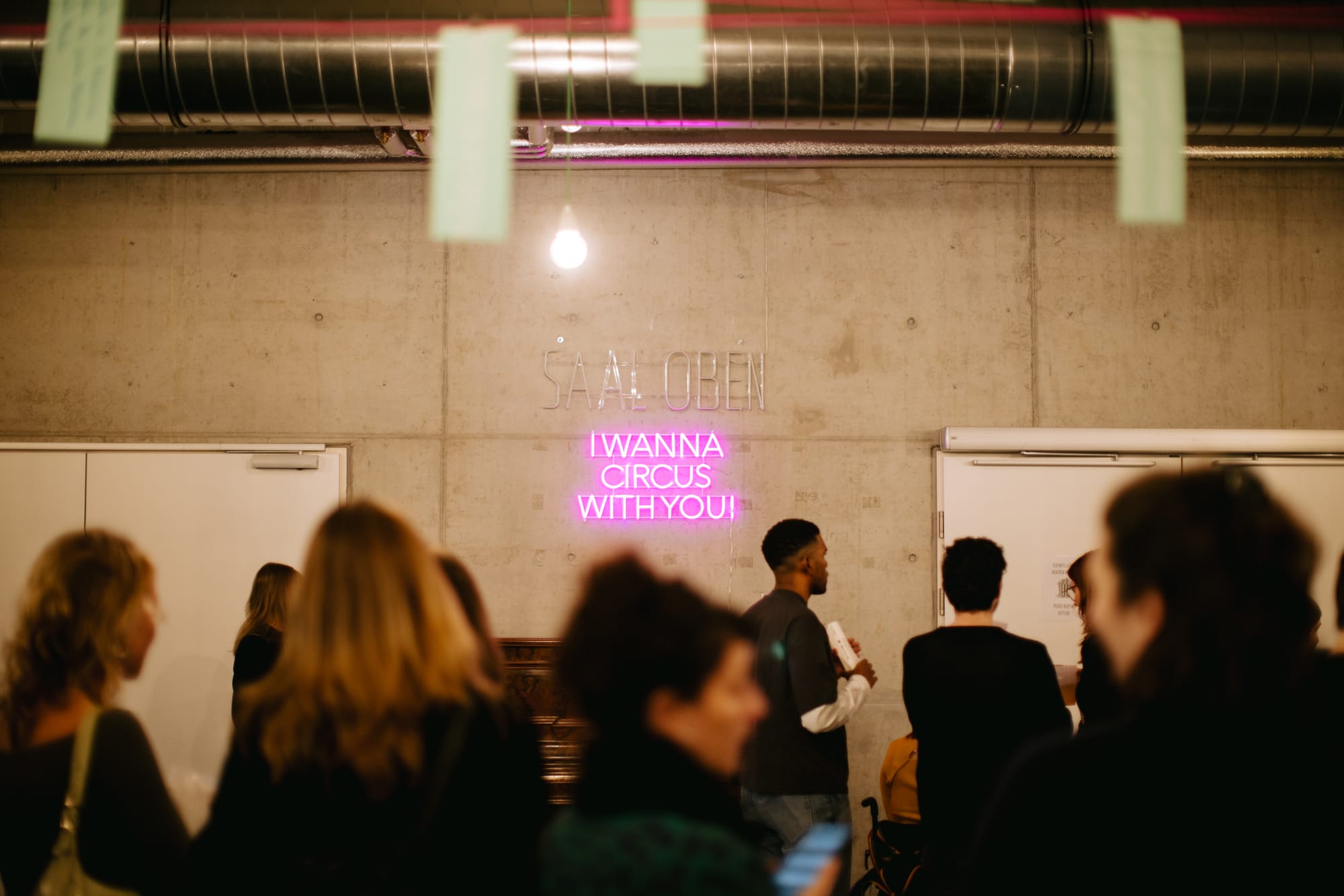
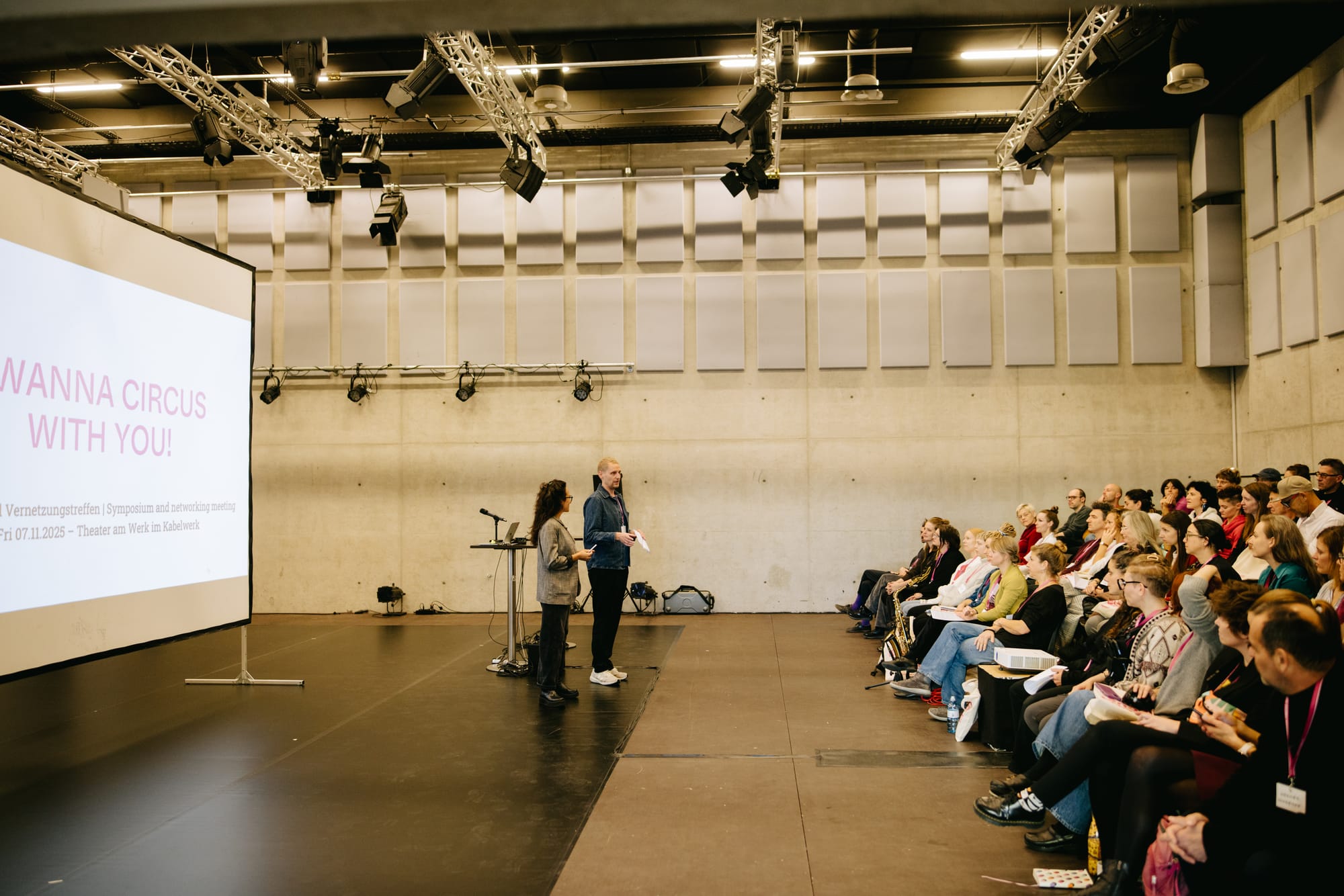
Since 2023, the festival has been based at Theater am Werk and has expanded its programming to other venues. The spacious theatre welcomed participants and guided them to the second-floor hall and foyer for a balanced program of keynote speeches, discussion rounds, workshops, and networking formats. To provide an overview of recent artistic production, the event also included pitches of circus shows touring nationally and internationally. The motto, I wanna circus with you!, invites participants to gather, exchange, and actively shape the future of circus arts within Austria’s growing scene.
Circus arts reflecting the society we are in
Artistic director Arne Mannott and Head of Production Nefeli Antoniadi introduced the first guest, curator and cultural worker Antonia Kusmanić, for an inspiring keynote: Circus now! Contemporary circus art is alive. What are the current international trends?
Based between Split and Barcelona, Antonia is a self-taught circus artist and a hands-on organiser. She is the founder of ROOM 100, Peculiar Families Festival director, a member of the steering committee and the artistic jury of the circusnext platform.
Her intervention highlighted two contrasting tendencies in contemporary circus production: the need for laughter and relief, and the urgency of circus as a reflective art form rooted in the world we live in. The core question might be: Are circus arts capable of engaging with the realities around us and exploring new disciplinary forms, or do they risk becoming a form of contemporary escapism by evading reality through entertainment?
She quoted biologist Edward Osborne Wilson to illustrate the society we currently inhabit: “We have a pre-industrial imagination.” She argued that, as circus artists and producers, one cannot create and work in a bubble. Artistic practice is embedded in a society facing multiple crises, and circus artists must find ways to confront personal anxieties while incorporating tools to resist and challenge ignorance within their work. And that perhaps, bridging personal imagination with reality is ultimately more compelling than offering mere escapism.
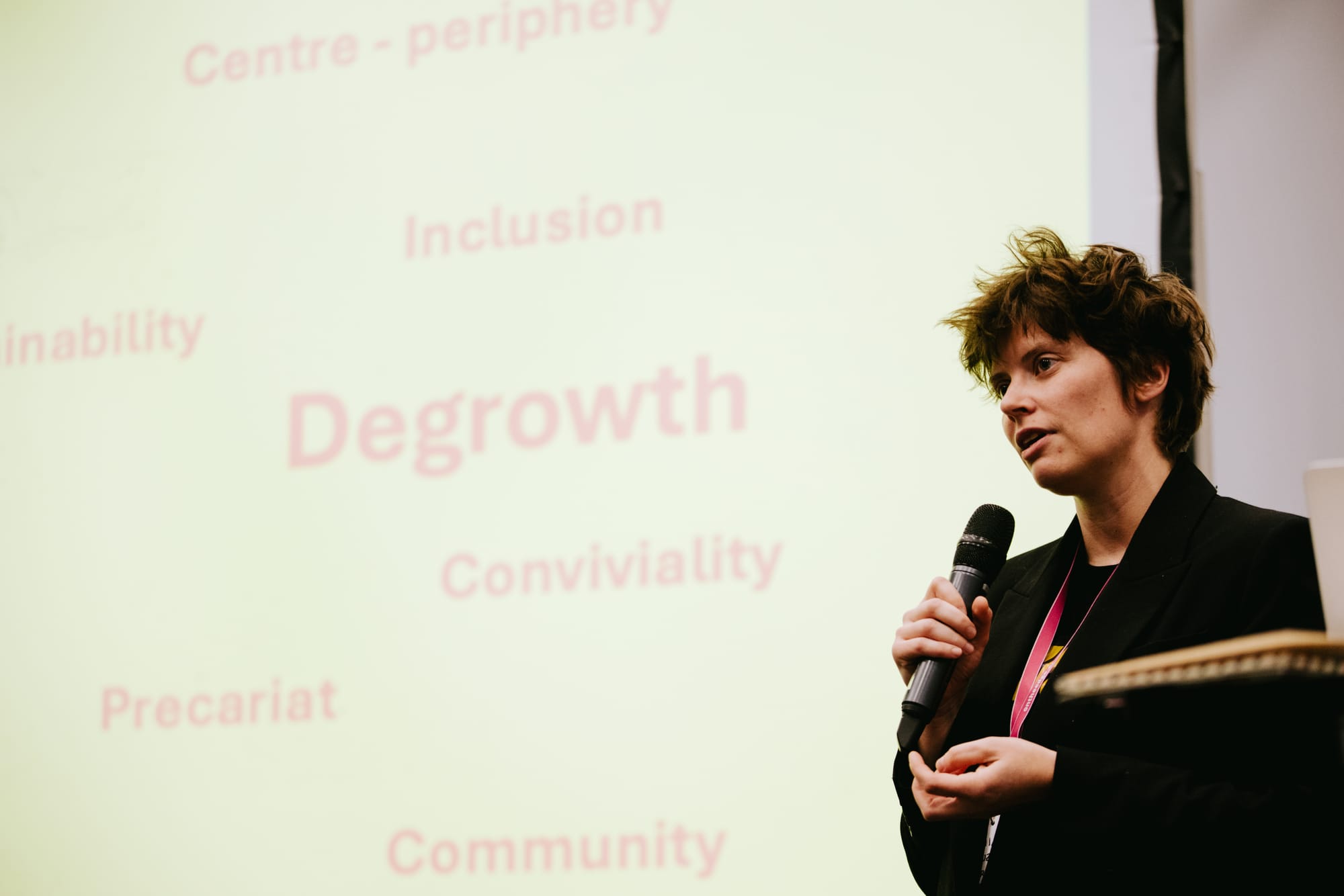
She then quoted the filmmaker Yorgos Lanthimos when he said: “For me, filmmaking is not about making statements but about exposing human behaviour so people are eager enough to start thinking on their own and make their own assumptions.”
With Antonia, we envisioned a future for contemporary circus rooted in integrity, international exchange, and social engagement, fostering cross-country collaboration and promoting equity across nations with varying economic resources. Her closing reflection focused on the idea of “positive laziness,” encouraging the prioritisation of quality over quantity, the thoughtful use of existing resources, and the collaborative sharing of connections.
Austrian Circus Pitch Session
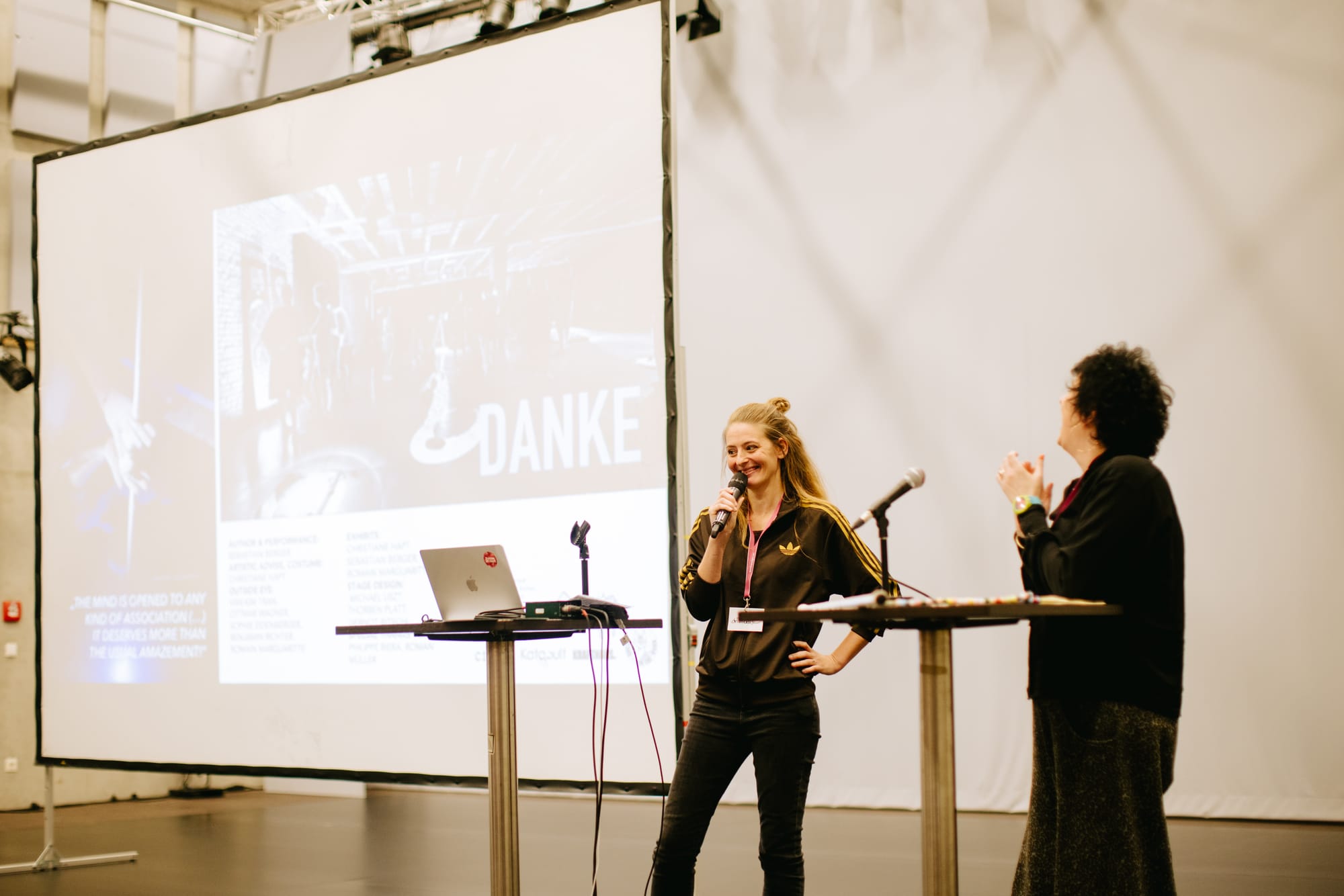
The circulation of current productions remains a challenge within the Austrian circus scene. For this reason, seven Austrian companies were invited to present their touring works with a wide range of artistic styles. The session started with Anna Sandreuter, who reminded the audience of a pivotal truth: that “nobody’s career can take off without the help of others, and the pivotal roles of people who believe in what you do.” I read this as an invitation to the Austrian theatre sector to take productive risks and integrate contemporary circus into their programming. In many cases, circus arts appeared as a graft within theatrical structures, merging physical storytelling and movement research with spoken text, reflecting an ongoing search for new artistic identities.
Anna Sandreuter introduced Silk. Women’s Work, a project exploring the value of textile labour. Cie Fenfire presented Is it a trick, a hybrid format at the interface of circus and installation. ConTakt introduced Foley, a participatory journey combining live music and hand-to-hand interaction. Hanschitz & Beierer shared still.dependent, blending dance and collective interdependency through the cyr wheel. Idiom/Ariane Oechsner presented dis.cover, deconstructing gender attributions from a feminist perspective. Olivia Platzer introduced The Miracle, a clownish storytelling piece, and Töchter der Kunst presented Über Piratinnen, women who conquer the sea, break the mould and defy traditional role models.
Programming circus in festivals and venues: challenges and potentials
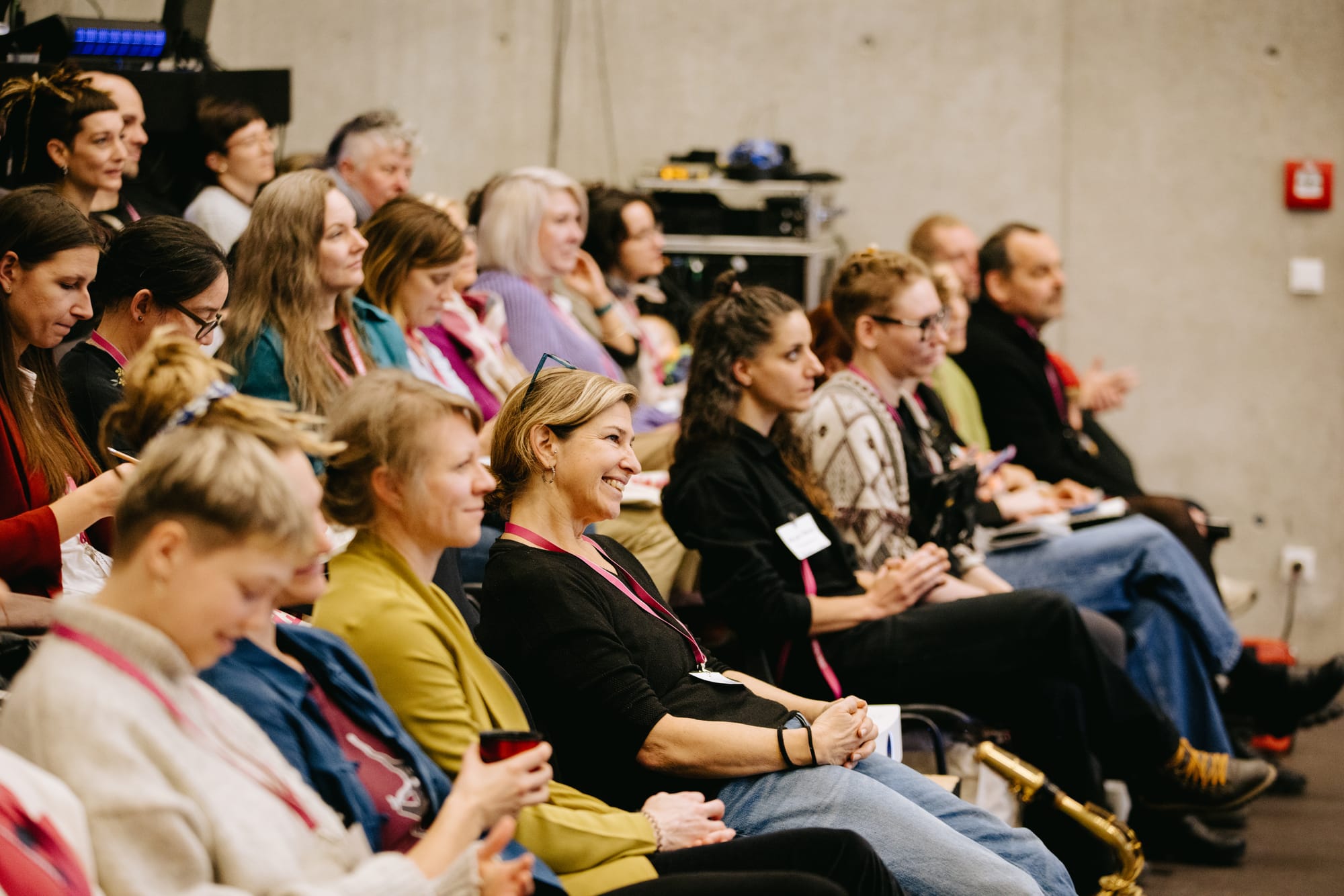
A panel on the necessities and challenges of theatre venues in programming circus arts closed the first day. The guests were Zsuzsi Nagy, curator of the multidisciplinary venue trafó in Budapest; Werner Schrempf, director at La Strada in Graz; artist Anna Sandreuter from Salzburg; and Antonia Kuzmanić, artistic director, moderated by theatre critic and translator Martin Thomas Pesl.
Audience development emerged as a central topic. Antonia, this time, focused on the Balkan regions, explaining the struggle of art to feel legitimised and how these difficulties are visible in the artistic processes on stage. On the other hand, resource constraints motivate artists to adopt a DIY approach, reinforcing their artistic proposals. She emphasised that festivals should rethink audience engagement by alternating neighbourhood performances with large-scale productions, offering free events, and strengthening collaborations with theatres and institutions. At the Peculiar Families Festival, for example, audiences can vote on social media to shape future programming.
Currently based in Salzburg, Anna Sandreuter compared the completely different perception of circus arts in Austria and the UK, where she lived and worked. After her training at NCCA – National Centre for Circus Arts, her early career has been precarious, and a structured ecosystem could improve working conditions and the quality of artistic productions.
Zsuzsi Nagy emphasised the importance of the training venue INSpirál Circus Centre in Budapest, and explained how trafó has developed familiarity with the genre over 15 years of activity, proposing a multidisciplinary season with music, dance, and theatre.
Werner Schrempf reported high attendance at La Strada’s summer edition and his winter counterpart, Cirque Noël. He sees in Austria a willingness to recognise the discipline as an art form and consolidate funding, and stressed the need for more cooperation and international productions.
One thought circulated: that festivals are increasingly focused on entertainment, which is not helping the evolution of circus arts. Responding to concerns that contemporary circus is becoming more pleasing and less political, Anna Sandreuter echoed Antonia’s keynote and insisted that artistic quality must remain the primary means of engaging audiences: artists should tell the stories they feel compelled to tell, while safeguarding their creative freedom despite funding constraints.
Antonia emphasised the importance of questioning artistic intention in the creation process, urging authors to clarify their motivations for what they aim to communicate, and the need for research as the foundation of meaningful artistic production.
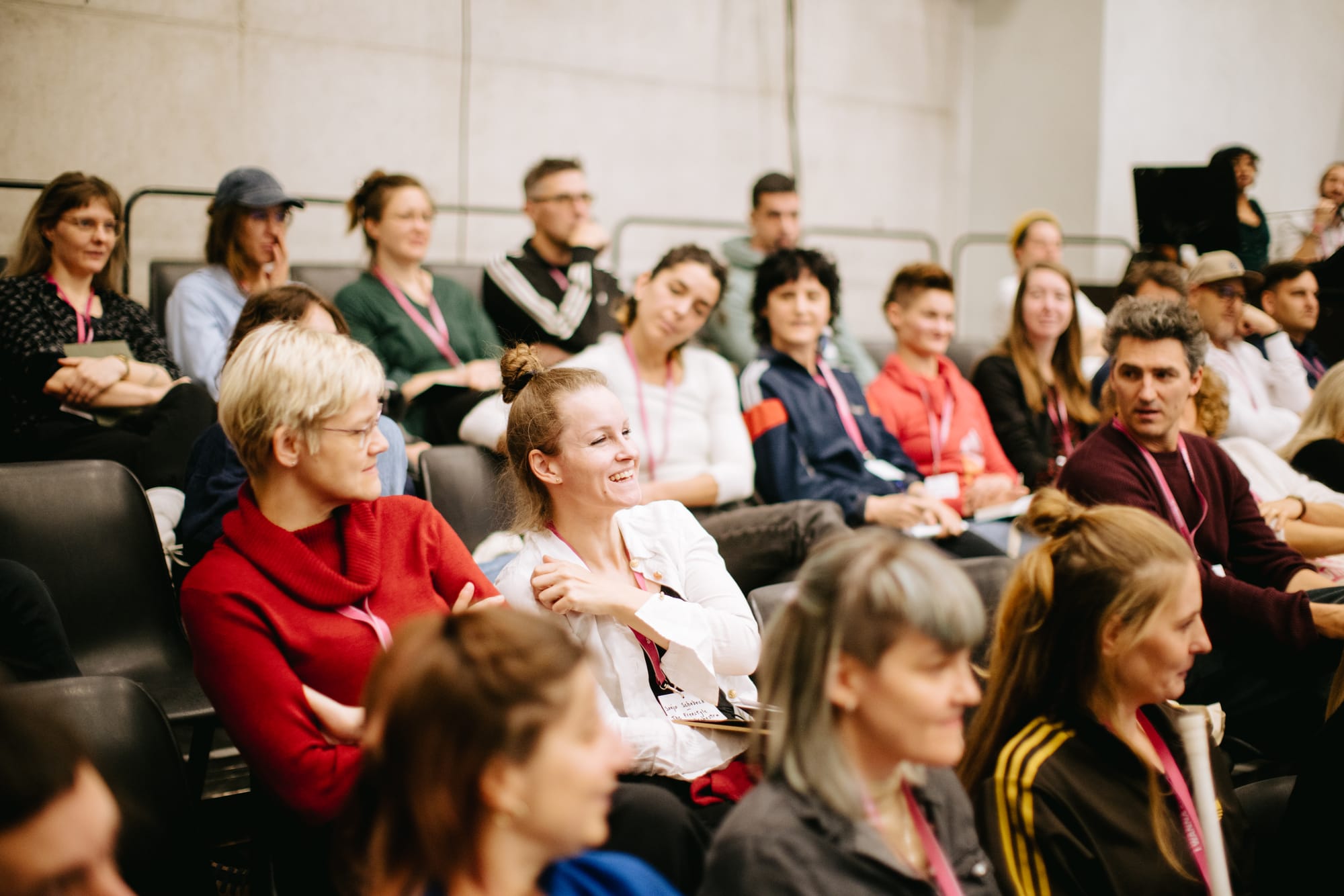
Contemporary Circus in Austria: what do we need and where will we be in 20 years?
The second day opened with a keynote by the German cultural worker and dramaturg Jenny Patschovsky on how Germany manages the current situation of contemporary circus as an art form. Her presentation included a brief history of the BUZZ and key initiatives to support artistic production, such as Zirkus ON and Zeit für Zirkus.
The closing panel instead focused on the Austrian context. Moderated by Arne Mannott, it featured Ulrike Kuner, chairwoman of IG Freie Theaterarbeit (Interest Group for Independent Theatres), Jenny Patschovsky (BUZZ), and artist Susa Siebel, co-founder of a residency programme at the training centre TRAP. The discussion was enhanced by the captivating live illustrations provided by Birgit Kellner from the Spitzwegerich collective. To start the conversation, Arne reminded us about the recent support from the City of Vienna for artists attending circus universities abroad and producing work within the country. Susa Siebel, as a freelance clown, highlighted the challenges of balancing official residencies with improvised practice. Ulrike Kuner emphasised that contemporary circus has become an active part of IG Freie Theaterarbeit’s agenda, together with online resources such as Zirkusinfo and Zirkustermine.
A recurring concern was that circus arts often intimidate theatre venues due to their technical requirements, and how to address this gap. Theatre organisers lack knowledge about producing contemporary circus, underscoring the need for clearer guidance, knowledge sharing, and support. Audience questions reinforced the need for an umbrella organisation to structure networking and seek allies across cities. Ulrike Kuner proposed that IG Freie Theaterarbeit could host an organised working group: this would be a significant step for the development of the Austrian scene.
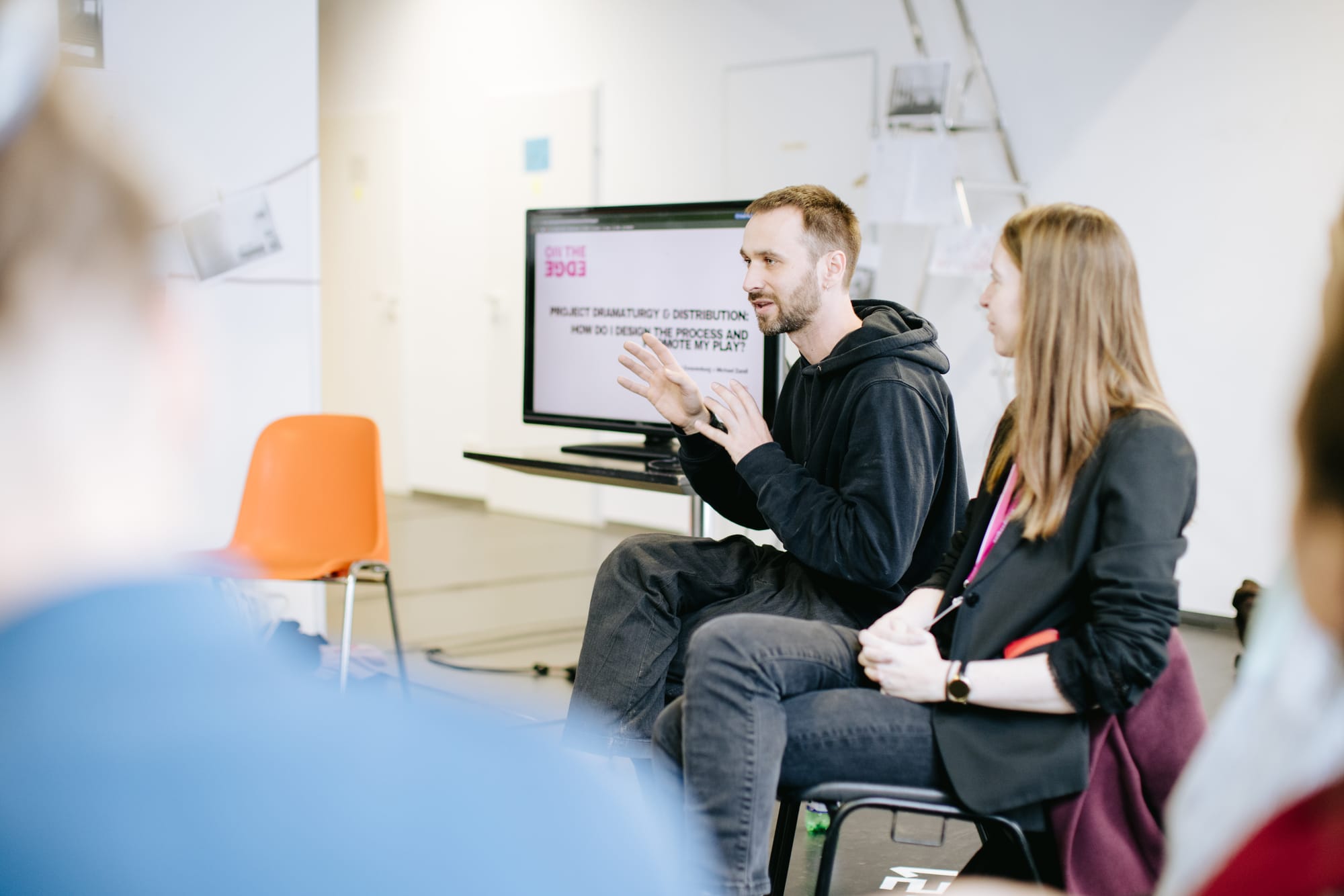
Internationalisation workshop and Around About Circus roundtable
A workshop and a roundtable filled the afternoon of the second day. Artist Michael Zandl and programmer Mirjam Zwanenburg from Korzo led a session on international distribution. At the same time, I moderated a roundtable on the history of contemporary circus, exploring companies’ styles and dramaturgical approaches.
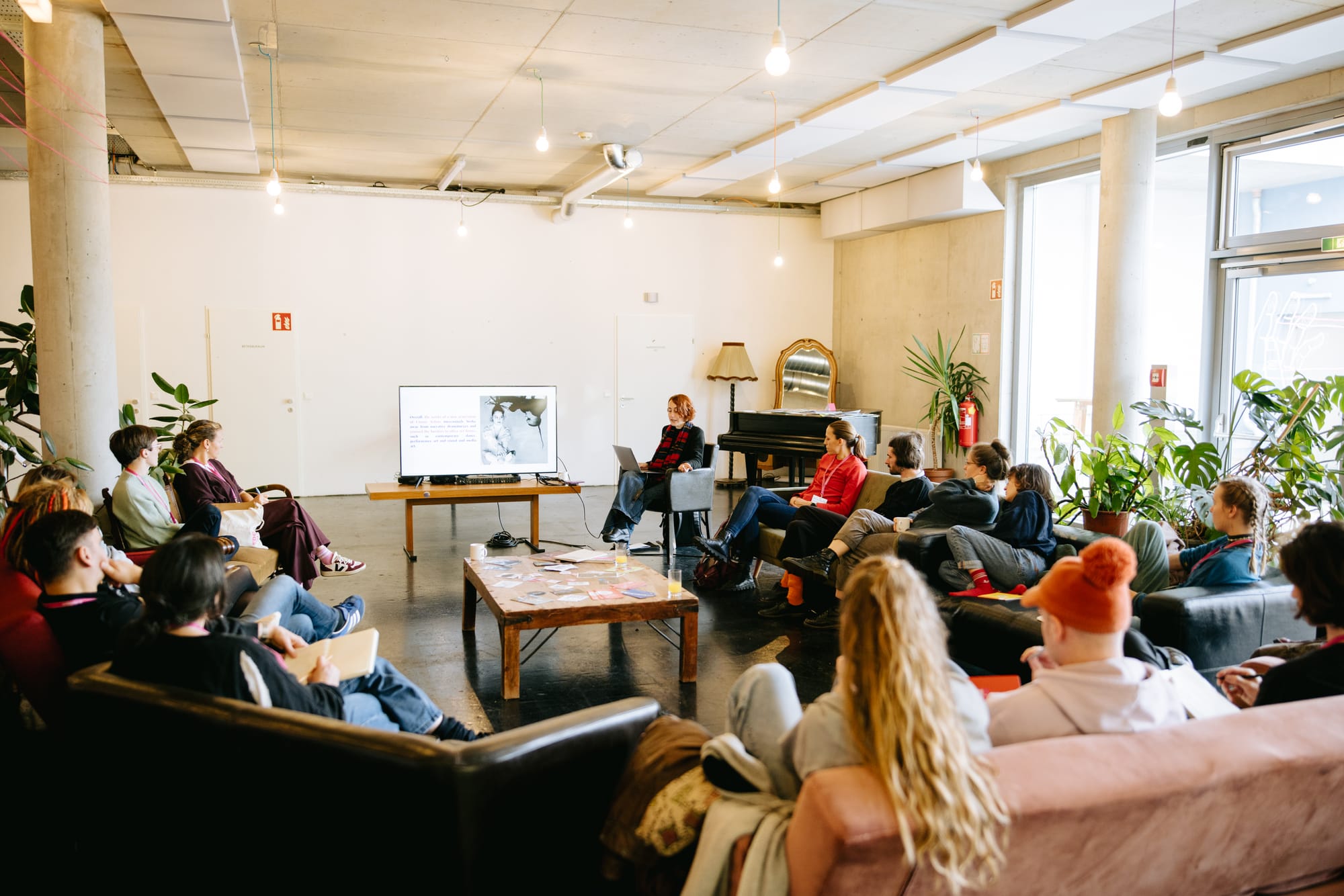
My intervention, Current Trends, Writing Styles, and Dramaturgies in Contemporary Circus, presented a chronological and aesthetic overview of the field’s development in recent years, serving as an entry point for a shared discussion. The round table was also attended by dancers and choreographers who were very interested in discussing dramaturgy in the circus field. We shared experiences and thoughts to understand how to encourage the creation of circus dramaturgy courses in the performing arts. Dance training does not include any lessons on the history of contemporary circus and its dramaturgy. It would be very interesting, however, to fill this gap by learning more about types of dramaturgy and aesthetics in multidisciplinary training environments.
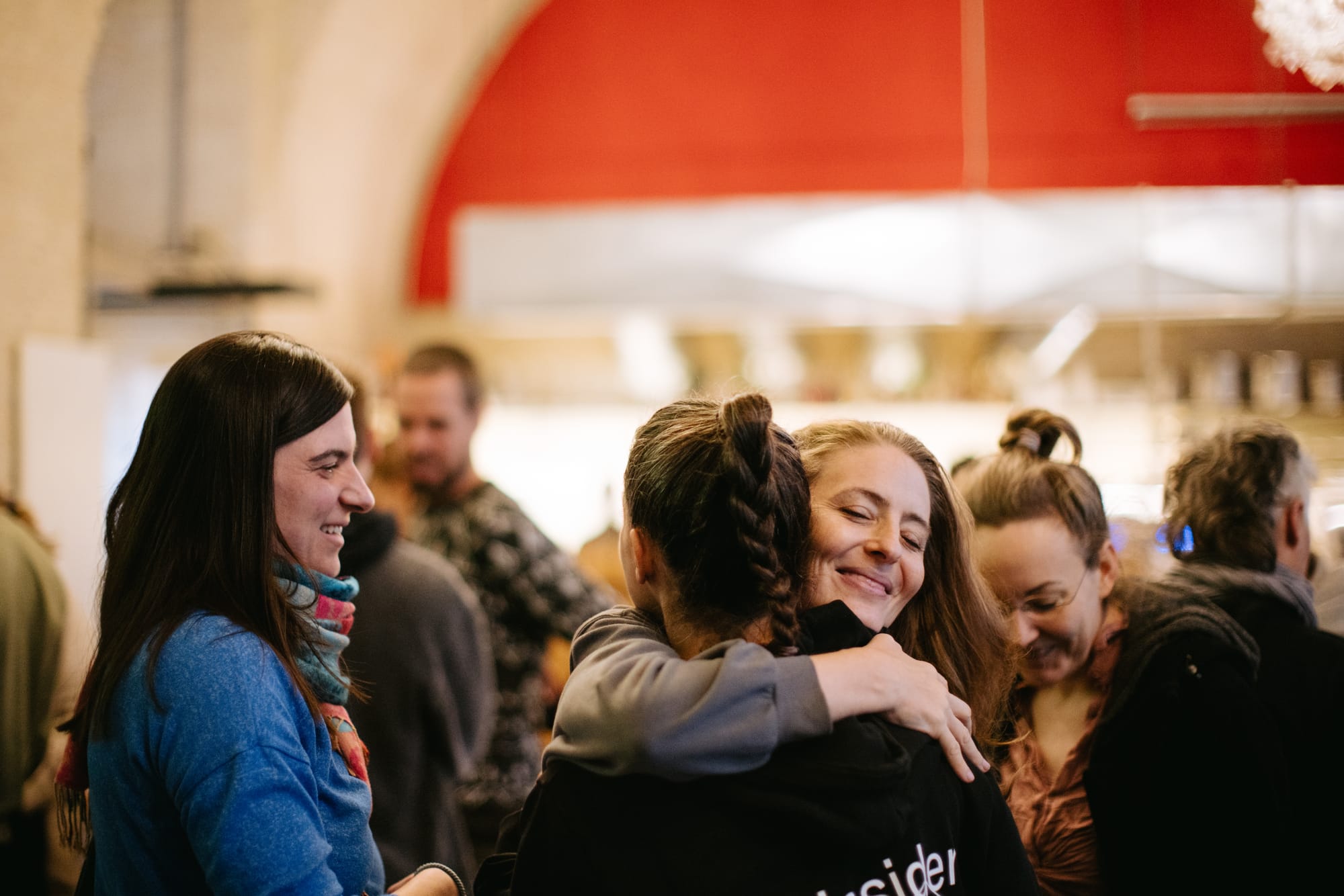
See you in November 2026!
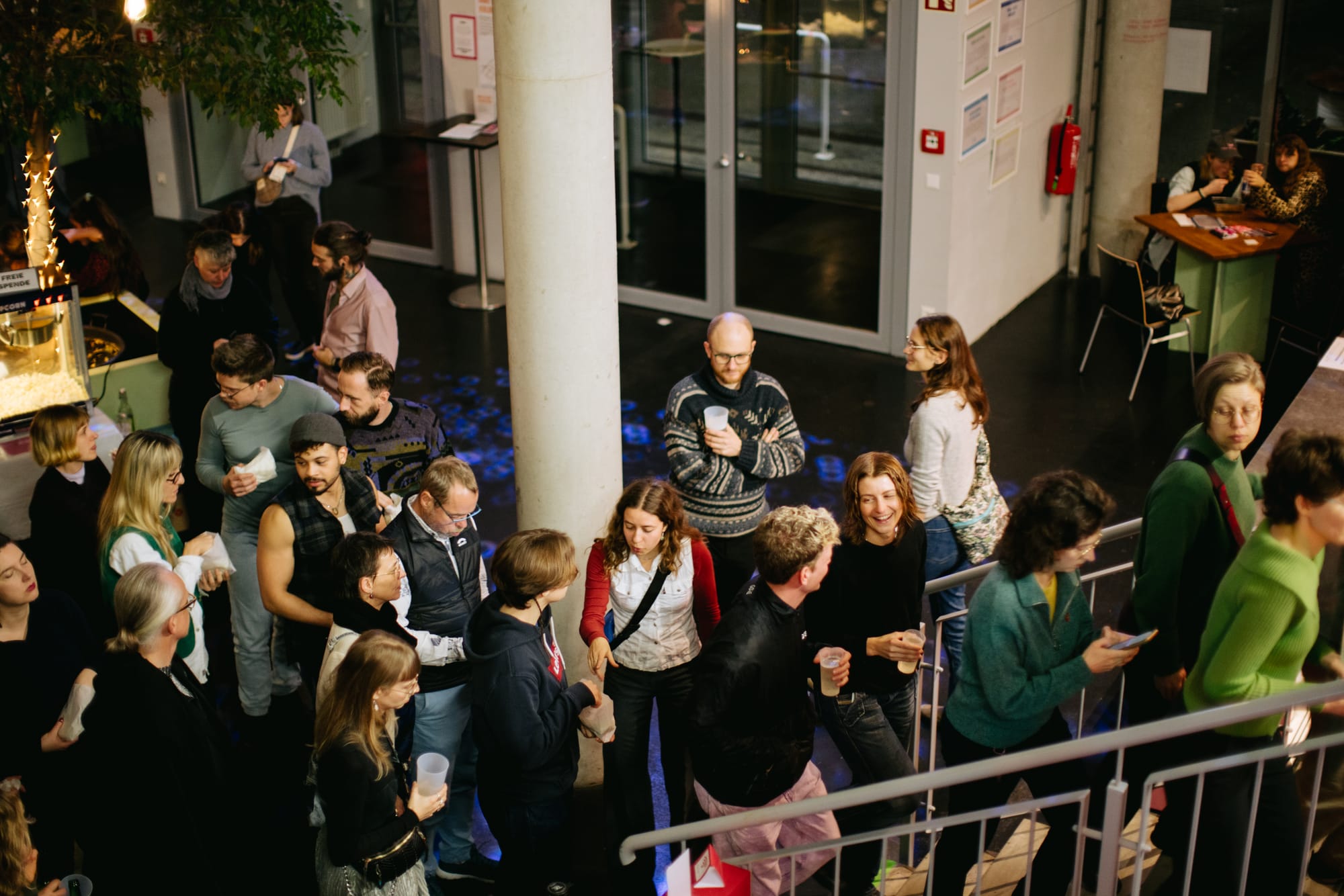
The first Symposium on Contemporary Circus at ON THE EDGE has been inspiring. Rich in content, it ran smoothly, facilitating a dialogue between participants and serving as a connective entry point before attending the shows in the programme.
For contemporary circus to be recognised as an art form on a par with others, it is necessary to talk about it, encourage interaction among its stakeholders and, above all, invite those unfamiliar with its artistic characteristics and international trajectory to discover the genre. As Edward Osborne Wilson would say: "You teach me, I forget. You show me, I remember. You involve me, I understand."
Save the date for the next ON THE EDGE edition in Vienna, from 4 to 13 November 2026. On 7 November 2026, the professional days will host the final conference of the EU project by FEDEC Take Care.